





The basics of healthy eating: how to choose the right diet for your needs
 Author:
 The simpler the advice, the more likely it is to be applied in the real world and the more likely it is to produce the desired result.
If you can't summarize your theories in less than a few minutes, your student won't understand you, you don't really get it, you want to sound too smart, or your handouts are so complicated that they have no real-world application.
I figured I'd give you a brief summary of what we've learned so far about diets designed for weight loss. Colleagues, clients and friends call it the Paleo-meets-Sports Nutrition hybrid approach (a combination of Paleolithic and sports nutrition).
Here's a summary:
- The Paleolithic diet is a simple model that anyone can break away from. It's about eliminating most man-made, processed and refined foods and emphasizing the natural foods from which we evolved. This alone can make a major difference in health and achieving a targeted appearance.
- However, such high-intensity training creates a unique metabolic environment and for 24-48 hours changes the way the body processes nutrients. If youexercise 3-5 days a week, your body is essentially constantly recovering. This is a change in physiological state that goes beyond normal rest, and its nutrient requirements are so completely different than those of a normal, sedentary, overweight office worker.
- Surviving in the wilderness in the caveman era is different from achieving a decent physical appearance in modern times. Prolonged life at the cost of unhealthy looks, low libido/testosterone levels and a general lack of toughness is not what our average reader is looking for. But at the same time, most are not after great looks at the cost of poor health and an early death. How about a smart plan and a little balance?
- A person who sits on their butt all day shouldn't fall off the food pyramid, and a strength athlete shouldn't start cutting out sugars altogether. Treating an unhealthy population (with insulin resistance, obesity, etc) is not like counseling athletes. Targeted carbohydrate intake can help the athlete with recovery and better response to intense strength training.
The athlete should start adding a little low fructose, gluten free, or "anti-nutrient" starches (potatoes, sweet potatoes, rice) to their diet.
This is how I do it due to my education and experience. But it's not the only way. I encourage you to take responsibility into your own hands and figure out what's best for you.
Just remember that there is never just one path to your destination.
The lost art of post-workout nutrition
I've said a lot about the Paleo diet. Now let's talk about sports nutrition. And we'll start with the most important thing, which is the post-workout diet.
Before information overload came along, the practical advice on the post-workout diet side was simple - eat some damn protein and carbs as soon as possible after your workout.
Recently, I've noticed a disturbing trend. Particularly with those who tend to theorise unnecessarily too much. It seems that post-workout carbs have been declared by some evolutionary theorist to be a disruptor of the fat-burning state that occurs in your body after a workout.
People then think they must never eat carbs, even in that critical post-workout window.
I can hear Donnie Brasco now, "Forget it."
The result is the loss of the most essential law of quality physique change, the post-workout combination of protein and carbs. Right now, I'm having to force people to add some carbs to their post-workout meal.
That's crazy!
Unfortunately, some readers have been bewitched. I had to shed some light on this problem for a few regular readers when we were looking into the reasons for their lackluster physique results.
The main culprit was a lack of carbohydrates in the post-workout period.
Time to wake up from that sugar-free nightmare.
What to do can be explained in one sentence: have a post-workout drink and/or meal with a 1:1 to 1:2 protein-to-carb ratio after every strength training session. Whole foods include fish and rice, eggs/whites and rice cakes, chicken and yam, steak and potatoes, etc.

If you're already doing this, you're done. You probably have results and don't need to read any further. The rest of the article is dedicated to those who somehow got the idea that post-workout carbs would interfere with their dietary goals.
Unfortunately, the scientific reasoning behind the simple advice can be quite complex. However, it is valuable to learn something. It gives you the opportunity to separate the facts from the brown stuff that falls out of your rear end. It will enable you not to be fooled by theorists whose height of intelligence is matched by their lack of practice.
Why a sugar-free diet after training is bad
Most people only see fat loss as the key to sculpting. This often stems from extreme calorie/carbohydrate tightening and workouts that are counterproductive in the long run. For example, hours of cardio a day and skipping lettuce because it contains 1g of carbs.
Short-term catabolism is desirable because it allows us to convert our body's energy stores, both glycogen and body fat, into fuel. But chronic, long-term catabolism is a problem for aesthetic goals. It eventually leads to muscle loss and body fat gain despite high activity and low food intake.
Athletes who are concerned with appearance must not think only about burning all the time. We must also think about rest and muscle growth, or at least muscle maintenance. This is where post-workout diet comes in.
I like to think of it as the yin and yang of physique improvement. We need balance in everything in life.
The equation needs to be in balance. If a sedentary person is still eating refined sugars, insulin is chronically elevated, too much "anabolism" is going on-the body is still in storage mode and naturally stores body fat as well. Unless this is disrupted by "catabolic" activity, or breaking down stored fat through exercise,
the overall effect is an express route to Obesity Lhota.
A little more complicated is what happens when the other side of the equation is unbalanced.
If you veer too far in the other direction (i.e., exercise intensely and chronically restrict calorie/carbohydrate intake, especially after training), there will be negative consequences.The most noticeable will be the lack of physical change despite sincere effort.
Training is a catabolic activity. We all know it causes microscopic tears in muscle tissue. But what some have forgotten is the fact that the catabolic process must be reversed by anabolic recovery for adaptation to occur. Muscle repair - the anabolic process - will only occur with sufficient nutrient intake.
If you exercise intensely and don't supply enough protein and carbohydrates for recovery, you will end up in a state where cortisol is dominant and catabolism is continuous. Cortisol dominance occurs in the presence of two lifestyle factors.
- Our modern lifestyle, especially for people who are career driven, is extremely stressful. Our cortisol levels are chronically high because of the pressures of work. You don't want to add a poor post-workout diet to such an unfortunate hormonal environment. Otherwise, an activity that was supposed to be beneficial (training) turns counterproductive.
- People who lack energy from the real anaerobic fuel, carbohydrates, make up for it with artificial energy from stimulants (coffee, energy drinks, diet pills). There is research confirming that reasonable doses of caffeine are beneficial for burning fat, but adequacy is the key, as it is with most things in life.
Needing to drink 84 ounces of coffee or 6 energy drinks to make the day worth something is not adequacy. That's chemical dependency. In this case, cortisol can remain chronically elevated, contributing to the infamous "stubborn fat" effect.
This scenario affects many strength athletes who keep carbs low in their diet. They think that such a diet, which is good for most of the sedentary population, will be good for them as well. Nothing is further from the truth.
Such a hormonal environment leads to the "skinny fat guy" syndrome. Girls and boys who train hard all the time, take in few carbohydrates and think they are doing everything right are skinny everywhere but in the midsection. It's strange, but their results are hampered by low carbohydrate intake and the denial of any catabolic activity with an anabolic recovery period.
Such athletes may improve in training parameters (strength, endurance, specific movement patterns like the snatch, deadlift, etc.), but their appearance doesn't change dramatically. Often they even get worse.

If you have a poor quality diet, it is much easier to improve performance than appearance. In fact, it's basically impossible for a natural with average genetics to improve appearance with a poor quality diet.
Yes, if there are too many carbs, fat burning will be impaired. Chronic insulin elevation or overproduction can understandably lead to weight gain. But in the right amount and at the right time (for example after intense training when insulin sensitivity is heightened), it can be helpful (anabolic, anti catabolic).
It doesn't sound very intuitive, but dietary carbohydrates can offset the catabolic effect of training (insulin is the opposite hormone to cortisol), can kick-start recovery, can aid muscle building, and can aid fat burning in the recovery phase.
I've worked with athletes who have overcome their misconceptions and fear of carbohydrates, and by adding carbohydrates to their diet, have carved out, and even broken their personal bests in low body fat. We started, of course, with the period just after training.
The myth of stopping fat burning
The most common thing I hear about post-workout carbs is that they prevent optimal fat burning. This may be true at other times of the day and under normal conditions, but it doesn't apply to the unique conditions created by intense strength training.
Chris Aceto, a nutritional consultant to bodybuilders, put it accurately when he said that carbohydrates have a metabolic advantage after training. The strength athlete cycles the depletion of glycogen and its rebuilding. After training, even high amounts of ingested carbohydrates are not stored as body fat.
Once again, the confusing idea that has become widespread in our industry is due to the fact that principles that will suit a sedentary population are being applied to athletes.
In the post-workout period, the main role of ingested glucose is to replenish depleted glycogen stores. When this takes place, fatty acids supply the body's normal energy requirements.
Conclusion
Much more could be discussed on this topic. For example, the effect of carbohydrate and protein levels on the post-training ratio of free testosterone to cortisol, changes in glucose transport, the response of glycogen synthase to training, etc.
However, all of this is not entirely relevant when we are talking about post-workout diet. For now, take my advice and go back to the basics: have some protein and carbs post-workout, even if you're after fat loss. You may need to cut back on carbs at all other times of the day, but cutting back on carbs post-workout is not
appropriate.
Recommended
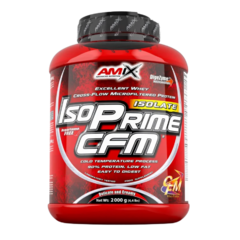
Amix Isoprime CFM
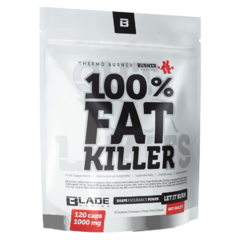
HiTec BS Blade 100% Fat killer
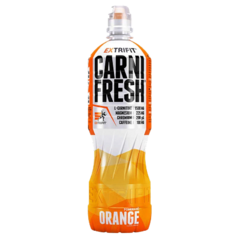
Extrifit Carnifresh
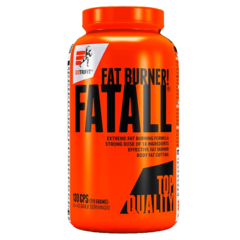
Sources
1. Kimber, et al. Skeletal muscle fat and carbohydrate metabolism during recovery from glycogen-depleting exercise in humans. J Physiol. 2003 May 1;548(Pt 3):919-27.
Written by Nate Miyaki, translated by Jaromír Uhlíř
No posts have been made yet.








