





Paleodiet - improved paleodiet
 Author:
 If it doesn't swim, run, fly or grow green in the ground, don't eat it!
This quote is probably familiar to our readers. It has been popularised by such luminaries as Charles Poliquin, Christian Thibaudeau and John Berardi, among others.
You may have heard a more recent version of this dietary recommendation from Jack Lalnne: "If it's man-made, don't eat it." Together, it basically sums up the practical part of that "traditional" caveman diet.
My practice of party eating has been accurately described as "a combination of paleo and sports nutrition."
Let's talk about the paleo side first. The summary above is simple, but it's worth the effort to look deeper into our problem, and find out the details hidden behind the philosophy of "eat what your ancestors ate."
If you don't do this, in one day of reading the endless amount of internet health gibberish and misinformation on the diet side, you may come back asking, "Wait, aren't fruit juices, wheat breads, fat-free mayonnaise, and cereal with fiber good for me?"
They're not, unless you're sponsored by Emco.
Paleodiet in a nutshell
An animal-based diet is superior to a grain-based or vegetarian diet
Animal proteins are considered superior to grain or vegetable proteins because they contain all the essential amino acids, they contain them in higher quality, and along with the essential fatty acids, they are also there in the right proportions and ratios that Mother Nature has planned. That last point is the key.
They are not called essential for nothing. If we were not predisposed to eat animals, these essential nutrients would not be needed for our normal metabolic and hormonal functioning. They would be optional and instead we would have essential cellulose and soy requirements.
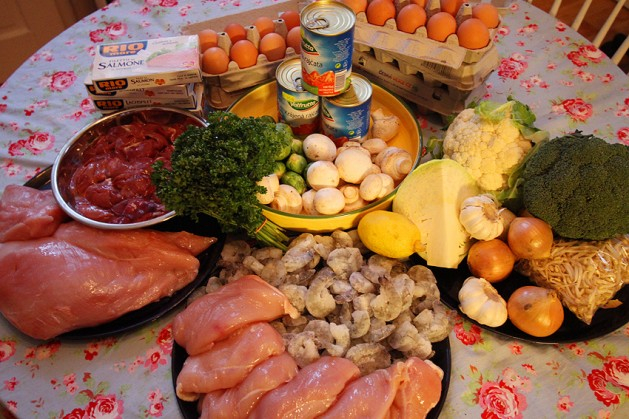
After all, look at four ounces of salmon:
24g protein, including all essential amino acids 2g saturated fat 5g monounsaturated fat 1500mg omega 3 fatty acids 425mg omega 6 fatty acids
You can't beat nature.
A diet with lots of vegetables is healthy - I'm not crazy - and it doesn't mean that a vegetarian diet is the healthiest. Because vegetarians make incredible combinations of foods to replace the essential nutrients they could get from animal foods, they can end up with a diet that is a metabolic disaster: insufficient protein intake, incomplete amino acid profiles, imbalances of essential fatty acids, too much sugar and refined flour, too many sugars combined with too much dietary fat, too many phytoestrogen components from soy substitutes... I could go on.
And when it comes down to it, if vegetarianism is so god, why are such a large percentage of vegetarians obese and/or looking so unhealthy?
I assume most readers have no desire to become vegetarians, but at least now you have some logical argument for that pesky relative who piously swears that a vegetarian diet is the healthiest thing in the world, while eating meat will kill you.
Remove sugar/concentrated sources of fructose from your diet
If I could, I would put a master's belt around my waist to concentrated sources of fructose as the worst ingredient in the modern diet. If you did nothing but cut sugar and glucose-fructose syrup out of your diet, you'd probably end up with a decent figure. But that crap is everywhere and in everything.
According to countless studies, the fructose in table sugar is the main culprit in causing insulin resistance - fructose, please, not my poor glucose-starch compounds, which have been wrongly lumped into the same category because of that recent smear campaign against all sugars.
An article in the American Journal of Clinical Nutrition took a deeper look into the metabolism of fructose. The results suggest that fructose, unlike glucose, tends to be metabolized into fat in your liver. In animals, fructose produced the following responses: insulin resistance, impaired glucose tolerance, high insulin levels, high triglycerides, and hypertension.
Remove trans fatty acids from the diet
If I named fructose the worst component of modern food, trans fats are the second hottest candidate for that title. These compounds are actually vegetable oils to which a hydrogen molecule has been added through a process called hydrogenation. This strengthens their structure and extends their shelf life - both great if you're a canned snack maker.
However, this chemical treatment also makes them so problematic from a healthy lifestyle enthusiast's perspective. Trans fats are essentially unnatural, mutated fats that raise total cholesterol and bad (LDL) cholesterol, increase C-reactive protein, lower good cholesterol (HDL), and as such are a major risk factor for cardiovascular disease.
So what if you're only concerned about appearance, not health? Trans fats have been shown to interfere with glucose handling, promote insulin resistance and cause abdominal obesity.(1)
So if you see trans fats or hydrogenated oils anywhere, take it easy.
Improve your Omega-6 and Omega-3 balance
From a health perspective, the best ratios of omega-6 fatty acids to omega-3 fatty acids are usually between 1:1 and 4:1. This was also the common ratio before modern food processing, when most dietary fats still came from the flesh of wild animals and fish.
With the addition of highly processed vegetable oils to the diet, the ratio for the average American has skyrocketed to 10/15:1, sometimes even 40:1. Such an unnaturally high ratio can lead to inflammation throughout the body, exacerbating autoimmune diseases and increasing the risk of heart disease and certain forms of cancer.
At the same time, as the consumption of vegetable oils and processed foods has increased, the average intake of omega-3s has dropped. Wild animals rich in omega-3s have been replaced in modern diets by domesticated animals fed corn and grains, whose meat contains more omega-6s.
Omega-3s have anti-inflammatory properties, improve insulin sensitivity, reduce blood triglycerides, dilate blood vessels and reduce general risk factors for disease.
I understand that this requires some faith, however, it is not the natural saturated and monounsaturated fats of animal flesh that are killing us. It's the abnormally elevated omega-6 fatty acids from vegetable oils (including various mutations of trans fatty acids) that are doing it.
Think about it - the natural fats we evolved on versus the modern fats we process. If I'm going to bet, I'm putting my money on natural fats, although the odds are going to be quite high due to the dominant, yet outdated, organs responsible for health.
The problem is that health advice and modern diets are under the major influence of the food industry. That's why you commonly hear about saturated fats from animals being bad and polyunsaturated fats from plants being good. That is a joke, unfortunately at our expense. Eat animals, not processed oils.
Eliminate foods containing gluten, grains and legumes from your diet.
Most problems associated with grains have nothing to do with the inherent starch content of the grain. Glucose is one of the oldest evolutionary fuels; unless you've developed insulin resistance by being fat, eating too much fructose, eating too many omega-6 fatty acids, not eating enough omega-3s, or not strength training regularly, your body can cope with the glucose polymers in starch. A properly functioning and athletic body stores normal amounts of glucose as muscle glycogen.
The main problem with modern cereals is the ingredients that are found in them along with the actual starch. Gluten, for example, is not a carbohydrate - it is a protein found in cereal grains such as wheat, rye and barley and is highly problematic for many.
We may not all have a downright developed gluten allergy, which manifests as celiac disease, a debilitating illness associated with eating gluten in which the immune system attacks and destroys the cells of the gut, but many of us can be sensitive to gluten. One new study even examines whether anyone should eat gluten at all. (2)
Unfortunately, gluten-free has become a prized marketing product lately. However, eliminating it from the diet can be a positive step toward overall digestive health, physical performance (reduced dullness), and appearance (reduced bloating in the abdominal area)
I suggest you try skipping gluten for a few weeks and see what the response is. Maybe it will do wonders, maybe nothing at all. Until you try it, you'll never know.
Other harmful ingredients in modern grains are collectively called "antinutrients."
Phytic acid is the storage form of phosphorus in plants and is commonly found in bran or seeds. Humans cannot digest phytic acid because they lack the essential digestive enzyme phytase.
The first problem with phytase is that it can cause abnormalities in the digestive tract. Another problem is that it binds minerals to itself, which impairs their proper absorption. These include zinc and iron. The final straw is the fact that most foods containing phytic acid look and taste like cardboard. Loren Cordain said, "Cereals are best left to the birds."
Legumes and cereals also contain a component called lectin. Lectins are sugar-binding proteins that plants have made to protect against insect predators - I'd say that's enough of a clue that people shouldn't eat them in bulk.
What are the problems associated with lectins? How about irritation and damage to the gut, excessive mucus secretion in the intestines, reduced nutrient absorption, diarrhea, nausea and bloating(3)?
However, you may recall that rice - technically a grain - is the mainstay of my dietary recommendations. The thing about rice is that it has never contained gluten and the phytic acid with lectin is removed during cooking. What you are left with is a combination of pure amylopectin and amylose starches - ingredients that your body can easily handle unless you suffer from insulin resistance.
Cut out dairy products from your diet
Arnold said, "Milk is for babies."
To be honest, dairy is such a controversial topic (among researchers, coaches, athletes, bodybuilders, and training enthusiasts) and there is so much to discuss about it (acid-base balance, insulin index, isolated milk proteins versus dairy foods, inclusion in volume versus exclusion in the diet, etc.) that it deserves an article all on its own. But I don't want to keep you waiting.
I tend to lose weight most of my life, and 99% of my clients do as well. Volume may be a different story, but the short answer is that dairy (milk, cheese, whipped cream, yogurt, etc.) should be omitted during weight loss.
 A practical paleo diet
Take that grass-fed cow, cut off its damn head, and eat it - and don't even feel bad about it. We're meant to. Our mouths contain incisors for evolutionary reasons, which is to tear flesh from bone, not to separate grub from cereal at Lucky Charms. Nature is wild - we are beasts. The further we move away from this and compensate with fake food from factories, the sicker and fatter we get.
Cut out more or less all processed foods. Most processed foods are just a random combination of the following six ingredients: (1) sugar (and/or glucose-fructose syrup), (2) trans fatty acids/hydrogenated oil, (3) omega-6 rich vegetable oils, (4) corn starch or other flour-based, (5) refined salt, (6) artificial additives/sweeteners. None of these are good for you.
Make clean animal protein the foundation of your diet. The range for strength training is 0.8g-2.2g per pound of net mass, depending on the composition of the rest of your diet.
Remove concentrated sources of fructose from your diet. Ditch glucose-fructose syrup, any food sweetened with fructose, sugar (which is 1 molecule of fructose and 1 of glucose), fruit juices, and dried fruit. Personally, I'm not a big fan of fruit, but 1-2 pieces of whole, unprocessed fruit a day shouldn't be a problem. Just don't start swallowing bananas by the pound. Then the fructose would build up.
Skip the trans fats/hydrogenated oils. Limit your consumption of omega-6 fatty acids by omitting vegetable oils. Increase omega-3 fatty acid consumption through wild fish and grass-fed beef. Avoid gluten-containing grains such as wheat, rye and barley. While you're at it, skip most grains, including those darn, overrated whole grain products (breads and cereals). Skip dairy products (milk, cream, cheese, yogurt) in your diet. Isolated milk proteins are fine.
As you can see, I think there are a bunch of principles that a muscle man, strong man, or even a mirror beauty can take from the paleo diet. But I don't want you to think I'm only in favor of such things. I definitely recommend some paleoprinciples, however my overall recommendations are drastically different.
Starches like rice and potatoes are definitely not paleo foods, but along with clean proteins, they form the basis of my plan for athletes and are anaerobic fuel for anabolism.
You'll never convince me that a 150 pound, obese, insulin resistant, sedentary office worker who just wants to see his privates again should eat the same as a 90 pound, chiseled, insulin sensitive, athletic alpha male trying to reach an athletic or aesthetic peak who can't keep his privates in his pants for more than five minutes.
That, by popular belief, is what you should believe. It might be fine for commercial programs aimed at the general masses, but you already know something about sports and you're surrounded by people who know something about sports - you simply have too much sense for that kind of trust.
To me, paleodieting for the anaerobic athlete is more about what removes the average athlete from the program than it is about the overall macronutrient structure. Why? Because a 100% paleo diet does not account for variations in activity level, individual metabolic factors, and differences in average and extreme performance or aesthetic goals.
Doctor and nutrition researcher Kurt G. Harris refers to some components of the modern diet as Neolithic disease agents. I think that's an accurate description. As discussed above, modern foods like concentrated fructose/sugar, omega-6 rich vegetable oils, trans fats and gluten are doing crazy things to our body systems, composition and disease risk factors. Eliminating these triggers is a valuable health step for everyone - the overweight person, the chiseled, the sedentary, the athlete, the iron lover, the nun, the porn star, and anyone in between.
But...
I'll quote Kurt G. Harris again, " Glucose is an essential internal fuel source and metabolite, and it is also the food and building block of food that has the longest evolutionary history of any food used by mammals."
(Confused yet? Hang in there. Remember, you're in good hands - I'm half Japanese, so I insist on efficiency.)
Glucose is one of the oldest evolutionary fuels, and a healthy body can process and utilize it. An active athlete should be treated differently than a sick diabetic.
Due to a lack of knowledge on the sides of physiology and nutrition, a lust for extremes, and a cultural tendency to categorize and demonize (think of the low-fat era when healthy fish oils, EFAs, and natural monounsaturated fats were put in the same category as trans fats and hydrogenated oils), and plain ignorance, many foods of value for bodybuilding - fructose- and gluten-free starches, for example - have been washed away by the Paleo-Smallies.
I don't recommend a pure paleo diet, just as I don't recommend eating pure sports shakes. I recommend a well-researched blend of both.
I want you to understand why I think glucose polymers can be beneficial whereas concentrated sources of fructose can be catastrophic, why saturated fats from animal sources can be better than polyunsaturated fats from processed plant sources, why starch with pure amylopectin is less problematic than starch containing gluten or lectins, and why a modified strip is better than an unshaved beaver.
The transformation of the classic fat man
Let's explore the classic scenario of why all carbohydrates have been lumped into one category and demonized within our industry.
The fat guy sticks to the traditional American diet, 50% sugar, tons of trans fats, omega-6 and gluten. If he does have something "healthy," it's usually a wheat bread sandwich with low-fat mayo and cheese. Fatty is tired of being fat, sick, feeling like crap, and finally resolves to make some changes. Somehow, mysteriously, he stumbles upon the dietary recommendations of the paleodiet/cave people.
Fatty follows the plan to the letter, loses a ton of weight, gets healthier, etc. Overall, he does a good job. Great. But now the fat man is religiously devoted to the system. He sees nothing, not even scientifically proven principles standing outside the system. All carbs, regardless of origin, are the enemy. Pure glucose polymers from rice or potatoes are no different than sugar or wheat with gluten. After all, HE lost a bunch of pounds on a carb-free paleodiet.
What the fat guy fails to see is the fact that commercial diet plans and "systems" can't address little things like why dietary recommendations for fat, sedentary types should be any different than for active athletes, because:
Commercially successful plans must fit everyone indiscriminately.
If your plan fits everyone, everywhere, it will dramatically increase your potential market.
The average reader doesn't want or can't understand the scientific details needed to individualize plans.
Many scientists in labs simply don't know, don't show, don't care about what actually happens in the real world of training.
Somewhere deep down our fat guy knows he's not exactly where he wants to be. He's much better off than he was, but he's still soft, lacking shape/definition, maybe still has a bit of that tire on his belly. He knows he wants to improve, but he's still stubbornly stuck in the system, a system that may very well hinder his progress.
He's oblivious to the fact that he's already in a completely different universe. He's not a fat guy anymore, he's an active athlete and the targeted principles of sports nutrition could actually be relevant and beneficial to him. He has dramatically improved his insulin sensitivity through weight loss and regular strength training. A bit of carbs could help him build muscle, get a little firmer, kick-start his metabolism, increase his thyroid/leptin output, improve his free testosterone/cortisol ratio, improve his physique, and even LOSE weight.
But he still thinks like a fat guy, he still has that fear of becoming fat again because of carbs.
I've tried it. When I researched this, I followed the plans myself. I ate like a regular American, strictly adhering to the paloediet, my current dietary recommendations, and everything in between. I was also living the practical side of the whole thing, and the most important lesson is this - you can't get caught up in a formulaic, one-size-fits-all system and expect to find what works best for you, your current athletic frame of mind, and your current goals.
Written by Nate Myiaki, translated by Jaromír Uhlíř
Sources:
1. Kavanagh et al, Trans fat diet induces abdominal obesity and changes in insulin sensitivity in monkeys. Obesity 2007 Jul;15(7):1675-84.
2. Bernardo D et al, Is gliadin really safe for non-coeliac individuals? Production of interleukin 15 in biopsy culture from non-coeliac individuals challenged with gliadin peptides. Gut 56 (6): 889-90.
3. Miyake K et al, Lectin-Based Food Poisoning: A New Mechanism of Protein Toxicity. PLoS ONE 2 (1): e687.
No posts have been made yet.








