Low-carbohydrate or low-fat diet? There is no winner or loser!
 Author: Šárka Randáčková
 Are you an advocate of a low-fat or low-carbohydrate diet? Know that it has no effect on weight loss!
A year-long clinical study found that both low-fat and low-carbohydrate diets produce the same results in terms of weight loss and metabolic health indicators. Neither insulin production nor the genes tested had any effect on weight loss success.
You should therefore choose your diet according to personal inclination, health goals and sustainability.
A large clinical study on low-carbohydrate and low-fat diets[1] overcame the 3 biggest barriers to this type of study:
- Sufficient numbers of participants
- Their maintenance and follow-up over a long period of time
- Careful monitoring of their adherence to the prescribed diet
This year-long study involved 600+ subjects. It was conducted by Dr. Christopher Gardner of Stanford University in collaboration with the US National Institutes of Health (NIH), the Nutrition Science Initiative (NuSI) and a team of nutritionists.
It is also noteworthy that one of the founders of NuSI is Gary Taubes, a great proponent of the low-carbohydrate diet and the carbohydrate-insulin theory of obesity.
Previous studies comparing these two approaches to dieting have shown that weight loss can be fundamentally different between them[2][3] The reasons for this are not fully understood, and researchers speculate that insulin sensitivity [4] or genetics[5] may be to blame. Our study investigated whether genetics and insulin production can help predict weight loss success on an annual low-carbohydrate or low-fat diet.
Who was tested?
The study assigned 609 participants to a low-fat or low-carbohydrate diet for 12 months. A total of 263 men and 346 women who were pre-menopausal and without major health problems (i.e. diabetes, cancer, heart disease, high cholesterol, etc.) participated in the study. The mean BMI was 33 (obesity class 1) and the mean age was 40±7.
Each subject visited a registered dietitian 22 times during the study. Both groups attended with an overall regularity of 66%. During the first 2 months, the instructions for the low-fat group were 20 g of fat per day, and for the low-carbohydrate group it was the same amount of carbohydrate. The subjects were not expected to keep this up for the entire time. After two months, people gradually began to add carbohydrate and fat, up to the minimum level they were able to maintain long term. Neither group maintained the starting, very low level. By the third month, the low-fat group was eating an average of 42 g of fat each day, and the low-carbohydrate group was even averaging 96.6 g of carbohydrate each day.
It is possible that some people in the low-carbohydrate group were in ketosis for the first 2 months, but they were probably very few. Indeed, not many were below the threshold generally considered necessary to maintain ketosis (≤50 g/day) over the long term[6].
No targets were set aside for caloric intake, but the instructions to all were to consume only high-quality, unprocessed, home-grown foods, especially vegetables, and to avoid added sugars, refined flour and trans fats.
A total of 12 times, without prompting, subjects were asked to recall what they had eaten and drank in the last 24 hours. Adherence to the regimen was also assessed using changes in blood fats and respiratory exchange ratio (RER), which indicates whether you are burning primarily fat or carbohydrates.
What was investigated?
The first hypothesis was the effect of genetics on the success of weight loss on each type of diet. All participants were followed for 15 genotypes, including 5 low-fat (which were predicted to perform better on a low-fat diet) and 9 low-carbohydrate, which were predicted to do the opposite. 1 genotype was considered neutral.
The second major hypothesis was a potential link between insulin production and success on either type of diet. All participants underwent an oral glucose tolerance test (OGTT) at 1, 3, 6 and 12 months to determine the rate of insulin production. This test determines your rate of insulin production after consuming a fixed amount of carbohydrate (commonly 75 g of glucose).
It also looked at body changes (using a DXA scan), cholesterol levels, blood pressure, fasting glucose and insulin levels, resting energy expenditure and total energy expenditure.
What were the results?
481 participants completed the study, which means 21% gave up. This is not surprising for such a long study.
Before the study began, there were not big differences in diet between the groups. At months 3, 6, and 12, there were obviously large differences in dietary intake of carbohydrates, fat, protein, fiber, and added sugars (see Figure 1).
Saturated fat intake was much lower in the low-fat group, while the total glycemic index was lower in the low-carbohydrate group. However, even the low-fat group was not completely deprived of the reduction in total glycemic load.
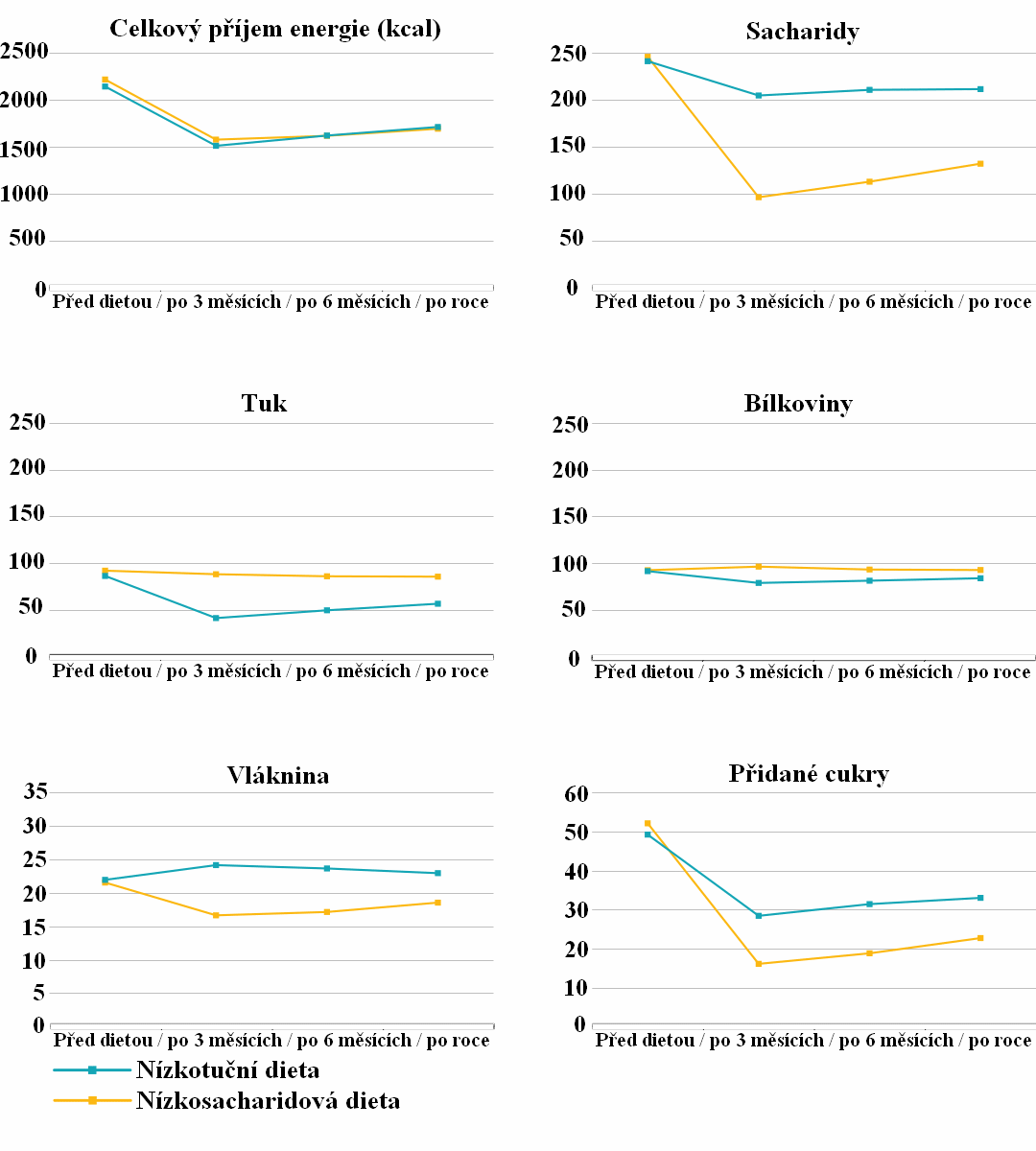
At month 12, the low-fat group had lost 5.3 kg and the low-carbohydrate group had lost 6.0 kg. This is not a statistically or clinically significant difference.
Furthermore, within groups, individual genotypes or insulin production played no role in weight change. This means that neither genotype nor the amount of insulin produced had an effect on success with either type of diet during this study.
Ironically, a confounding factor could be that both diets were based on high quality foods. For example, if the low-fat diet had taken in carbohydrates from sweetened beverages and refined grains, the effect on weight change might have been greater.
Some health indicators (BMI, body fat percentage, waist circumference, blood pressure and fasting glucose and insulin levels)improved in both groups. Even in these, there were no major differences between the groups.
At month 12, LDL cholesterol decreased significantly in the low-fat group (-2.12 mg/dL), while it increased in the low-carbohydrate group (+3.62 mg/dL). However, the low-carbohydrate group also significantly increased HDL cholesterol (+2.64, versus +0.40 mg/dL in the low-fat group) and experienced a greater reduction in triglycerides (-28.20, versus -9.95 mg/dL in the low-fat group).
Resting energy expenditure did not differ between groups at any time during the study. At month 12, it decreased significantly for both groups (-66.45 kcal for the low-fat group, -76.93 kcal for the low-carbohydrate group), compared with baseline.
Total energy expenditure did not differ between groups compared to baseline either. Just over 10% improved their metabolic syndrome, but again there was no significant difference between groups.
What does the study tell us?
The results of this study add to the body of evidence that there is no winner or loser between low-carbohydrate and low-fat diets, that is, as long as calorie intake and protein intake are roughly the same.
The caloric intakes of the two groups were almost identical, and the low-carbohydrate group ate a little extra protein (an average of 12.5 g extra per day).
The results of this study replicate some shorter trials[7] and longer, less controlled studies[8][9]. Although this study let people live their normal lives, it offered several benefits:
- Subjects had professional dietitian consultation throughout. Many studies, despite initial instructions, left their subjects to their own creativity.
- Subjects' food intake was regularly and randomly monitored using questionnaires where they reported what they had eaten in the previous 24 hours.
- The study strongly advised its participants to consume quality food instead of filling their refrigerators with junk.
- This is one of the larger studies, which reduces the risk of the result being a mere coincidence or statistical outlier.
Our understanding of the link between genetics and diet is improving all the time. However, this study tested 15 genotypes suspected of influencing the success of a low-carbohydrate or low-fat diet, and found no significant differences. The researchers promised to analyse the data in more depth.
Measured insulin production failed to predict changes in body weight. However, the researchers note that the effect of fasting insulin levels on predicting weight loss is worth further investigation[10][11].
As a final note, it is worth adding that not all participants managed to strictly follow the rules, which may have also slightly biased the results of the study.
However, the results are still very interesting and all that remains is to conduct a similar study that takes into account adherence to the set regimen.
What should you take away from this?
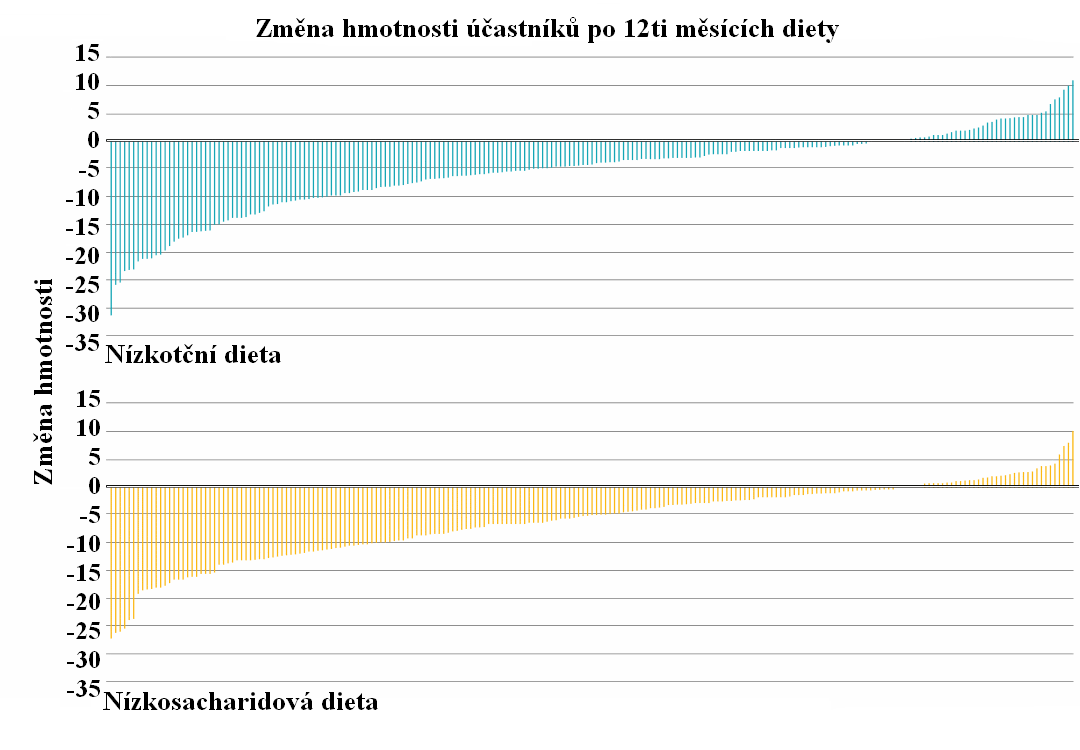
You need to consider one important aspect, and that is inter-individual variability.
As you can see in the figure, the weight changes were drastically different in the two groups - ranging from 32 kg lost to 11 kg gained!
Each bar represents the weight change of one participant.
Even counting the 10% of participants who gained weight during the study, the combined weight loss in this study was an impressive 3,000 kg!
References:
- Gardner CD, et al. Effect of Low-Fat vs. Low-Carbohydrate Diet on 12-Month Weight Loss in Overweight Adults and the Association with Genotype Pattern or Insulin Secretion: the DIETFITS Randomized Clinical Trial. JAMA. (2018)
- Gardner CD, et al. Comparison of the Atkins, Zone, Ornish, and LEARN diets for change in weight and related risk factors among overweight premenopausal women: the A TO Z Weight Loss Study: a randomized trial. JAMA. (2007)
- Sacks FM, et al. Comparison of weight-loss diets with different compositions of fat, protein, and carbohydrates. N Engl J Med. (2009)
- Pittas AG, et al. A low-glycemic load diet facilitates greater weight loss in overweight adults with high insulin secretion but not in overweight adults with low insulin secretion in the CALERIE Trial. Diabetes Care. (2005)
- Qi Q, et al. Insulin receptor substrate 1 gene variation modifies insulin resistance response to weight-loss diets in a 2-year randomized trial: the Preventing Overweight Using Novel Dietary Strategies (POUNDS LOST) trial. Circulation. (2011)
- Westman EC, et al. Low-carbohydrate nutrition and metabolism. Am J Clin Nutr. (2007)
- Hall KD, Guo J. Obesity Energetics: Body Weight Regulation and the Effects of Diet Composition. Gastroenterology. (2017)
- Johnston BC, et al. Comparison of weight loss among named diet programs in overweight and obese adults: a meta-analysis. JAMA. (2014)
- Bueno NB, et al. Very-low-carbohydrate ketogenic diet v. low-fat diet for long-term weight loss: a meta-analysis of randomised controlled trials. Br J Nutr. (2013)
- McClain AD, et al. Adherence to a low-fat vs. low-carbohydrate diet differs by insulin resistance status. Diabetes Obes Metab. (2013)
- Cornier MA, et al. Insulin sensitivity determines the effectiveness of dietary macronutrient composition on weight loss in obese women. Obes Res. (2005)
- Jensen MD, et al. 2013 AHA/ACC/TOS guideline for the management of overweight and obesity in adults: a report of the American College of Cardiology/American Heart Association Task Force on Practice Guidelines and The Obesity Society. Circulation. (2014)
Source: www.examine.com
Author: Michael Hull
Translated by Jaromír Uhlíř
Author: Šárka Randáčková No posts have been made yet.