





Intermittent fasting - a complete guide for beginners
 Author: Šárka Randáčková
 Intermittent fasting is currently one of the most popular trends in the world of health and fitness. People use it to lose weight, improve health and simplify their lifestyle.
Many studies prove that it can have a powerful effect on your body and brain, and can even help you live longer.
Below, we offer the only intermittent fasting guide you'll ever need.
What is intermittent fasting?
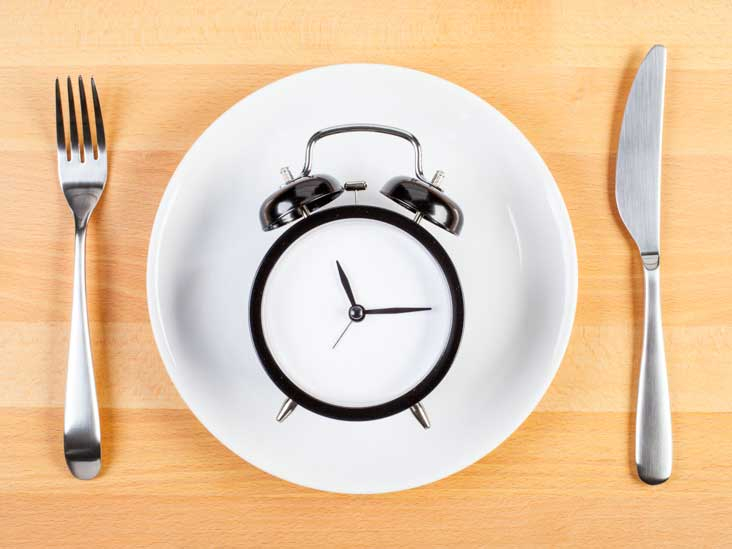
Intermittent fasting is an eating regimen where you alternate between cycles of fasting and eating. It says nothing about what you should eat. It is only about timing.
It's not a traditional diet. Rather, it is an eating regimen.
The classic intermittent fasting involves daily 16-hour periods of fasting or 24-hour periods twice a week.Humans have been fasting since the beginning of evolution. Sometimes it was for lack of food, sometimes it was mandated by the greatest religions.
Our ancestors certainly didn't have supermarkets, refrigerators, or food on hand at all times. As a result, our bodies have evolved so that we can function without food for extended periods of time.
Occasional starvation is even more natural than a steady supply of 3-4 (or more) meals a day.
Intermittent fasting has become very popular in recent years and several different methods have been used. All of them involve dividing the week into meal periods and fasting periods. In the fasting periods, one either eats not at all or very little.
These are the most popular methods:
- The 16/8 Method: also called the Clean Picking Protocol. It involves skipping breakfast and limiting the daily eating period to just 8 hours, for example from 1 to 9 pm. So you fast for 16 hours in between.
- Eat-stop-eat: This involves 24 hours of fasting once or twice a week. For example, not eating from dinner to dinner the next day.
- Eat 5:2: On two non-consecutive days, eat only 500-600 calories. The other 5 days, eat normally.
With all methods, you should lose weight, unless you compensate for the fasting with food on the remaining days.
I personally find the 16/8 method the easiest to follow. It is also the most popular.
How intermittent fasting affects your cells and hormones
When you fast, many things happen in your body on a cellular and molecular level.
For example, the body changes hormone levels to make stored fat more accessible.
Your cells also start repair processes that change the expression of certain genes.
Here are some of the changes that occur in your body when you starve:
- Growth hormone (HGH): Its levels skyrocket, up to 5 times. This is beneficial for weight loss and muscle gain, among other things.
- Insulin: Insulin sensitivity improves and its level drops dramatically. Lower insulin levels will make stored fat available.
- Cell repair: Cells begin repairing when you starve. This involves the process of cells pulling in and using proteins, which then accumulate in the cell. ese genes: Changes in gene function occur that are related to longevity and protection against disease.
All of these changes associated with intermittent fasting are beneficial to health.
Intermittent fasting is very good for weight loss
Weight loss is the most common reason people resort to it. By eating less, you should automatically eat fewer calories.
Intermittent fasting further alters the levels of hormones responsible for mediating weight loss. In addition to insulin and HGH levels, it also increases levels of the fat-burning hormone norepinephrine (noradrenaline).
These changes can speed up your metabolism by as much as 3.6-14%.
Weight loss through intermittent fasting is also confirmed by studies. For example, a 2014 study showed weight loss of 3-8% over a 3-24 week period. This is a very high number compared to most studies comparing weight loss.
According to this study, people also lost 4-7% of their waist circumference. This indicates that they lost a large amount of that dangerous fat that accumulates around important organs.
One study also shows that intermittent fasting makes you lose less muscle than normal calorie restriction.
Keep in mind, however, that intermittent fasting works mainly because you eat fewer calories overall. If you overeat during periods of fasting, you may not lose any weight at all.
Health benefits of intermittent fasting
Intermittent fasting has been the subject of many studies in both humans and animals.
These studies have shown strong positive effects on weight control and body and brain health. You may even live longer this way.
Here are the main benefits of intermittent fasting:
- Weight Loss: As mentioned above, intermittent fasting can help you lose weight without consciously restricting your caloric intake.
- Insulin Resistance: Intermittent fasting can help reduce insulin resistance, reducing blood sugar by 3-6% and fasting insulin levels by 20-31%. This should protect you against type 2 diabetes.
- Inflammation: some studies show a reduction in indicators of inflammation, a key driver for many diseases.
- Heart Health: Intermittent fasting can reduce LDL cholesterol, blood triglycerides, inflammation markers, blood sugar and insulin resistance. These are all risk factors for heart disease.
- Cancer: animal studies suggest that intermittent fasting may reduce the risk of some cancers.
- Brain health: Intermittent fasting increases levels of a hormone called BDNF in the brain and may help nerve cells grow. It may also protect against Alzheimer's disease.
- Anti-ageing: Intermittent fasting can increase lifespan in mice. Studies have shown that fasted mice can live up to 36-83% longer.
Keep in mind that the research is only in the early stages. Many of the studies have been small, short, and conducted on animals. Many questions have yet to be answered by human trials.
Intermittent fasting facilitates a healthy lifestyle
A healthy diet is easy, but it can be very difficult to stick to. One of the main problems is the complexity of preparing meals.
If you are intermittent fasting, it makes everything easier because you don't have to cook and plan as many meals.
Some people should be wary of starvation (or avoid it)
Intermittent fasting is definitely not for everyone.
If you're underweight or have had eating problems, you shouldn't try intermittent fasting without consulting a professional.
In such cases, it could be downright harmful.
Should women fast?
There is evidence that it might not be as beneficial for women as it is for men.
For example, one study showed that insulin sensitivity improved in men, whereas it worsened in women.
Although we have no human studies, in female rats starvation may have caused masculinity, infertility and irregular periods.
Recommended

There are anecdotal reports from women who lost their periods after fasting, but they returned after returning to a normal diet.
Women should handle fasting with care. Start with caution, and if period problems occur, definitely stop.
If you have fertility problems or are trying to have a baby, definitely save fasting for another time. And if you're breastfeeding or pregnant, fasting will probably be a bad idea.
Safety and side effects
The main side effect of fasting is feeling hungry.
You may also feel weak and lack mental capacity.
This may be temporary as your body will need to adjust to the fasting.
If you have health problems, you should consult your doctor before attempting to starve yourself
This is especially important if:
- You have diabetes.
- You have problems regulating your blood sugar.
- You have low blood pressure.
- You take medication.
- You are underweight.
- You have ever had trouble eating.
- You are a woman who is trying to get pregnant.
- You have ever had trouble with your period.
- You are pregnant or breastfeeding.
When all this is said, intermittent fasting is generally very safe. There's nothing wrong with not eating for a while. That is, as long as you are healthy and eating properly.
Frequently asked questions about intermittent fasting
1. Can I drink liquids during intermittent fasting?
Yes. Water, coffee and other soft drinks are fine. Do not sweeten coffee with sugar. A small amount of cream may be okay.
Coffee can be very helpful during fasting because it can suppress hunger.
2. Is skipping breakfast unhealthy?
No. The problem is that those who regularly skip breakfast usually live unhealthy lives. If you eat healthy food the rest of the day, it's okay.
3. Can I take supplements while fasting?
Yes. But keep in mind that some supplements (such as fat-soluble vitamins ) may work better when taken with food.
4. Can I exercise while fasting?
Yes, fasted workouts are fine. Some people recommend taking BCAAs before training.
5. Will fasting deprive me of muscle?
Any diet can deprive you of muscle. That's why you should exercise and take in plenty of protein. One study shows that intermittent fasting will deprive you of less muscle than regular diets.
6. Will fasting slow my metabolism?
No. Studies show that short-term fasting even speeds up metabolism. However, longer fasting (3 or more days) can slow metabolism.
7. Should children starve themselves?
That's probably a bad idea
How to get started
You've probably been intermittently hungry many times in your life. If you've ever had dinner and then not eaten until lunch the next day, you've survived 16+ hours without food.
Many people do this instinctively. They simply aren't hungry in the morning. I find 16/8 the easiest sustainable way to starve myself. I recommend trying that one first.
Once it starts to feel easy, you can try some of the more advanced ways of fasting.
Another way is to simply starve whenever it suits you. That is, when you're not hungry or don't feel like cooking, for example.
You don't need to plan your fasting in any structured way to reap at least some of the benefits.
I encourage you to experiment and try different methods until you find something that works for you and fits into your schedule.
Should you try intermittent fasting?
Intermittent fasting is not something that everyone has to try.
It's just one strategy that can improve your health. Eating real food, exercising and getting enough sleep are still the most important factors you should follow.
If you don't like the idea of starving yourself, you can safely ignore all of this. Just keep doing what works for you.
At the end of the day, diet is not a one-size-fits-all thing. The best diet is one that you can stick to for the long term.
Intermittent fasting is great for some people, but not for others. The only way to know which people you are is to try it.
If intermittent fasting makes you feel good and you can manage it long-term, it can be a useful tool for you in losing weight and improving your health.
Source: www.healthline.com
Author: Kris Gunnars, BSc
Original article title: Intermittent Fasting 101 - The Ultimate Beginner's Guide
Author: Šárka Randáčková No posts have been made yet.








