





Avoid the "JO-JO" effect! Lose weight properly and healthily once and for all!
 Author:
 The internet is literally full of articles on how to lose some pounds, which diet is the best, what the principle of weight loss is based on and what a calorie deficit is. We also devote a lot of space to these hot topics, but we haven't had time to mention one very important thing - the yo-yo effect. You've probably heard this phrase before, so you know that it's not exactly a favorable phenomenon for everyone whose goal is to reduce fat stores. Let's explain this principle in more detail, talk about what negatives it has on our health, and most importantly, how to prevent it safely.
Article content:

What is the yo-yo effect?
To begin with, we need to take a classic theoretical window and explain what the yo-yo effect actually is. Therefore, in order to shed pounds, we need to follow the principle of calorie deficit, take exercise and get enough rest. Losing the pounds is not such an effort, but what to do when we reach our "dream weight"? Practically everyone knows how to lose weight, but how to keep the often laboriously dropped pounds is a more complicated task.
The "yo-yo" works on the principle that you let it down and it comes back to you. And the yo-yo effect works in exactly the same way in the weight example - you lose a few pounds, you're happy, but then you go back to your original eating habits, loosen the reigns, and with a snap of a finger your weight is back to its original number, if not even higher. This diet is quite common, providing mostly women, but it doesn't avoid men either, regardless of age and the diet they choose to stick to. If this process repeats itself more often, it is popularly called a "perpetual dieter", in short, a person who sticks to a diet all his life but never sticks to one and puts the pounds back on over and over again. Before we move on to how to prevent the yo-yo effect, let's talk about its negative effects on health.
Permanent gaining and losing stimulates appetite
During weight loss, there is a decrease in the level of the hormone leptin, which is the hormone that regulates satiety. Normally, your fat stores release leptin into the bloodstream. This signals to the body that its energy stores are sufficient, or that you are full and do not need additional energy intake. When you lose some of that stored fat, leptin levels decrease and appetite increases proportionately. So we can say that the body is "looking" for a way to fill the fat stores you have reduced and therefore sends signals because you need to eat more and triggers the feeling of hunger. In addition, the loss of muscle mass during dieting causes the body to conserve energy.
Research suggests that if people follow a short-term oriented diet, whether we mean those three-day diets, weekly diets, based on brutal calorie restriction, or certain macronutrients, or eating only certain foods - in short, the type of diet they are unable to follow in the long term, within a year they gain back 30-70% of the weight they have lost. And as a bonus - one in three of these dieters even end up with a gain that exceeds their starting weight. This, of course, causes them to start another diet and the yo-yo (our dieter's weight) kicks in again and another yo-yo cycle begins.

The increase in body fat percentage
The second phase of the yo-yo effect (i.e. weight gain) usually means that not only does the weight increase, but the body fat percentage increases as well. This is due to the fact that in this phase the body stores fat much more easily than it builds muscle mass. Why? The reason is simple. For example, if you have been in too big a calorie deficit, or have simply been on some nonsensical short-term diet where your body has been starving, it will try to "stockpile" something when you return to normal eating, in case similar crap ever strikes you again.
The yo-yo effect often results in a doubling of body fat. The results of 11 out of 19 studies looking at the effects of the yo-yo effect on overall body fat percentage showed a clear predisposition for increased fat as a result of the yo-yo effect, particularly in the abdominal area.
Increasing risk of muscle loss
Following on from the previous point, there is also muscle loss. Not only is fat lost during weight loss, but some muscle mass is also lost. Because fat is more easily gained than muscle after weight loss, this can ultimately mean that you have actually lost muscle mass and gained fat instead. Muscle loss during dieting also logically goes hand in hand with an overall reduction in physical strength.
This can be treated simply - supplement your calorie deficit with regular training (ideally a combination of cardio with strength training). Exercise encourages the body to promote muscle growth even though fat is gradually lost. Furthermore, it is a known fact that higher protein intake is needed during weight loss. Ensuring sufficient intake of quality protein is thus a definite prerequisite for reducing muscle loss.
JO-JO effect increases the risk of developing cardiovascular disease
A condition in which the body goes through repeated cycles of weight loss and weight regain is associated with coronary heart disease, which means that the arteries that supply the heart begin to narrow. The fat gain that occurs during the yo-yo effect is even worse for the heart than obesity (and that's saying something). According to a study that observed nearly a thousand adults struggling with the regular yo-yo effect, the increase in heart disease risk is directly proportional to the size of the weight fluctuation - the more weight you lose and regain through the yo-yo effect, the greater your risk of developing heart disease. There is even scientific evidence to suggest that a repetitive cycle of gaining and losing weight doubles the risk of dying from heart disease. Is it worth it?
We'll stick with the heart. The yo-yo effect is also associated with an increase in blood pressure and can also, unfortunately, blunt the future positive effects of weight loss. However, it turns out that if you have been losing weight through pointless diets and then gaining it back through youthful indiscretion, you may not suffer any consequences after a while. After a while, the body recovers and everything can function normally.
The state of the "perpetual dieter" is constantly dissatisfied and frustrated
It's probably not surprising that perpetual weight loss and regaining is frustrating and can lead to depression. But worse, frequent weight changes lead to developing an unhealthy relationship with yourself. People then often really hate their body and torment it with pointless diets and subsequent weight regain. This condition can also lead to binge eating and socialisation problems.
Other health risks:
- The yo-yo effect has a detrimental effect on liver health
- Increased risk of developing type II diabetes
So we've summed up all the negatives, but let's get to the main one! How to prevent these things, how to create sustainable eating habits, lose weight and keep the weight off for good?
Set realistic goals
The first prerequisite for successful weight loss that results in dropped pounds and maintaining a healthy weight is setting REALISTIC GOALS. After years of unhealthy eating and gradual weight gain, getting back in shape is not a matter of days or weeks. In some cases, they are few even months. If you have been hunting your body for X years with constant "dieting" and regaining weight, you can't expect it to be fine in a week or two!Set yourself a reasonable calorie deficit, and most importantly ensure that the reduction is gradual - the faster you lose weight, the clearer it becomes that your intake is too low, increasing the risk of the yo-yo effect. Create eating habits that are sustainable for you in the long term.

Don't want everything right away, be patient, be persistent and be hard on yourself. You have to learn to hold the whip hand over yourself, because if you don't, who will? You are in control of what your eating looks like, your daily routine, and how it shows up on your scale. Set a REALISTIC but clear goal, and take incremental steps towards achieving it.
Don't diet, change your diet
Let's smoothly build on the last sentence of the previous paragraph. Ditch all the restrictive short-term diets and focus on building overall change - that is, eating habits that will last for the rest of your life. But don't change everything at once, because for many, this may be another subtle precondition to going back to square one. Start small and gradually build a lifestyle that will last forever. Adopt healthy eating principles without restricting yourself, find a sport you enjoy, pay enough attention to rest and sleep and try to reduce stress. The changes won't take long!
Avoid extremes
It doesn't matter if we're looking at over-restricting or eliminating a certain macronutrient, over-restricting caloric intake, or outright starvation. All extremes are wrong. The first step you need to take to prevent the yo-yo effect is to accept the fact that you need to learn to eat in a balanced and wholesome way. If people go on diets, and restrict their intake too much, completely giving up their favorite foods, eliminating baked goods, fruits, carbs, fats, and God knows what else, after a while, what happens is that they just give up that diet, go back to their original diet, and the weight flies up. Why? Because this type of eating is unsustainable in the long run. The more extreme the diet you choose, the harder it is to stick to.
Moreover, some extreme guidelines can have fatal health consequences if misunderstood and applied in practice by an amateur. They can be eating disorders, psychological problems, but also serious health complications such as chronic fatigue, anemia, organ failure, etc. And most importantly - why go to extremes when you can do without them? Why go to extremes when your diet can contain carbohydrates, fat, it can contain baked goods, fruits, in short practically anything you like, as long as you can incorporate it appropriately into your daily intake and CONTROL THE QUANTITY. Learn to filter the really important information, don't believe everything anyone on the internet advises. Above all, your diet should be varied, balanced and you should enjoy it.
Keep moving
A sedentary lifestyle leads to hell. This is not a metaphor, but a fact - a sedentary lifestyle is not good for your body. In fact, the human body is designed to be in almost constant motion. Therefore, if at all possible, you need to set up and maintain a regular exercise routine. In fact, it is not necessary to spend time 5 times a week in the gym crushing dumbbells when you are not enjoying it. EVERY MOVEMENT COUNTS! If you swap your car ride to the store for a walk, your body will definitely thank you. If our body is not expending energy, the only way to achieve a reduction is to accentuate the caloric deficit.
If you do both, i.e. set a reasonable calorie deficit and add physical activity, your body will be happy, you will lose fat, at best build some muscle and improve your overall health. However, it is very important to find a type of exercise that you find fun so that you can stick with it.
Psyche is the most powerful weapon
The psyche really is an insanely powerful tool. When we're stressed, whether it's because of work, time pressure, or because our weight isn't moving the way we'd like it to, levels of the stress hormone cortisol are elevated, which leads to a tendency to eat calorie-dense foods. We dedicated an entire article to cravings (link here). So try to reduce stress as much as possible - by creating healthy eating habits, building a positive relationship with your body, physical activity and getting plenty of rest, you should end up feeling better and happier.
Don't be discouraged by initial setbacks - after all, you've been troubling your body for quite some time, it really needs time to accept the new change and start to respond to it. Don't worry if you miss a calorie every once in a while - life isn't about having everything 100% under control, it's about knowing how to balance it all out. If you have a pizza or a filet mignon from mom once in a while, the world won't come crashing down and your weight loss doesn't have to be compromised either.
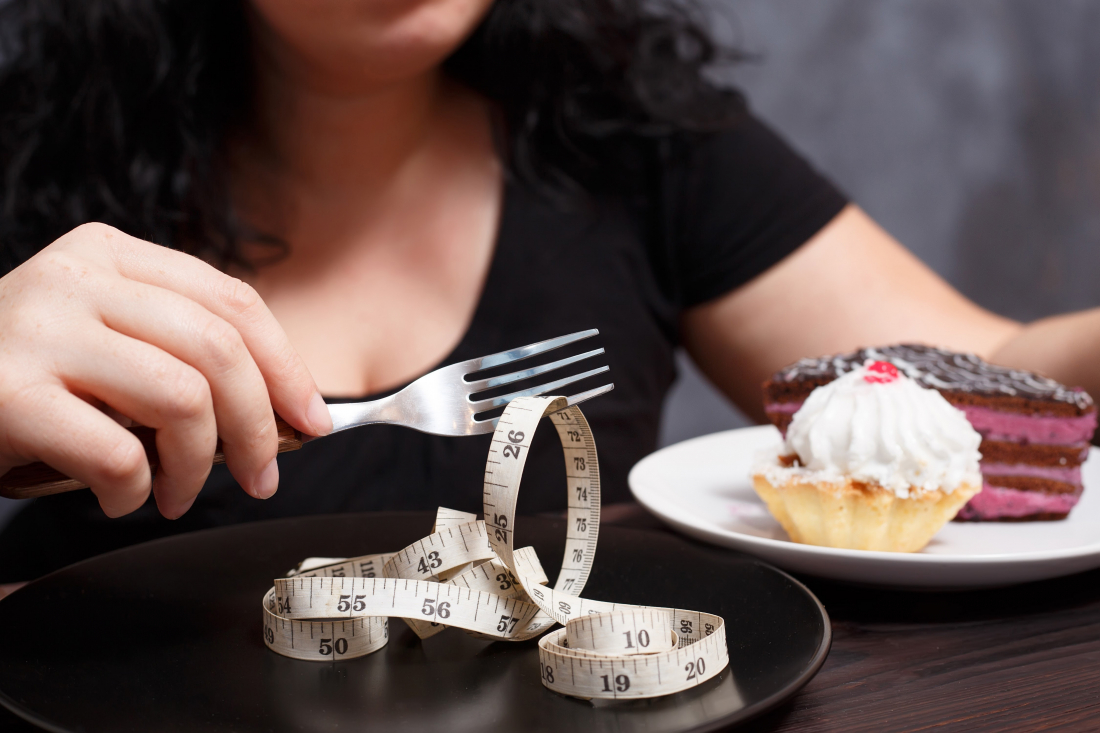
Don't be afraid to ask for help
If you're in a vicious cycle of losing weight and gaining weight, don't be afraid to reach out to an expert to help you find the right way out. But be careful who you put yourself in the hands of - unfortunately, not everyone who presents themselves as a nutritionist actually is. But if you need a "firm hand and order" it is advisable to reach out to a nutritionist who can help you set the right intake, or a trainer who can help you with technique and motivate you to exercise and shape your body.
What to take away from the article?
Losing weight is not a problem for virtually anyone, but keeping it off is more difficult. Many people struggle with the problem of the yo-yo effect, which consists of permanently repeating cycles of losing and gaining weight back. Unfortunately, this phenomenon has many negative effects on health and therefore needs to be eliminated as much as possible. Focus on making sure that your weight loss goals are realistic, that no dietary extremes lead to meeting them, and that your change in status leads you to make this a change for life. Focus on eating a varied, wholesome and balanced diet, get some exercise, get enough sleep, eliminate stress and reduce your pounds once and for all and learn to love your body!
Recommended
HiTec BS Blade 100% Fat killer
Prom-in Lean Solution
Extrifit Carni Liquid 120000mg
Sources:
https://www.ncbi.nlm.nih.gov/pmc/articles/PMC5139007/
https://www.ncbi.nlm.nih.gov/pubmed/15981894
https://www.ncbi.nlm.nih.gov/pubmed/25614201
https://www.ncbi.nlm.nih.gov/pubmed/25614198
https://www.ncbi.nlm.nih.gov/pubmed/25614202
https://www.ncbi.nlm.nih.gov/pubmed/27773644
https://www.ncbi.nlm.nih.gov/pubmed/27126087
https://www.ncbi.nlm.nih.gov/pubmed/21798863
https://www.ncbi.nlm.nih.gov/pubmed/27973438
https://www.ncbi.nlm.nih.gov/pubmed/8002684
https://www.nejm.org/doi/full/10.1056/NEJMoa1606148
https://www.ncbi.nlm.nih.gov/pubmed/10968377
https://www.ncbi.nlm.nih.gov/pubmed/19393389
https://ww
No posts have been made yet.








