





You want to be big and skinny? Then try this training program!
 Author: Šárka Randáčková
 What is the perfect look?
The perfect look is one that instantly shows that you are making an effort not only in the gym, but also in the kitchen! So:
- Wide, strong shoulders.
- Narrow waist: A sign of determination in the gym and in the kitchen.
- Strong legs.
When you combine these factors, you have a recipe for the perfect look, for a strong, athletic and symmetrical body.
Two things will lead you to this goal: A solid strength foundation and using that strength to build specific muscle groups.
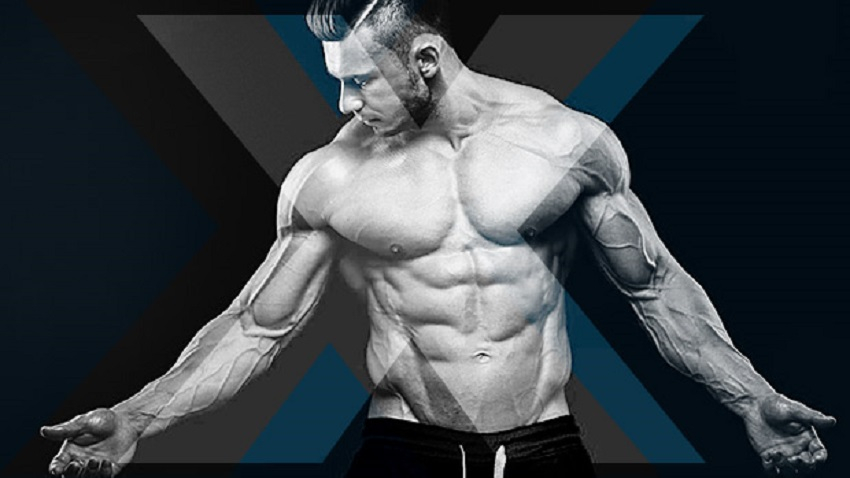
Key 1: Strength foundation
You can't build an impressive body without strength! The X-physique program is based on complex exercises, especially deadlifts and heavy overhead presses. These will bring the tension necessary to engage the maximum amount of muscle fibres. And above all , you will build a body that is as strong as it looks!
Key 2: Work on the volume of specific areas
This is where bodybuilding principles come into play.
Shoulders
The essential muscles are the side and back shoulders. Most people have overdeveloped front shoulders, and their posture makes them look like they're Neanderthal. Focusing on the lateral and back shoulders will bring even development to this area and add width and depth to the shoulders.
Upper back
Even the trapezius rhomboids play a vital role in your appearance. These muscles further help compensate for people who sit at a computer all day.
Bats
These accentuate the difference between the shoulders and the waist. By combining horizontal and vertical pull-ups, you will build lats that look like the head of a cobra. Exercises in the program will include variations of pull-ups, pulldowns and crunches, among others.
Quadriceps
The muscular quadriceps, especially the vastus medialis oblique, look impressive. They can also aid knee stability and definitely look great in shorts.
Calves
Genetics may not have favoured you, but like most athletes, you could certainly do with more of them. With a little effort, even the smallest chicken legs can be improved.
X-Physique training
You'll work out your upper and lower body twice a week, with one day dedicated to assistance exercises. Two days a week you will sculpt using cardio.
The goal is to shock the body: fatigue the muscles and work the maximum volume in the shortest amount of time. The workouts will therefore focus on three things: heavy weights, blood volume and mechanical tension.
1 - Heavy weights
You'll train huge sets with heavy weights, lower reps and individual breaks. This allows you to lift a lot of volume and rest long enough to not have to take weights off during the set. That kind of mechanical load will definitely jumpstart growth.
2 - Changes in mechanical tension
These are probably the most important when building muscle. Tension is the amount of load placed on a muscle over a given period of time. The problem is that enough athletes only think of heavy, complex exercises as load. For maximum growth, however, you need to focus on a variety of muscle contractions, not just heavy or explosive lifting.
Recommended
Czech Virus Pure L-Citrulline
Nebbia 3/4 sportovní legíny s vysokým pasem 406
Nebbia Legínové šortky s vysokým pasem 5” HAMMIES 615
L-Glutamine 500g 1+1
In one workout below, for example, you'll increase tension with partial reps and slow starts. In another, you'll accomplish this with giant sets and mid-rep breaks, range-of-motion work, and partial reps.
More or less every one of the exercises will work tension in some way, squeezing more out of each pack than if you just do regular sets and reps.
3 - Blood Volume
This one is also key for muscles: you need to get as much nutrient-packed blood into the muscle tissue as possible. Gigantic sets with heavy weight will help here. And at the end of the workout, you always add a brutal exercise that gets the maximum blood into the muscles.
The X-Physique training program
- Day 1: Lower Body A
- Day 2: Upper Body A
- Day 3: Sprint
- Day 4: Lower Body B
- Day 5: Upper Body B
- Day 6: Auxiliary exercises
- Day 7: 30-45 minutes of light cardio
Lower body A
| Exercise | Series | Repetition | Break | |
|---|---|---|---|---|
|
A |
Lunges |
10 |
10 |
30 sec. |
|
Use a pedestal to get under the parallels. Swing your leg in from 45° and get as deep as you can. Ascend only halfway through the rep and come back down, then up. That's one rep. |
||||
|
B1 |
Romanian deadlifts with wide stance |
7 |
10-12 |
45 sec. |
|
Feet more than shoulder width apart and toes turned out about 45°. |
||||
|
B2 |
Romanian deadlifts with narrow stance |
7 |
MAX |
1 min. |
|
Same weight as B1. Take three 1 second breaks on the way down. As many reps as you can handle (MAX). |
||||
|
C |
Bulgarian split squats with one arm |
4 |
6 |
1 min. |
|
One hand is on the side of the working leg. 6 reps with right leg, 6 with left, 6 again with right and 6 with left. That's one set. |
||||
|
D |
Walking lunges |
100 |
||
|
Perform the given number of repetitions in as few sets as possible and with as little self-pity as possible. |
Upper body A
| Exercise | Series | Repetitions | Break | |
|---|---|---|---|---|
|
A |
Rubber Stretch and Shoulder Dislocation |
3 |
12 |
30 sec. |
|
B1 |
Big axis push-ups in seated position |
4 |
6-8 |
MIN |
|
Keeping wrists above elbows, lower for over 3 seconds, up explosively and focus on maximal scapular lift for 1-2 seconds at the top. Pause as short as you can manage. (MIN) |
||||
|
B2 |
Negative bench press with one-arm dumbbells |
4 |
6-8 |
MIN |
|
Lower until elbows are at 90°, do not extend arms, keep constant tension. Breaks as short as you can manage. |
||||
|
B3 |
Chest presses on machine |
4 |
6-8 |
MIN |
|
Hold the peak contraction for 2 seconds. Try to push your biceps to the outside of your chest muscles as much as possible and your elbows together. Pause as short as you can manage. |
||||
|
C1 |
T axis pull-ups |
4 |
6-8 |
MIN |
|
With chest support if possible. Neutral or semi-neutral grip. Load up with a good amount of weight. Breaks as short as you can manage. |
||||
|
C2 |
Pulling the pulleys in close |
4 |
6-8 |
MIN |
|
Neutral grip, back arched toward the pulley and pull toward your back pockets. Hold the peak contraction for 2 seconds and lower for 3. Pause as short as you can manage. |
||||
|
C3 |
Lower pulley wide grip pull-ups |
4 |
8-10 |
MIN |
|
Use as little swing as possible to make the exercise harder. Pull to the upper chest for more involvement of the back shoulders. With proper weight selection, the last few reps should be very heavy. Do not remove the weights. If necessary, the last few reps will only be partial reps. Keep the breaks as short as you can manage. |
||||
|
D |
One-arm swing |
3 |
30 |
1 min. |
|
Take a heavy one-handed swing and focus on tension, not range of motion. Push it away from your body. By the end of the set, the range of motion will be pretty low. |
Chest Support T-Axis Pull-ups
One-arm swing
Lower body B
| Exercise | Series | Repetition | Break | |
|---|---|---|---|---|
|
A |
Difficult Eccentric Stumbling 2-1 |
3 |
12 |
45 sec. |
|
B |
Repeat front squat or safety squat |
5 |
10 |
90 sec. |
|
Controlled lowering, get halfway up, back down and all the way up. That's one repetition. |
||||
|
C1 |
Leg Press |
3 |
12 |
30 sec. |
|
High, wide stance. Controlled lowering and continue explosively into a hard contraction. |
||||
|
C2 |
Split squats with one arm and front leg on the base |
3 |
8-12 |
1 min. |
|
Pause for 15 seconds after the first rep, then briskly complete the rest of the reps. |
||||
|
D |
Hacken squats |
3 |
15 |
1 min. |
|
Stand like a frog. Heels together, toes at about 45°, knees pushing out. Hold constant tension, do not overstretch legs. |
||||
|
E |
Sissy squats |
4 |
MAX |
45 sec. |
|
If you still have some strength left in your legs, grab a 10 pound disc and attempt 8-12 reps. |
Weighted Eccentric Stumble 2-1
Split squats with one arm
Upper body B
| Exercise | Series | Repetitions | Break | |
|---|---|---|---|---|
|
A |
Cuban Press |
3 |
12 |
1 min. |
|
B1 |
Positive Bench press with big axis |
4 |
7-9 |
30 sec. |
|
Constant tension, do not overstretch at the bottom or top of the movement. Range of motion 80-90%. |
||||
|
B2 |
Meadows pull-ups |
4 |
7-9/each arm |
1 min. |
|
Strong contraction. Add weight each set to get more reps at the beginning of the set and less at the end. |
||||
|
C1 |
Shrugs with underhand grip |
2 |
MAX |
30 sec. |
|
C2 |
Barbell push-ups |
2 |
MAX |
30 sec. |
Destroy shoulders at the end of the workout
Perform exercises D1-D6 with one arm and in succession. Do the same immediately with the other. When one arm is exercising, the other is resting. Practice 3-4 rounds on each arm.
| Exercise | Series | Repetition | |
|---|---|---|---|
|
D1 |
One-arm push-up with support |
3-4 |
8-10 |
|
D2 |
Push-ups with one hand with support |
3-4 |
8-10 |
|
At the top, the one arm should be directly over the shoulder |
|||
|
D3 |
Reaching with the pulley |
3-4 |
8-10 |
|
D4 |
Positive pull-up with one arm lying on the side |
3-4 |
8-10 |
|
Do not go above shoulder level. |
|||
|
D5 |
L l lunges with one arm and extended eccentric phase. |
3-4 |
MAX |
|
Start with a normal L-up, but at the top, fully extend the arm and lower for 3-4 seconds. |
|||
|
D6 |
L pull-up with one arm |
3-4 |
MAX |
|
When you can no longer handle the heavier version of the lowering, finish the arm with a regular L clamp. |
Cuban Press
Meandows pull-ups
Shoulder Destruction
A day for assistance exercises
| Exercise | Series | Repetition | Break | |
|---|---|---|---|---|
|
A |
Repositioning, squats and push-ups with one-armed push-ups |
3 |
10/8/6 |
90 sec. |
|
B1 |
Renegade single-arm pull-ups |
3 |
5/side |
45 sec. |
|
B2 |
Ab Wheel Rolls |
3 |
8-10 |
45 sec. |
|
C1 |
Pull-ups of the bottom pulley while standing |
3 |
15/12/10 |
30 sec. |
|
C2 |
Triceps pulley press |
3 |
15/12/10 |
30 sec. |
|
D1 |
Reverse pull-ups |
50 total |
||
|
D2 |
Handles |
50 total |
||
|
D3 |
Backward lunges |
50/leg |
Repositioning, squats and push-ups with one-armed push-ups
Renegade one-arm pull-ups
Ab Wheel Rolls
Day of sprints or intervals
- Option A: Sprints on the belt. 3-5 minute warm up, then 12x20 second sprints with 40 second breaks. Increase speed in each set.
- Option B: Go outside and alternate different distances of sprinting and walking for 20 minutes. Keep it simple, work hard and rest as needed.
- Option C: Cycling intervals. 5 minutes warm up, then 15x30 seconds of pedaling and 30 seconds of light pedaling.
Meals for the X-Physique program
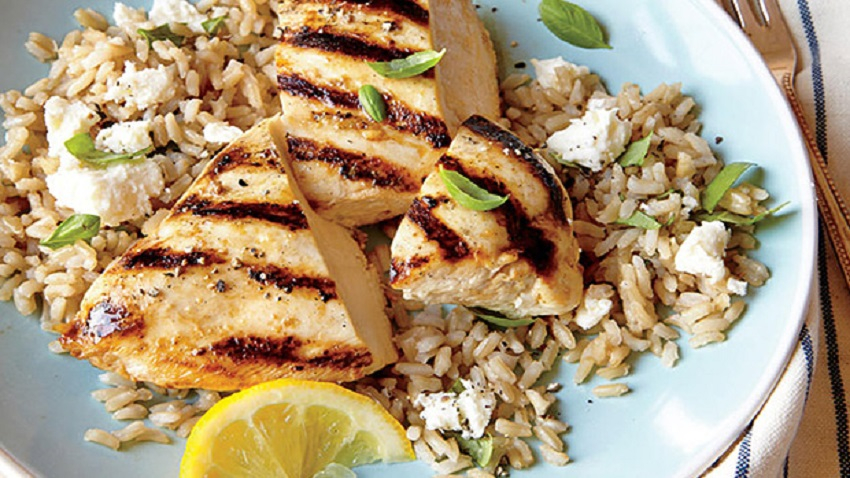
Eat maintenance calorie levels on training days, be in deficit on rest days. This will help you maintain and build muscle in key areas and carve at the same time.
A basic schedule looks like this:
Gym days
- Calories.
- Protein: Bodyweight x 2.6 grams
- Carbohydrates: Bodyweight x 3.3 grams
- Fat: Remaining Calories
Days off or cardio
- Calories: 20% below training days
- Protein: Body weight x 2.6 grams
- Carbohydrates: Body weight x 1.1 grams
- Fat: Remaining Calories
As an example, let's take a highly active 90 pound guy:
Gym days
- Calories: 90 x 33 = approx. 3000
- Protein: 90 x 2.6 = approx. 240 grams
- Carbohydrates: 90 x 3.3 = approx. 300 grams
- Fat: approx. 93 grams
Note on fats: Take the values for carbs and fats and multiply by 4, Add these values and subtract the result from your total daily calorie intake. This is the number of calories from fat you should be taking in. Divide by 9 to get the number of grams.
Days off or cardio
- Calories: 3000 x 0.8 = approx. 2400
- Protein: 90 x 2.6 = approx. 240 grams
- Carbohydrates: 90 x 1.1 = approx. 100 grams
- Fats: approx. 115 grams
Stick with the program for 8-12 weeks, follow the diet, focus on progressive overload, controlled reps, and watch your body change before your eyes.
Source: www.t-nation.com -The X-Physique Program
Author.
Author: Šárka Randáčková No posts have been made yet.








