





Which deadlift style is ideal for me? And is the sumo variant really easier?
 Author:
 When someone tells you that a deadlift can be done in two basic variations, it's probably not new to you at all. But even though you'll learn in today's article that there are actually three variations, you may have ever wondered if each of these variations of the same exercise is actually completely different. And maybe that's why we tend to say that one of them is easier, and the right guys who don't lift as much but lift a different variation are much more manly. So today's article will be about whether one variant is really easier, which one to choose, and whether it makes any sense at all to dismiss the other variant.
Conventional, sumo and?
The most significant finding for most readers of today's article will most likely be the discovery that , in addition to the conventional and sumo deadlift, we also distinguish the so-called semi-sumo, which today we tend to lump in with the conventional sumo deadlift, even though it has little in common with it. So let's first introduce the different styles of deadlift in more detail in our article.
Conventional deadlift
In the case of the conventional deadlift, there is probably no need for too long a description. This type of deadlift is performed with the feet roughly shoulder-width apart, thus limiting the influence of the quadriceps and gluteals quite effectively.
Instead, most of the load is directed to the hamstrings, back muscles and consequently the entire posterior chain. The conventional deadlift will primarily benefit those of you who:
- Have very long arms
- Have long legs that provide ample room for hamstring development
- Ideally have a shorter torso that allows them to lift heavier loads
And of course, it is suitable for any person who wants to focus on developing their back muscles and hamstrings in their training, as you would be hard pressed to find a better and more comprehensive exercise for these muscle groups.
Sumo deadlift
The Sumo deadlift differs from the conventional deadlift at first glance because the basic difference is the position of the feet. Instead of a slight shoulder-width straddle, competitors have their feet almost at the individual discs and their toes pointing outwards. Then all they have to do is to engage their quadriceps and with a straight back, get into the upright position that marks the successful completion of the exercise.
As you've probably guessed, the name itself is derived from the stance that sumo wrestlers perform before a match. Much less strain is placed on the back muscles, and instead almost all the work is done by the quadriceps and gluteals. The sumo deadlift is especially suitable for those of you who:
- Have long arms, which, as with the conventional deadlift, significantly shorten the range of motion
- Have shorter legs and a longer torso
- Ideally love challenging leg workouts multiple times a week
And of course, this is an amazing exercise for any athlete who isn't afraid of challenging leg workouts. Even if you prefer the classic deadlift, the sumo is hard to compete with in a leg workout after the various squat variations. Even at higher loads, most practitioners can follow a strict technique and comprehensively exercise almost all the muscles of the lower limbs.
Polosumo deadlift
The Polosumo is a variant that is almost unknown today, but which combines the best of both of the above exercises. The main difference is that the foot position is slightly wider than the grip (but not nearly as wide as the sumo), but otherwise the technique is more like a conventional deadlift. While sumo extremely isolates the leg muscles, the classic puts the primary load on the back and hamstrings, and the semi-sumo is something of a compromise that, when performed correctly, loads everything from the calves to the traps. Those of you who:
- Feel that neither sumo nor the conventional deadlift suits them.
- They don't have as strong a grip and feel that the position of their legs in the conventional deadlift makes it difficult for them to complete the movement and hold the dumbbell.
- They do not have a physique predisposed to either type of deadlift.
It may be useful to add a few more details to this not-so-common movement to avoid misunderstanding the situation. The Polosumo is a movement that comes from our evolutionary setup and has overlap into everyday life. If we need to pick up a certain not-quite-light object of irregular shape, it is logical to walk around it and then pick it up. Indeed, few objects are shaped like a dumbbell and can be pulled higher up the thighs. The advantages of the semi-lumbar have been realised by a number of successful and famous athletes, led by Ed Coan, who, according to the International Sports Hall of Fame, has set 71 world records.
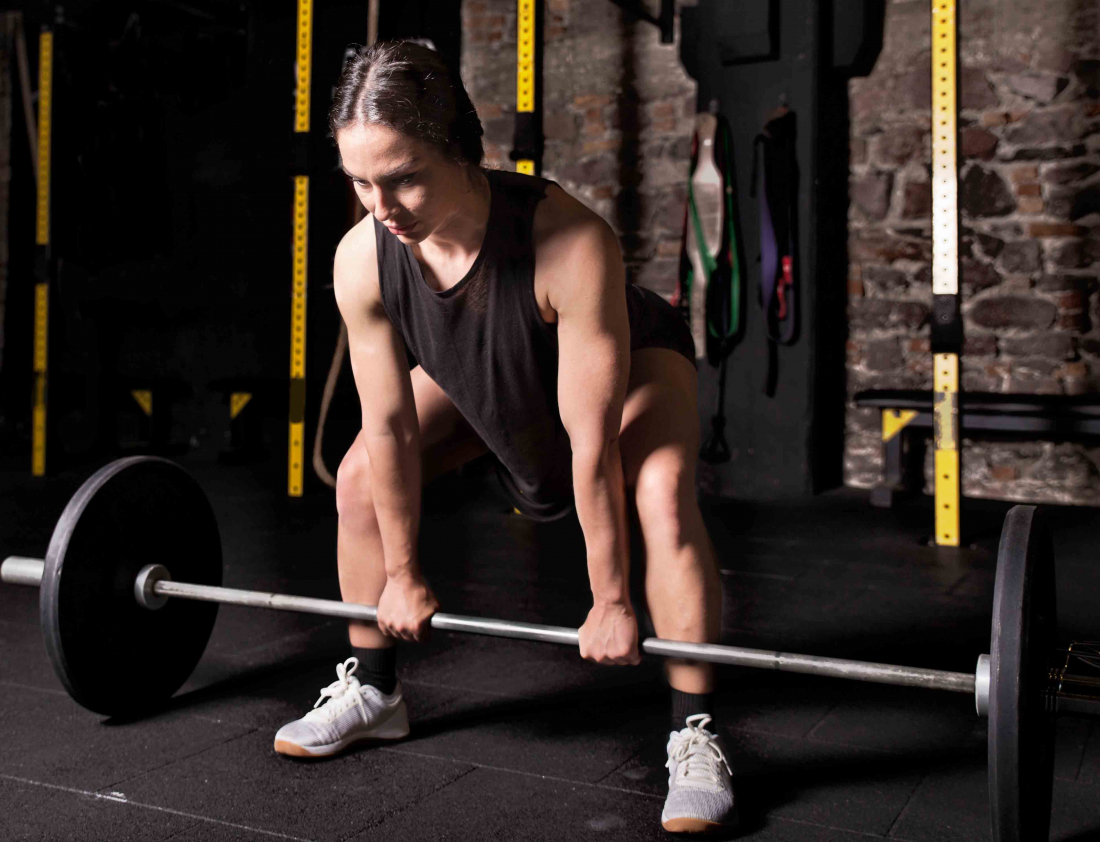
"Polosumo combines the best of both conventional and sumo deadlifts and is definitely worth a try."
Every deadlift has its pros and cons
Whichever variant of the deadlift you look at, you'll find some pros and cons to it. The conventional deadlift often overloads the hamstrings and if you deviate from the correct technique, there is a risk of a prolapsed disc, while the sumo deadlift requires extreme hip mobility, without which there is a risk of injury. And I could go on with more examples.
Recommended
Prom-in Vita Solution 2.0
Nutrend Magneslife instant drink powder
Nebbia Legíny na cvičení ROUGH GIRL 616
Nebbia Dámské kompresní tílko INTENSE Ultra 835
The message of this paragraph, however, is rather that if you are a recreational athlete, no one is telling you that you have to prefer one style or another. After all, there is nothing stopping you from incorporating at least a few lighter sumo moves into your leg training and applying a conventional move to your back training for a change. In fact, whichever option you prefer, it is a great comprehensive exercise that has huge overlap with a wide range of other sports. Regardless of whether you go running, swimming, fencing, wrestling, or wall climbing, strong legs, a functional mid-body, and sufficiently developed back muscles will always be appreciated, plain and simple.
Is sumo really easier?
Since a number of athletes who prefer sumo lift incredible weights, the belief that it is some sort of lighter version has become widespread, especially among lay gym-goers. In fact, when one observes the performances of shining stars such as Yury Belkin, Cailer Woolam and Czech athlete Marek "Folha" Zych, one is left with a real sense of wonder. In any case, that doesn't mean that they have it any easier - by and large these athletes are able to use their physical constitution to perform such incredible feats. However, if Eddie Hall or Thor were to try this option, they probably wouldn't lift much more than they currently lift on a conventional deadlift.
Moreover, the conditions are the same for everyone and if you feel that sumo is easy, there is nothing easier than to start practicing it too, going to competitions and winning titles. You might find out at the very second training session that it really isn't that easy, unless you have the genetically determined physical constitution for it.
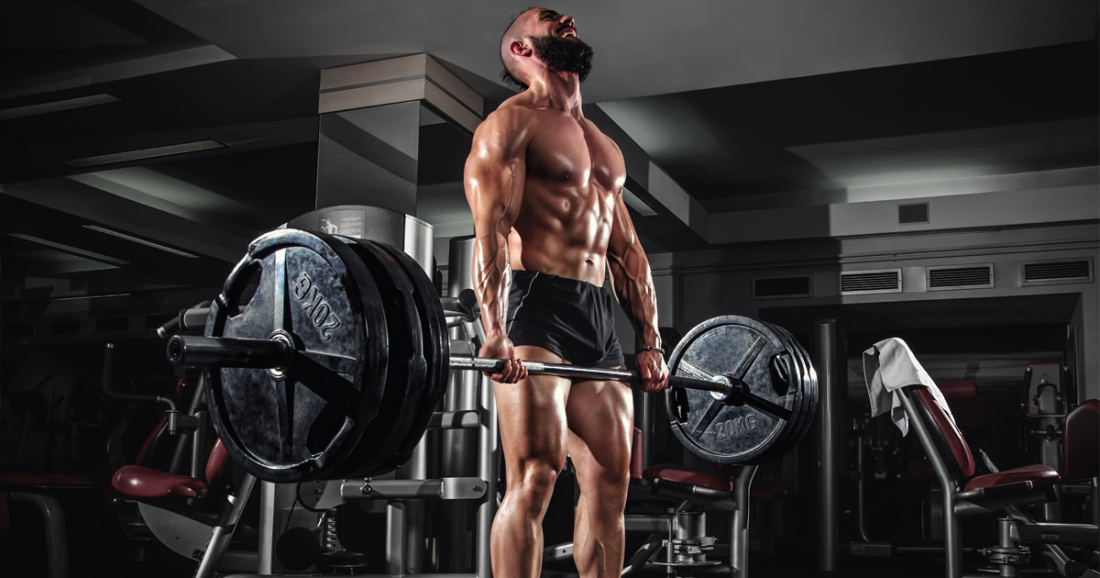
"Although a lot of competitors use the sumo deadlift, this variation is definitely not for everyone."
What to take away from today's article?
There are a few things you should take away from today's article. Probably the most important one is that unless you're an athlete set on a particular direction, there's absolutely no harm in alternating between different deadlift variations. Sumo can be used in leg training, while the classic deadlift fits better in back training. And definitely don't resist the semi-sumo either, especially if you feel that your physical constitution doesn't even allow you to profile yourself in a certain variation. It's a really great exercise that puts a load on absolutely your whole body. Oh, and don't forget that sumo is definitely not easier than a conventional deadlift.
No posts have been made yet.








