





WALKING - the easiest and most useful way to improve your physique and not hurt your progress!
 Author: Šárka Randáčková
 Interval training (HIIT) has become the norm when it comes to fitness. What about trying a different method of burning fat? Today, we'll explore the benefits of walking at a steady pace. For most readers, such walking will be quite beneficial.
What you should know
- If you work out, walking is the easiest and most useful way to improve your physique and not hurt your progress.
- Walk 3-6 hours a week, and you'll burn fat and increase your work capacity. Use an uphill walking program and never hold on to the handles on your belt.
- Walk 4-10 times a week. As a beginner, try to burn about 300 calories. Intermediate? 400 calories. Advanced will aim for 500 calories.
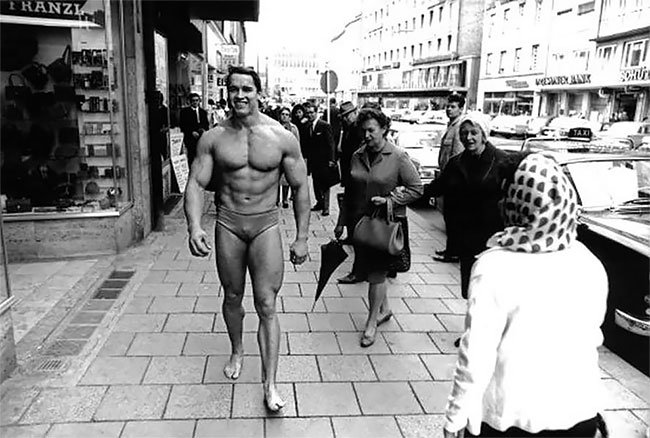
10 Benefits of Walking
1 - It doesn't add to the workout load.
- If you overdo it with your cardio intensity, it's easy to overtrain. You just can't do that with walking. You can walk for miles and the worst thing you risk is strained muscles around your shins.
- Of course, don't overdo it here either and wear comfortable shoes.
2 - Walking will help you recover from your workout.
- When you get off the treadmill, you'll feel better than you did before the workout started.
- Your blood flow will increase, which will speed up injury healing and recovery.
- Some even claim that walking improves nerve positioning and the transmission of electrical impulses. Maybe that's why muscle aches and pains decrease a bit after walking.
3 - You burn a lot of fat, and almost no muscle.
- The intensity is low, which means you'll burn primarily fat. 10 minutes of walking is useless, of course, but 4-8 hours a week will burn some fat.
- But we're all about muscle, right? Intense cardio uses glucose as fuel. Normally this isn't a problem because you have glycogen stores in your body, but these are depleted in the diet, and the body starts taking from amino acid stores. And those come from our precious muscles.
- This is a problem because the body is trained to take from the stores of what you get the most of.
- If you're fat, great. As soon as you start moving, the body draws from fat stores. But if you're muscular, the body sees that as a waste, and covers the caloric demands of the workout from muscle stores.
4 - You don't change your muscle fiber composition.
- Walking stimulates type I fibers, not type II. HIIT uses type II and turns them into medium-strength, endurance type IIa fibers. And you want bigger, stronger type IIb or IIx fibers.
- A 30 second interval seems short, but for a strength athlete, that's a lot of time, and the body will adapt to it.
5 - Walking can build aerobic capacity.
- You won't become a marathoner, but you will improve your VO2 Max.
- Speeding 4.0 mph uphill - without holding on - is not as easy as it seems. If you do it regularly, your VO2 Max can get into the 50+ range, which is optimal for heavy barbell workouts.
- A person with decent fitness should be able to maintain that pace for quite a while. Walking helps with that.

6 - Stress Relief.
- When you walk, you will be silent, think and escape problems. In fact, after a walk, the world usually seems better to you than before.
7 - It's functional.
- Functional means that the exercise benefits your daily activities. Walking is probably the most important functional activity for everyone, because without the ability to move, it's pretty hard to survive.
8 - Walking won't harm you in any way and it's hard to technically mess it up.
- If you have problems with your knees or back, you can probably manage walking without difficulty.
- The biggest mistake is holding on to the waist handrails, especially on devices with an uphill walking feature.
- If you hold on to them, you'll actually be walking on level ground because your body will be perpendicular to the belt.
9 - For strength athletes, walking is better than running.
- Many strength athletes notice that their performance and explosiveness decreases when they run regularly!
- And the heavier you are, the worse idea it is to go running!
- I'm not talking about sprints, of course.
10 - Running on an empty stomach.
- You exercise on an empty stomach because your body lacks carbohydrates, thus it will use fat for energy. I agree with this and walking is ideal here.
- If you do something more intense, you'll burn a bunch of muscle - if you have any.
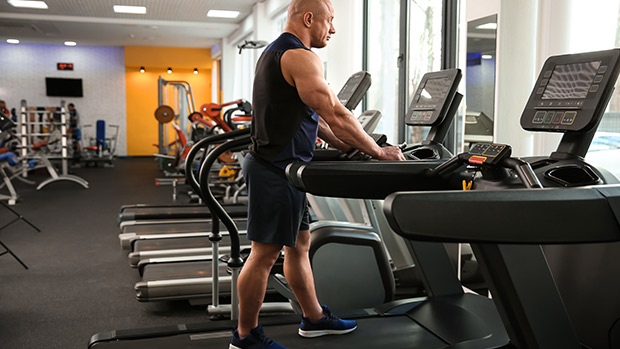
The only downside
Walking is time consuming. I recommend a minimum of 3 hours a week to burn fat , but 6 is ideal. At the pace I recommend, you won't be able to read. Don't even try it!
You can kill time watching TV, talking, listening to music, etc. I'm sure you spend a lot of time in front of the TV every week. I suggest you do it on tape.
When to go?
Timing is not critical. If you are concerned about fitness and health, walk when you want. You don't even have to walk the whole interval at once. If you are concerned about weight loss, it is best to walk in the morning, before breakfast.
The second best time is after a heavy weight training session. You'll be depleted of glycogen, so your body will burn fat.
How to do it
Walk briskly and occasionally set a hill on the machine. The length will be reasonable. The hills will increase your calorie burn. Find a pace at which you burn about 8-10 calories per minute. This will still be walking, so muscle catabolism will be minimal.
If you can't do the whole interval at once, you're probably working too hard.
For cardiovascular benefits and calorie burning, walk for 30 minutes or more. Some mileage is better than none, of course, but 3, 4 or 5 miles will already burn some fat with regular repetition.
Walking training - comments
- A beginner's program is easy enough for most people.
- The intermediate program is best suited for people who work out regularly.
- You want to work your way up to the advanced program gradually, especially if you weigh under 90 pounds.
- The smart thing to do is to start with a program that is easy and add on. You shouldn't get even close to failure. If you do, you're at least one level higher than where you should be.
- Even if it seems easy to you, start the program from the beginning, not the middle. If you don't make it through the first week of the beginner program, you're in disastrous shape!
- I suggest a frequency of 4 x per week. If you want to go more than once, redo any workout from the week.
- Each day there are small changes in speed, incline or time, so pay attention and try to stick to the program. The small changes will buy in over time.
- Never hold on to the handles!
- You don't have to warm up. But if you want to, I don't forbid it.
- I wrote this program for the treadmill so that I could accurately control pace, incline, and you didn't have to worry about the weather.
- The things listed above are hard to control outdoors. Walking in the outdoors is great, of course, so somehow you'll figure it out. For example, you could add a weighted vest or weights to your pack to make it harder to walk.
Recommended

Nebbia Dámský top s dlouhým rukávem INTENSE Sheer 847

Czech Virus Natural Coenzyme Q10 60

Nebbia Washed-off oversized tričko HERITAGE 355

Nebbia Crop top mikina MUSCLE MOMMY 619
How to select a level
- Beginner: A speed of 5.5 km/h and a gradient of 5% would be a problem for 45 minutes.
- Intermediate: A speed of 6.5 km/h and a gradient of 5% would be a problem for 45 minutes, but the beginner program can handle it.
- Advanced: Can handle a speed of 6.5 km/h/ha gradient of 5% for 45 minutes.
- Notes: The program is written like this - Speed (km/h) @ gradient (%) X time interval in minutes, or 5.5 @ 4% 40' means you have to go at 5.5 km/h at 4% gradient for 40 minutes.
Program for beginners
| Week | Day 1 | Day 2 | Day 3 | Day 4 |
|---|---|---|---|---|
|
1 |
4,8@1% 30' |
4,8@1% 30' |
4,8@1% 30' |
4,8@1% 30' |
|
2 |
5@1% 33' |
5@1.5% 33' |
5@1% 33' |
5,2@1% 33' |
|
3 |
5,2@1.5% 35' |
5,2@2% 35' |
5,2@1.5% 35' |
5,3@1.5% 35' |
|
4 |
5,3@1.5% 37' |
5,3@2.5% 37' |
5,3@1.5% 37' |
5,5@1.5% 37' |
|
5 |
5,5@2% 39' |
5,5@3% 39' |
5,5@2% 39' |
5,6@2% 39' |
|
6 |
5,6@2% 41' |
5,6@3.5% 41' |
5,6@2% 41' |
5,8@2% 41' |
|
7 |
5,8@2% 43' |
5,6@4% 43' |
5,8@2% 43' |
6@2% 43' |
|
8 |
6@2% 45' |
5,6@4.5% 45' |
6@2% 45' |
6,1@2% 45' |
- Week 9 and beyond - Progression to the intermediate program.
- Do cardio a minimum of 4 times, maximum of 6 times per week. You can feel free to workout 2x a day, but no more than 6 total workouts per week.
- Try to burn at least 300 calories in each workout where you choose not to walk.
Intermediate program
| Week | Day 1 | Day 2 | Day 3 | Day 4 |
|---|---|---|---|---|
|
1 |
5,6@2% 35' |
5,6@2% 35' |
5,6@2% 35' |
5,8@2% 35' |
|
2 |
5,8@2.5% 37' |
5,8@3% 37' |
5,8@2.5% 37' |
6@2.5% 37' |
|
3 |
6@3% 40' |
5,8@4% 40' |
6@3% 40' |
6,1@3% 40' |
|
4 |
6,1@3% 42' |
5,8@5% 42' |
6,1@3% 42' |
6,3@3% 42' |
|
5 |
6,3@3% 44' |
5,8@6% 44' |
6,3@3% 44' |
6,5@3% 44' |
|
6 |
6,5@3% 45' |
5,8@7% 45' |
6,5@3% 45' |
6,6@3% 45' |
|
7 |
6,6@3% 45'+ |
5,8@8% 45'+ |
6,6@3% 45'+ |
6,8@3% 45'+ |
|
8 |
6,8@3% 45'+ |
5,8@9% 45'+ |
6,8@3% 45'+ |
6,9@3% 45'+ |
- Week 9 onwards - Progression to the advanced programme.
- Cardio exercise a minimum of 4 x, maximum of 8 x per week. You can feel free to workout 2x a day, but no more than 8 total workouts per week.
- Try to burn at least 400 calories in each workout where you choose not to go.
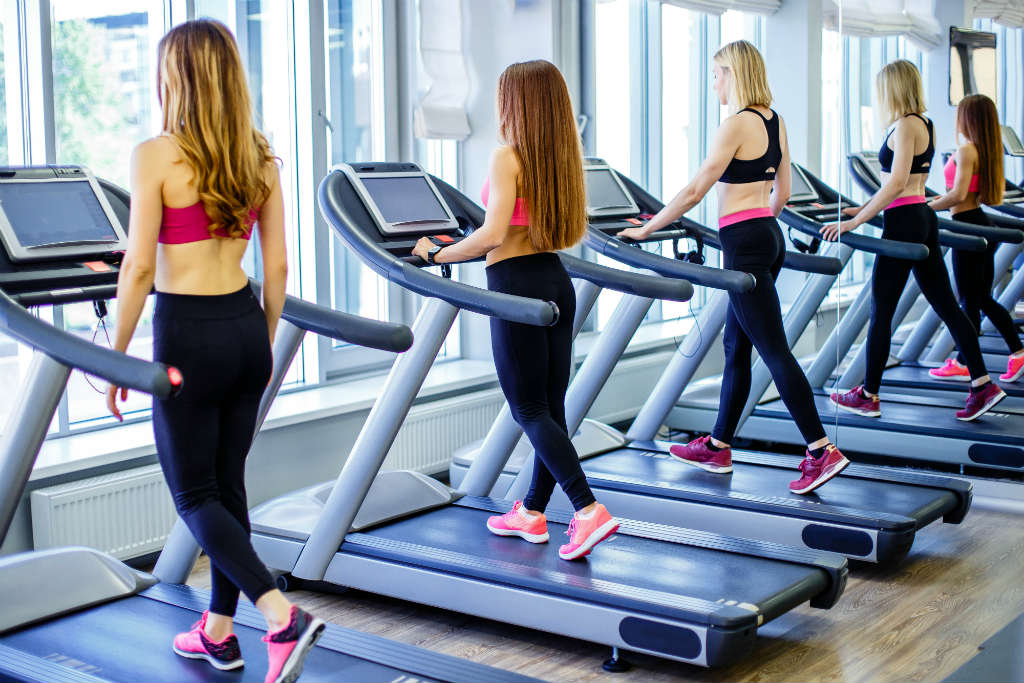
Advanced program
| Week | Day 1 | Day 2 | Day 3 | Day 4 |
|---|---|---|---|---|
|
1 |
6,8@2% 35' |
6,5@5% 35' |
6,8@2% 35' |
6,9@2% 35' |
|
2 |
6,8@2.5% 38' |
6,5@6% 38' |
6,8@2.5% 38' |
7@2% 38' |
|
3 |
6,9@3% 41' |
6,5@7% 41' |
6,9@3% 41' |
7,2@2% 41' |
|
4 |
6,9@3.5% 43' |
6,5@8% 43' |
6,9@3.5% 43' |
7,4@2% 43' |
|
5 |
7@4% 45' |
6,5@9% 45' |
7@4% 45' |
7,4@2% 45' |
|
6 |
7@4% 45'+ |
6,5@10% 45'+ |
6,5@4% 45'+ |
7,4@2% 45'+ |
|
7 |
7,2@4.5% 45'+ |
6,5@11% 45'+ |
7,2@4.5% 45'+ |
7,4@2% 45'+ |
|
8 |
7,2@5% 45'+ |
7,2@12% 45'+ |
7,2@5% 45'+ |
7,4@2% 45'+ |
- Cardio exercise minimum 4 x, maximum 10 x per week. You can easily workout 2 x's a day, but no more than 10 total workouts per week.
- Try to burn at least 500 calories in each workout where you choose not to go.
And go!
Beautiful energy system workouts and complex lactic acid routines are definitely effective, but you can get in shape without them!
In fact, you don't have to look further than your own two feet to get sculpted!
Walk, exercise, eat sensibly and the sculpting will come.
Source: www.t-nation.com - Get Ripped. Get Walking.
By Tim Henriques
Author: Šárka Randáčková No posts have been made yet.








