





Training the center of the body in the twenty-first century
 Author:
 I present you Krásno-Břich 5000 :-) , a revolutionary mid-body training device created by the most credible scientists to give you a fantastic belly that is both SEXY and FUNCTIONAL. For just three installments of 500Kč, you too can.....
You must be familiar with ads like this that promise the unbelievable.
Sorry!!!
Everyone wants a strong, eye-pleasing midriff. The vultures behind the advertising slogans know it. That's why they are so persistent in trying to sell you tools that are supposed to help you achieve this universal goal.
But you don't need to pick up the phone or pay three installments or a nominal price for an amazing device. You just need to want to listen.
A quick definition of the center of the body
Here's the simplest definition of center of the body. Think of it as a box made up of the following walls.
- The gates at the top
- Pelvic floor at the bottom
- Abdominal muscles (rectus abdominis, TVA) in front
- Back muscles (erector spinae, multifidi) at the back
- Lateral stabilisers (quadratus lumborum, musculus obliquus externus/internus abdominis) on the sides
And that's it? Not quite. We can argue that muscles like the glutes and latissimus are important for stability, but for now let's stick with my simple description.
This definition of the midsection will ensure that you are clear that the midsection is more than the six-pack rectus abdominis (rectus abdominis).
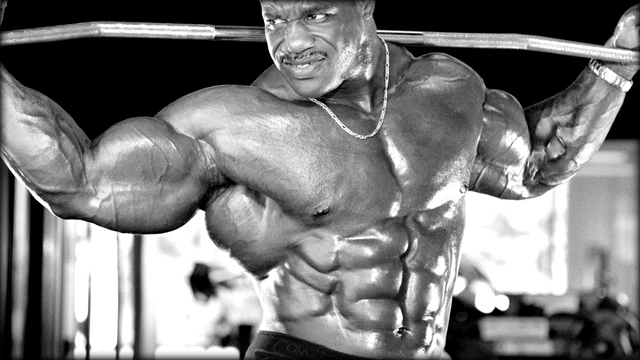
Likewise, stability requires something more difficult than lying on your back all day and pulling in your abs.
Before we get to the exercises I use and prescribe, let's address two myths about mid-body training that just won't go away.
Myth 1: You ONLY need squats, deadlifts, overhead presses, and similar exercises to build your midsection.
This debate has been going on for years. Some trainers will tell you that all you need to do is incorporate multi-joint movements like squats, deadlifts, and overhead presses into your workout in the first place and - voila- your midsection is just fine.
Not so fast, tough guy.
In a nicely balanced system, every part of the midsection does its necessary amount of work. Think of it this way:
- Your lower back muscles are working at 100%
- Your abs are working at 100%.
- Your left lateral stabilizers are working at 100%.
- Your right lateral stabilizers are working at 100%
But how often do you see this?
I don't know about you, but I don't see it very often.
Look at the picture below. It's a customer who came to IFAST (the author's gym) about six months ago. He wasn't doing any squats or deadlifts (he wasn't actually doing any bilateral movements) because every bilateral lift was causing pain in his lower back.
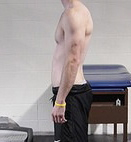
Any idea why?
He wasn't distributing the load well!
Instead of each part of his midsection taking its necessary share of the load, his lower back was getting an excessive dose. One way to put this is that his abdominals and lateral stabilization were working at 50% of their capacity, forcing his lower back to not only take its share of the load, but to work for other muscles as well.
Of course his back hurt.
This is a prime example of why supplemental mid-body work is important. If you have your mid-body aligned in a front-to-back and side-to-side direction, then squat and deadlift. Just make sure you maintain that balance.
But if it's not balanced, you need some of that extra work to improve your stabilization habits and get those weak spots in order.
Myth 2: Sit-ups and crunches aren't that dangerous.
I can't believe we're still arguing about this one.
I was hoping that by this time we'd all have put shortcuts and sit-ups on the back burner. I really think some coaches simply enjoy being able to go against the flow.
I also think that some people who post too much on the internet don't train enough people to get enough insight into what is safe and effective.
You may not like Stuart McGill, but the guy knows a lot about the spine. If you want a healthy lower back, there are safer and more effective ways to train your abs than doing sit-ups and enjoying that unique pleasure associated with a bulging disc.
The new argument is that crunches "aren't so bad." As for the lower back, I might even agree with that - a properly executed shortening moves the thoracic spine, not the lumbar one.
But think about the effect of crunches on the whole body - such a crunch trains the rectus abdominis by pulling the rib cage downward..
When we pull the rib cage down, we increase the thoracic kyphosis. This starts a cascade reaction - we increase the kyphosis, we lose tension in the thoracic spine. This continually puts our shoulder blades in a bad position, not to mention it also puts our shoulder joint at increased risk for painful shoulder syndrome (impingement).
So currently our "not so terrible" exercise compromises our ability to push overhead, squat, and basically do any exercise where we have our axis on our back or overhead.
That doesn't sound like a very good option to me.
If I left it that way, I'd basically just be telling you what sucks and what not to do. So let's get to the fun part, where I tell you what you CAN do and how to get the most out of it.
Speaking of which, I find the following exercises to be not only more effective for mid-body training, but also more fun (and less mind-numbing).
Introducing mid-body training in the twenty-first century
I currently divide all mid-body training into four categories.
- Resistance extension
- Lateral bend resistance
- Rotation resistance
- Hip flexion with the spine in neutral position
Let me briefly introduce each of these.
Extension resistance
Any exercise where you actively resist extension of the lumbar spine falls into this category. I will give examples:
- Ball/Ab Dolly rollouts
- Ab wheel rollouts
- Blast strap/TRX fallouts (watch the video)
These exercises are fantastic for improving the stability of the mid-body, lumbar spine and pelvis. If you do them correctly, they will really load up your external obliques and with them, the rectus abdominis quite nicely.
People often say that these exercises seem easy, but they often don't do them correctly. To get the most out of these exercises, focus on the following:
- Keep your chest off the entire time. Don't allow yourself to slouch into it - at that point, you'd be using the rectus abdominis to stabilize instead of the obliques. Stop doing that!
- Squeeze the oblique abdominal muscles all the time. I'm certainly not advocating pulling in the abdominals. Engage the obliques by calling yourself "tall and lean," rather than "pulling your belly button up your spine."
- For exercises where you'll be preventing complete spinal extension (like blast fallouts/Miyagis), as you straighten your obliques into position, contract your glutes as well. This will properly increase the intensity and force the middle of the body to work.
Note: Don't think that because you suck at this that you don't stand a chance. I could get better at these exercises myself. Years of crunches have made my rectus abdominis very dominant, so keeping my chest pushed out and my neck in a neutral position is going to take a lot of work.
Lateral bend resistance
Any exercise where you are actively resisting sideways flexion of the lumbar spine falls into this category. Examples:
- Offset waiters walks (walking with one hand suspended in one hand only)
- Offset farmers carries (walking with one hand overhead in one hand only)
- Suitcase deadlift
Exercises where you resist bending to the side are fantastic for developing the lateral sides of the midsection, specifically the quadriceps lumborum (quadratus lumborum) and the external and internal obliques (obliqui abdominis externi/interni).
During these exercises, focus on the following:
- Stretch the spine. Try not to allow any sideways bending at all times.
- Once you have mastered the basics, try to breathe normally during the exercises. Some people call it "bracing." It will increase the difficulty quite a bit.
Resistance to rotation
Any exercise where you actively resist rotation of the lumbar spine falls into this category. Examples:
- Pallof press variations (on knees, with knees bent, standing, etc.).
Check out the videos:
Exercises where you resist rotation train literally every part of your midsection: inner/outer obliques, rectus, TVA, etc.
The hardest part about these exercises is actively keeping everything contracted and not allowing any rotation of the lumbar spine.
Remember what we talked about above - Can you rotate your lumbar spine? Right. do we need to train for that? Probably not.
For Pallof presses, focus on keeping your mid-body and glutes contracted and keeping an upright posture at all times. Don't hunch over for stability.
For Tornado Ball exercises, keep your mid-body and lumbar spine contracted and stable and focus on hip and thoracic spine rotation.
Hip flexion with the spine in neutral position
This category includes any exercise where you actively brace (retract with an inhale into the abdomen) the mid-body/lumbar spine and pull the knees towards the chest. Examples:
As you can imagine, these will probably be the most difficult of the mid-body exercises. You will focus on keeping your lumbar spine in a neutral position at all times, without bending your hips or "hunching."
Getting a good alignment is essential. Focus on the following:
- Chest up and out. Once again. No hunching.
- Firm up the middle of the body - allow as little movement in this area as possible.
- Use the bend in your hips to pull your knees towards your chest. Paul says exercises like this can improve your squatting and pulling posture. Maintain a neutral position and pull your knees toward your chest.
You can see in the videos that it takes me a lot of work to stay in a neutral position. It won't be perfect right from the start, but focus on staying as stable and neutral as you can.
How to make this a workout
Now that you have the exercises explained, let's somehow incorporate this into your training program.
If you train four times a week, the breakdown is simple - do one set of exercises each time you train. Something like this:
Day 1 - Resist extension
Day 2 - Resist rotation
Day 3 - Hip flexion with spine in neutral position
Day 4 - Resist side bending
If you're training three times a week, I'd do it something like this:
Day 1 - Extension Resistance
Day 2 - Rotation Resistance
Day 3 - Lateral Bend Resistance
When you get better at the extension resistance exercises, consider swapping them out for hip flexion exercises with the spine in neutral, which are usually harder.
If you're training twice a week, I'd stick with exercises for resistance extension and resistance rotation, which will more or less cover those basic needs.
Summary
Have you ever wondered how the guys giving you the complicated advice actually train themselves? Well, that's how I currently train my midsection. You can see that it's not complicated. Effective yes - and pretty hard too!
Unfortunately, it's more of a guide than a beautiful new machine to add to your collection of cool fitness equipment. But I'd guess it's a heck of a lot more efficient.
I look forward to hearing what you have to say about it - and I'm not pushing you to make any purchases!
Written by: Mike Robertson
No posts have been made yet.








