The truth about time under tension!
 Author:
 Explaining time under tension: myth or key to hypertrophy?
Is Time Under Tension (TUT) really important for muscle growth or is it just another fitness myth? TUT refers to the duration of one set in seconds. For example, if you perform 10 reps with a 3-second eccentric (lowering) phase and a 1-second concentric (lifting) phase, the total time under tension would be 40 seconds.
Does TUT affect muscle growth?
The answer is yes and no. My recommendation for most people is to focus on progressive overload in the range of 6-10 reps per set with a controlled eccentric phase and maintaining muscle tension. Series length alone is not a major factor in hypertrophy, although some physiological response to specific time under tension may play a role.
What is the physiological impact of TUT?
Time under tension is not in itself a growth stimulus. What is often mentioned - the accumulation of lactate and growth factors during a series lasting 40-60 seconds - may promote adaptation, but is not the primary trigger of hypertrophy.
What is the real muscle growth stimulus?
It can be summed up with a simple equation:
(muscle fiber recruitment + mechanical load) × number of reps = hypertrophic stimulus
How many muscle fibers you activate depends on how much force you need to exert relative to your maximum power output. The amount of force generated can be increased in several ways:
- By using heavier weights → Higher weight means a higher percentage of your max.
- By fatiguing your muscles → More reps or supersets reduce your relative maximum due to increasing fatigue.
- By maximal acceleration when lifting → (Strength = weight × acceleration). This approach is great for developing strength and power, but less effective for hypertrophy.
Mechanical load: a key factor in growth
Mechanical loading is about exerting as much muscle tension as possible. Muscle fibers must be subjected to sufficient mechanical load to cause them to grow. The more force a muscle must exert, the higher the tension - and this is the main factor stimulating hypertrophy.
Summary: TUT alone is not a key factor in muscle growth. Mechanical load, muscle fiber recruitment, and overall training volume are more important. Instead of focusing on the length of the set , make sure to progressively overload, control the movement and load the muscles sufficiently.

Let's look in detail how the muscles contract:
Each muscle fiber has actin and myosin fibers. These fuse together when the myosin heads hook onto the actin. This is called a "cross-bridge". The myosin heads then pull the actin and shorten the muscle. It looks like this:
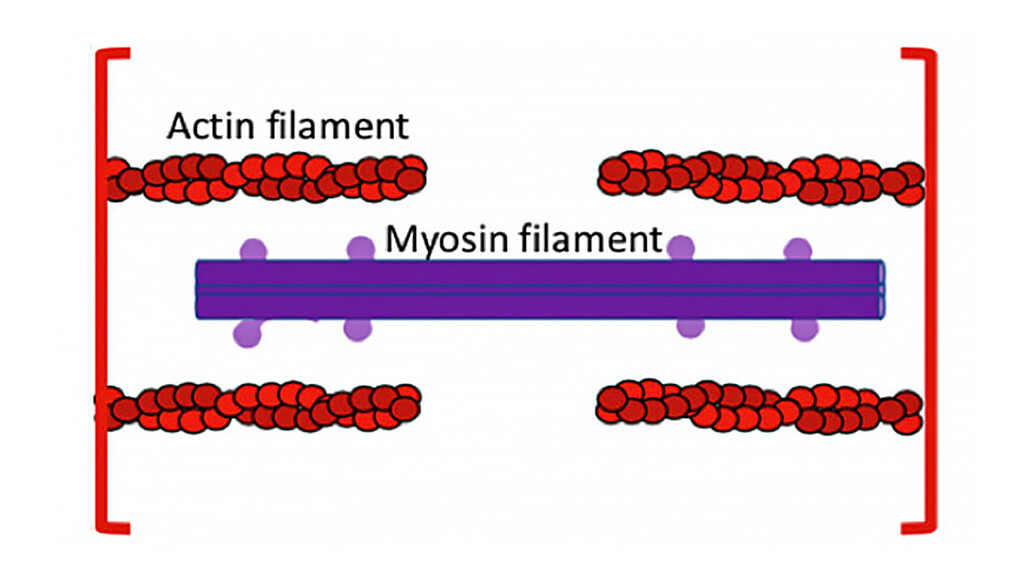
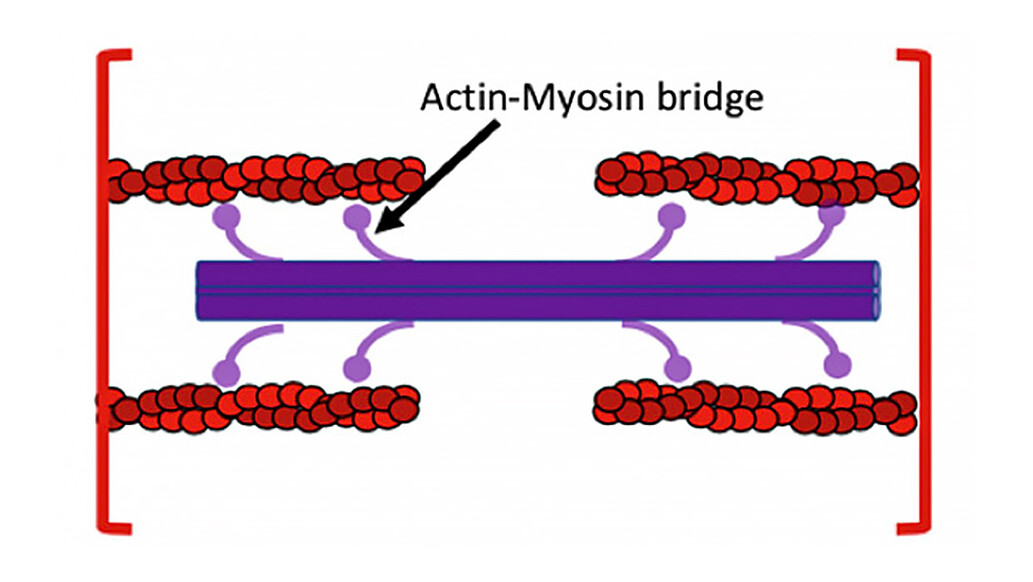
Now remember that the more force/tension you have to exert, the more bridges you create.
During the eccentric phase of the exercise, when the muscle fibers are lengthening (being stretched), if the bridges stay connected, you will create muscle damage and stimulate mTOR activation - two important hypertrophic cues.
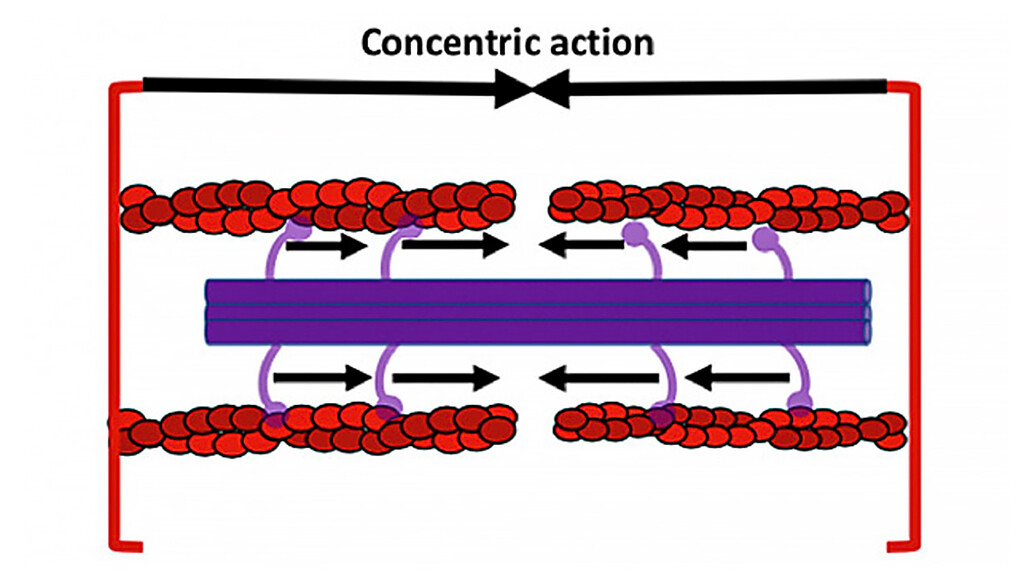
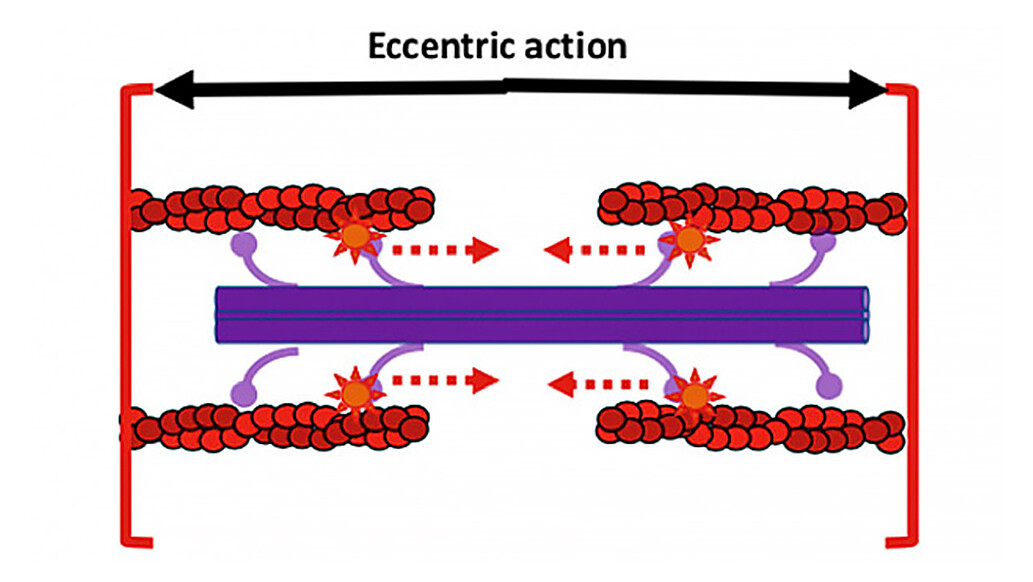
Bridges can only shorten a muscle fiber, they cannot lengthen it. If the bridges remain connected, muscle tension is high and you perform an eccentric action that loads the fiber to lengthen it while the bridges try to shorten it. That's "mechanical tension" and it's the main trigger for growth.
Therefore, if you have zero control over the load (very low tension) during the eccentric action, it is much less effective for growth. When you are not actively resisting weight, muscle tension decreases, the number of bridging decreases, and the potential for muscle damage and mTOR activation is lower.
How about time under tension?
In bodybuilding and strength training, Time Under Tension (TUT) is often talked about as a key factor in muscle growth. But is it really that important? In fact, the number of reps is more important than the length of the set itself. This is because each rep brings new mechanical loading and stretching of the muscle fibers, which is essential for hypertrophy.
Two scenarios of TUT in practice
Let's look at an example of two different approaches to the same series:
10 reps with 100 kg at 2010 tempo.
- 2 seconds to lower (eccentric phase), no pause at the bottom, 1 second to raise, no pause at the top
- Total TUT: 30 seconds
5 reps with 100 kg at 5010 tempo
- 5 seconds to lower, no pause at the bottom, 1 second to raise, no pause at the top
- Total TUT: 30 seconds
At first glance, both approaches have the same time under tension (30 seconds), but the first option is more efficient. Why? Because it involves more reps, and therefore more stretching of muscle fibers under load, leading to more muscle damage and higher mTOR activation - two key factors in hypertrophy.
What if we add a third scenario?
10 reps at a tempo of 5010 (TUT 60 seconds)
Will it be even more effective? No! Because for such a slow tempo you would have to reduce the weight - probably to 85 kg instead of 100 kg. And this would reduce mechanical tension, which means a less effective growth stimulus.

So is TUT relevant for muscle growth?
TUT is not the main stimulus for muscle growth. It is only a factor that can influence some physiological processes, for example:
- Lactate production - which can slightly affect follistatin levels, which inhibits myostatin (the hormone that limits muscle growth).
- The release of growth factors - which can promote protein synthesis and muscle tissue regeneration.
However, this response is not the main trigger of hypertrophy. Thus, betting on high TUT is not an optimal strategy for muscle growth.
When might a longer TUT be useful?
This is not to say that a longer TUT has no use. For some exercises and situations it can be beneficial, for example:
✔ Isolated exercises - If the exercise does not cause a lot of muscle damage (e.g., chin-ups), a longer TUT can increase metabolic stress without causing excessive muscle damage.
✔ People with slower recovery - Older athletes or individuals with high stress levels may benefit from a TUT of 40-60 seconds with a moderate load to minimize fatigue and speed recovery.
Why do I use slow eccentric phases myself?
You may be asking, "If TUT isn't crucial for growth, why do I ever use it?"
I don't use slow eccentric reps primarily for hypertrophy, but for other reasons:
Improved motor learning - Better movement control and technique.
Tendon and ligament strengthening - Slow eccentric contractions increase connective tissue strength.
Enhancing eccentric strength - Which is useful for athletes and strength training.
Conclusion.
If you want to maximize muscle growth, TUT alone is not critical. More important:
✅ S ufficient mechanical tension
✅ Optimal number of reps (6-12 for hypertrophy)
✅ Progressive overload (gradual increase in load)
✅ Controlled eccentric phase, but not at the expense of weight
But if you 're looking for a strategy for recovery, isolation exercises, or injury prevention, a longer TUT may make sense. It depends on the context and training goals!??
Source.
Recommended

Czech Virus Testo Virus Part 2

Viridian Saffron Extract

HMS Magnetický Eliptical H6319
No posts have been made yet.