





The power of threes, or training 3 times a week
 Author:
 Some of my best gains in the gym came when I was the busiest and most stressed. I distinctly remember improving my maxes on the front squat and deadlift with the trap axis during finals week of my freshman year of college. My expectations were low because I had kept my schedule to a minimum the previous three weeks due to reading and writing papers. I went from training 4-5 days a week to three. I cut my workouts from two hours to 30-35 minutes, including warm-ups. I didn't work out with any supplements. No exercising muscles from all angles. Just a few concentrated and heavy sets of basic exercises.
I didn't sleep or eat too well and didn't make a big deal out of my workouts. In fact, except for the half hour I spent in the gym, I didn't think about lifting at all. I couldn't for the life of me figure out how I managed to get stronger. The same thing happened later in my senior year, and that's when it dawned on me.
I got stronger because I didn't make a science out of training. I was spending too much time thinking and grinding out the little things. Lifting is tricky because it doesn't take that much time. It's not like video games or chess, which you can do all day. It leaves an unnecessary amount of time to think about lifting - and that can be dangerous. The more you think and read, the more you get your head wrapped around it, and you start getting caught up in little things that don't really matter.
Because of this, I will now introduce a system based on going back to basics. I would recommend it to the following target groups:
- Those who get bogged down in overly complex programs and need to relax.
- Those who are extremely busy and don't have much time for the gym.
- Those who are finishing a high volume training phase and need to get stronger while giving their body a break.
You don't have to do this workout for the full 8-10 weeks, but if you want to, feel free to. I've used it successfully in 2-3 week long sprints when I've been swamped with work, or in times when I felt like I lost perspective and needed to somehow refocus my training.
The beauty of this program is its simplicity. But again, you don't have to think it's deload, it's not supposed to be easy. I call it the Power of Three.
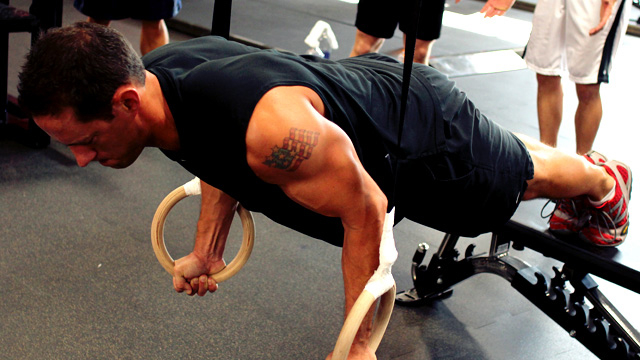
Program Overview
The program consists of three training units: A, B and C. Try to spread them out over the week so that there is at least a day of break in between. It doesn't matter that the workouts are always on the same day; just work them off.
Each workout will consist of three main exercises, one from each of the following categories: lower body, deadlift, and press.
The actual exercises should be different in each of the three workouts, but the categories should be maintained throughout. This means that you need to choose three lower body exercises, three deadlift exercises, and three push exercises.
For each of the categories you will then have a heavy day, a medium day and an easy day. So if you go heavy lower body, the next workout should be medium, then light, etc.
In this way, you'll exercise each of the major muscle groups three times a week - which will afford you the benefits of increased frequency - the intensity will be modulated so you don't wreck yourself.
A weekly split looks like this:
Workout A
Heavy lower body
Medium Deadlift
Light push
Workout B
Heavy pressure
Medium lower body
Light thrust
Training C
Heavy thrust
Medium pressure
Light lower body
Note that heavy, medium, and light refer to rep range and loaded weight, not effort. Full effort is expected in all cases.
The ideal number of reps in a set will vary slightly by exercise choice, but in general:
- Heavy = 3-6 reps
- Medium = 6-9 reps
- Light = 10-15 reps
The heavy exercise will be performed for six sets in the workout, while the medium and light exercises will be performed for three sets each. To save time, the entire workout will be performed as paired sets. I say paired on purpose because superseries for many means going between exercises without a break.
The primary goal is strength, so I want you to rest - however, I also realize that you are busy and don't have time to sit around the gym.
With paired sets, you're going back and forth between two different exercises, but taking enough of a break to fully recover. The first three sets of a heavy exercise will be paired with three sets of a medium exercise, while the last three sets of a heavy exercise will be paired with three sets of a light exercise.
Confused? This is what workout A looks like as an example:
| Exercise | Series | Repetition |
| A1 Heavy lower body | 3 | 3-6 |
| A2 Medium deadlift | 3 | 6-9 |
| B1 Heavy lower body (A1 continues) | 3 | 3-6 |
| B2 Light pressure | 3 | 10-15 |
Remember that you will only be doing three exercises from each category all week, so choose them wisely.
For lower body, choose at least one where the knees dominate (squat, lunge) and one where the hips dominate (deadlift, deadlift, thrust, etc.). In addition, include one bilateral and one unilateral exercise.
Recommended

Thermogel 80g 5+1

New 100% Whey Protein 800g 1+1

Omega 3 240cps 1+1

Nebbia Kraťasy FIRST PICK 379
Include at least one vertical move (push-up, pulldown) and one horizontal move (pull-up) as your pull-up exercise.
For your push exercise, use at least one vertical push (a variation of the overhead press) and one horizontal push (a variation of the bench press). One of the exercises will also be with your own weight (push-ups, chin-ups, etc.).
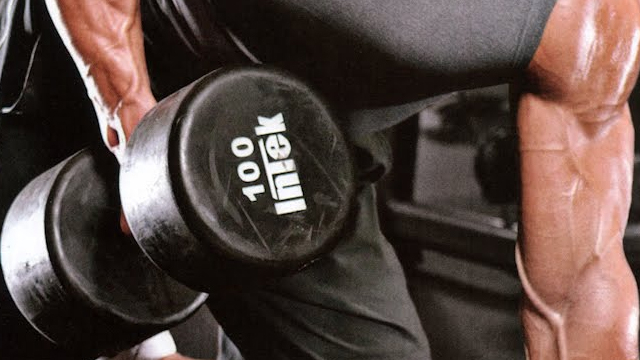
Correct choice of exercise
I've provided you with some barriers as far as exercise selection goes, but I've intentionally left most of the work up to you.
Here's why
There are no best exercises for everyone. Everyone is built differently, has a different injury history, has access to different equipment, which plays a major role in choosing optimal exercises. You need some autonomy. The best program is one that ensures enthusiasm. If you're prescribed a bunch of exercises you hate, you're more likely to screw it up - and without full commitment, it just won't work, regardless of how good it looks on paper.
You should learn the basics of exercise selection. Getting a program on a platter will do you no good in the long run. Those who prefer detailed plans usually jump into a new workout within a week or two.
However, if you learn to effectively choose your own exercises, you will be able to apply this to whatever program you choose, either now or in the future. If you only take one thing away from this article, I hope it's this.
Choose exercises based on what you need, not what you want. In other words, choose exercises that will improve your weaknesses, not just the ones you like to do. It's natural to like what you do best, but your weaknesses will always limit you. If you're really only as strong as your weakest link and avoid what you suck at, you'll never get rid of the weakness.
This means that if your lower back is noticeably weaker than your quadriceps, you're better off choosing two movements that focus more on the hips and only one variation of squats or lunges for your lower body.
Or, if you have noticeable size and/or strength differences between your limbs, you'll probably want to incorporate more unilateral work. If you're not significantly good at hunches, more lunges. You get the idea.
Try to choose exercises that best match the specified rep range. Some exercises are better suited to a lower rep range, while others are better suited to a higher rep range. In general, heavy exercises are better done with the big axle, while medium and light exercises may be better done with one-arms, kettlebells, rings, bodyweight, etc.
The only exception is your deadlift exercises. I'm not a big fan of big axis pull-ups for low reps, as the execution often devolves into something that resembles a monkey flipping a kicker. I'd rather recommend weighted push-ups as a heavy pull-up exercise, and I'd save the single arm pull-ups and big axis pull-ups or other pull-up exercises for medium and light work.
Choose pairs of exercises that overlap as little as possible. This specifically applies to lower body exercises and deadlifts. For example, if you're doing deadlifts, avoid pairing them with variations of pull-ups, such as axle pull-ups and T axle pull-ups, which are also demanding on the lower back.
Also, avoid pairing exercises that are grip-intensive, which can be tricky when you're using deadlift variations or single-leg work with heavy one-arm dumbbells. In such cases, the use of snatches may be necessary.
Here's an example workout. It should give you an idea of the program as a whole, but feel free to use other exercises at your discretion.
Workout A
| Exercise | Series | Repetition |
| A1 Deadlift | 3 | 3-6 |
| A2 One-handed deadlift | 3 | 6-9 |
| B1 Deadlift | 3 | 3-6 |
| B2 Click on the rings | 3 | 10-15 |
Training B
| Exercise | Series | Repetition |
| A1 Bench press | 3 | 3-6 |
| A2 Front squat | 3 | 6-9 |
| B1 Bench press | 3 | 3-6 |
| B2 Reverse deadlift (with weights as needed) | 3 | 10-15 |
Training C
| Exercise | Series | Repetition |
| A1 Sub-arm curl (with weights as needed) | 3 | 3-6 |
| A2 Standing alternating one-arm press (neutral grip) | 3 | 6-9 |
| B1 Shifting underhand grip | 3 | 3-6 |
| B2 Lunges while walking | 3 | 10-15 |
Additional information
All series listed are working only. For heavy and medium exercises, start with a few warm-up sets. You may also need one or two before the light ones, but since your body will already be warmed up, you won't need much. For each exercise, work up to reaching a technical failure on the last set - the point where you can't complete the next repetition with good technique. Don't do ugly reps, but get to the bottom of it.
Only the last set of each exercise should reach technical failure, but all working sets should be relatively hard. Start with 75% of the weight you are going to use on the last set and keep adding.
With all unilateral work, rest 45-60 seconds between limbs. If you're trying as hard as you should, you'll need all that time. If you have some time left and want to add some mid-body and/or arm work, that's fine, just don't overdo it. It's not necessary.
Keep a journal and try to add to it each week. Your first choice should always be to add weight. However, if you fail to complete the prescribed number of reps one week, keep the weight and try to get into the right rep range the next week. You can then add weight again the following week.
Don't complicate things. No need for calculators or complex equations.
Words in conclusion
Your success (or failure) with this training method will depend on two things: sensible exercise choices and brutal effort. I hope I've given you the right cues on how to choose the most appropriate exercises. The effort must already come from you. Remember, it's no accident that the big, strong guys are called "mutton heads" and the skinny ones "nerds." Getting stronger doesn't require any extreme brain capacity or fancy training methodology. What it does require is perseverance, a solid work ethic, time, and balls.
Go for it with gusto.
Support your performance with quality supplementation!
In our shop you can choose from a lot of proteins, gainers, amino acids(bcaa, glutamine, ...), vitamins and minerals, creatines,fat burners and much more. So don't hesitate and step up a notch!
Written by Ben Bruno, translated by Jaromír Uhlíř
No posts have been made yet.








