





The best hamstring exercise at home = Nordic stumbling!
 Author: Šárka Randáčková
 Last time we showed you some exercises that you can use to target your hamstrings at home. One of them was the so-called Nordic hamstring curl, which is the gold standard for hamstring strength. In terms of muscle tension, no other hamstring exercise compares to them.
This exercise activates the hamstrings more than deadlifts with legs extended, deadlifts on one leg, seated stumbling, good mornings or squats. Try it and you'll quickly see why it's the most effective way to strengthen this part.

However, most people have to work their way up to full-scale Nordic burying first. Below you will find some step-by-step instructions.
1. Glute ham raise
People often confuse this exercise with Nordic tripping. Although both exercises look similar, the glute ham raise is much easier. It puts your body in a more advantageous position. During the concentric portion of the exercise, the knees are lower, which moves the center of rotation towards the hips. In the northern stumble, the center of rotation is at the knees because they don't move during the raise and lower. This forces the body to be in a mechanically disadvantageous position all the time. If you want to get the most out of the glute ham raise, lower slowly for 3-5 seconds on each repetition. The hamstrings will feel it and the strength response will be better as well.
Practice 3-5 sets and 5-10 reps
2. Hamstring tilt (hip hinge)
This is a cross between the glute ham raise and the Nordic stumble. The position will be similar to the stumble, but the bend will be in the hips, not the knees. You will try to keep your weight as far forward as possible throughout the series.
Try to keep your arms close to your body and lower down slowly until your forehead touches the bench. At the end of each repetition, you will have your hips at full extension and your torso perpendicular. No need to add weights. If you want to make the exercise harder, lean forward more. You'll put more stress on your hamstrings.
Start with sets of 5 reps and work your way up to 10.
3. Nordic stumbling with partial range of motion
After mastering the previous exercise, you are ready for this one. Just don't attempt the full range of motion too soon. You might find that you don't have the strength for it yet.
Most people can manage to lower themselves halfway down in a controlled manner. Then at the bottom of the lowering, they usually run out of strength and drop like a stone.
Recommended

Nebbia Lounge šortky CLUB D’OR 643
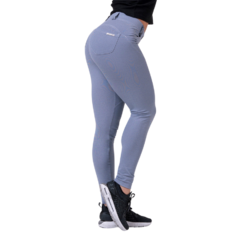
Nebbia Dreamy Edition Bubble Butt legíny 537

GymSupps XGen

Nebbia Oversize mikina s kapucí GYM RAT 256
You want to avoid this because losing control of the descent means you lose tension in the muscles, which will halt progress. Limit the range of motion and lower yourself in a controlled manner the entire time.
Stick to a range of 1-5 reps. As you improve in that range of motion, add an extra bit of distance and repeat the process.
4. Nordic burying
Most important factor: keep tension in the hamstrings throughout the rep. Lower yourself slowly until your chest touches the padding of the bench. Then explosively lunge your chest back up. The contraction of the hamstrings, which pulls the torso back up, will help you do this.
It's an extremely difficult exercise. The average exerciser will get a face bump the first time they attempt it, but as you progress through the exercises described above, you will master it, and build up big, strong and durable hamstrings!
Many more exercises for home training can be found in our Exercise Database.
Source: www.t-nation.com - Tip: The #1 Exercise for Hamstring Strength
Author.
Author: Šárka Randáčková No posts have been made yet.








