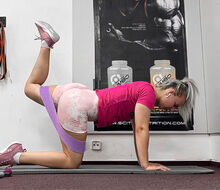
The 8 best exercises for the butt. Try effective glute training!
 Author:
 A beautiful and firm butt is the dream of many people, whether they are women who desire a sleek look or men who want to accentuate their strength and physique. Butt exercises, often called glute exercises, have become a staple in the fitness world. These exercises will not only help you achieve a graceful and round butt, but will also strengthen your gluteal muscles, thighs and hips. If you desire strong and firm buttocks and at the same time get rid of excess fat on this area, we have good news for you.
In this article, we will focus on the eight best butt exercises to help you achieve these goals. Firming your buttocks, strengthening your thighs and butt, and sculpting your overall appearance will be your reward for regular training.
Article Content:
- Hip Thrust
- Reproduction
- Pelvic Bridge / Glute Bridge
- Pull-up with pulley
- Engaging with pulley on bench
- Leg Press
- Backward lunges on multipress
- Pull-ups with pulley
- Conclusion
1. Hip Thrust
The Hip Thrust is an excellent exercise for strengthening the glutes, thigh muscles and lower back. It is usually performed on a special bench, but can also be done on the ground with support under the upper back.
Description:
Sit on the floor or on a bench with a straight back. Bend your knees and place your feet hip-width apart. It is important to keep your legs close enough to your body so that your back is straight and resting on the bench or support. Place a single arm or dumbbell on your hips. With an inhale, squeeze your glutes and lift your body up so that your thighs are in line with your torso and form a 90-degree angle. The peak of the movement should be when your glutes are as high off the ground as possible.
Make sure you keep your back straight and your head slightly elevated. Exhale as you come back down to the ground or bench, but don't touch it. Again, return to the starting position with your buttocks just off the ground and repeat the exercise.
Breathing during the Hip Thrust exercise:
When doing the Hip Thrust exercise, it is important to coordinate your breathing correctly to make the movement efficient and safe. In general:
- Inhale: When lifting the body up (squeezing the buttocks), you should perform a deep inhale to provide stability to the trunk and add strength to the movement.
- Exhalation. This helps to release pressure on the chest and abdominal wall.
Hip Thrust Exercise Variations:
There are several variations of the Hip Thrust exercise that may be appropriate for your goals and level of advancement:
- Single-Leg Hip Thrust: The same principle as the classic Hip Thrust, but performed on one leg only. This variation increases the demand on stability and develops each buttock more evenly.
- Weighted Hip Thrust.
- Elevated Hip Thrust: Performed on an elevated surface, such as a bench or stepper, to increase range of motion.
- Resistance Band Hip Thrust: Using a resistance rubber band around the thighs for additional resistance during the exercise.
- Barbell Hip Thrust: Using a long dumbbell placed on your hips to increase the load. This variation is often performed in gyms.
2. Reproduction
The propagation exercise is one of the effective exercises to strengthen the gluteal and thigh muscles. This exercise can be done with your own body weight or using exercise equipment such as dumbbells, rubber bands or machines in the gym. Here is a step-by-step description of how to perform the propagation exercise:
Execution description:
Stand upright with your legs straight and feet slightly apart. You can either place your hands on your hips or hold your head for better stability. As you inhale, lean forward slightly at the hips, keeping your spine in a neutral position. Your pelvis should be facing forward. Slowly open your legs out to the side, far apart, until you reach your maximum range of motion. You should feel tension in your buttocks and thighs during this movement.
As you exhale, return to the starting position, pulling your legs together so that they are perpendicular to your pelvis again. Repeat the exercise for the desired number of repetitions. It is recommended to perform 3 to 4 sets with 10 to 15 repetitions in each set.
Breathing during the exercise:
During the propagation exercise, breathing is important to maintain proper rhythm and control of the movement. It is usually recommended to inhale while propagating the legs, which will help keep the center of the body stable and support the abdominal muscles. Inhale as you return to the starting position (bringing the legs together).
Exercise Variations:
There are several variations of the propagation exercise that can be used to increase its difficulty:
- Barbell exercise: Holding a dumbbell in front of you during the exercise will increase the resistance and strengthen the thigh and glute muscles even more.
- Reproduction on the machine: In the gym, you can use a special propagation machine that allows for more precise resistance and movement settings.
- Standing on one leg.
- Plyo Propagation: This variation involves quick and explosive leg propagation, which can increase the exercise difficulty and build strength and endurance.
3. Pánevní most / glute bridge
The pelvic bridge, also known as the Glute Bridge, is an effective exercise to strengthen the glutes, lower back and hamstrings. Properly performed, this exercise can yield significant results for your glute strength and shape.
Execution Description:
Lie on your back on a mat or exercise mat with your knees bent. Your feet should be placed on the floor, about hip-width apart. The arms should be placed along the body with the palms facing downward. Begin by squeezing the glutes and abdominals and slowly lifting the pelvis upward. Your body should form a straight line from your shoulders to your knees. Hold the top position for a few seconds to feel the contraction of your glutes. Slowly return to the starting position and repeat the exercise.
Breathing during the exercise:
It is important to maintain regular breathing when doing the Pelvic Bridge exercise. Inhale when you are in the down position before lifting the pelvis. After you lift your pelvis and reach the top position, exhale. Try to maintain the rhythm of your breathing to make the exercise smooth and effective.
Exercise Variations:
- Single Leg Pelvic Bridge. For a more extreme version, lift the pelvis on one side only and keep the other leg in the air. This variation puts even more strain on the glutes.
- Pelvic bridge with weight: Place a dumbbell or other heavy weight on your stomach and lift your pelvis with the weight on your hips. This will increase the load on your glutes and back thighs.
- Pelvic bridge on a ball: Place your heels on an exercise ball and perform the exercise. This requires more stability and improves coordination.
- Pelvic bridge with lunge: After lifting the pelvic bridge, you can also perform steps to the side, which will increase the load on the hips and buttocks.
4. Breeding with pulley
The "Pulley Lifts" exercise is an excellent way to strengthen your lower body, especially your glutes, thighs and hamstrings. This exercise can be performed on a pulley or similar exercise machine that allows you to move your legs against resistance.
Execution Description:
Stand with a pulley and attach a special strap or anchor to the pulley. The strap or anchor should be placed at the height of your ankles. Attach the strap or anchor to your ankles and stand at a distance from the pulley so that the strap is taut. Stand upright with your arms resting on the support for stability. Begin the exercise by squeezing the strap with one foot and continue moving until you have one foot slightly in front of the other.
Pull the leg that is in front of you back towards your body, you should feel the gluteal muscles and hamstrings activate with this movement. Be sure to control the movement and avoid fast and jerky movements. Slowly return the leg to the starting position and repeat the exercise with the opposite leg.
Breathing during the exercise:
Breathing is very important to maintain proper pressure and stability during the pulley exercise. Usually, you should exhale when you contract (when you push your leg back), and inhale when you return your leg to the starting position. Keep your breathing regular and controlled throughout the exercise.
Exercise Variations:
There are several variations of the pulley stretch that can provide different levels of difficulty:
- Change the height of the anchor: Adjust the height of the anchor or strap on the pulley to change the angle of pull and the stress on the muscles.
- Single Leg Unweighting: Instead of using both legs at the same time, work only one leg, which increases the effort and engages more stabilizing muscles.
- Adding Load: Hold a barbell or disc at the ankle to increase the effort during the exercise.
- Combinations with other exercises: The pulley squat can be incorporated into an overall training plan along with other leg and glute exercises for comprehensive lower body strengthening.
5. Planking with pulley on bench
The exercise "Pull-up with pulley on bench" is an effective way to strengthen the gluteal muscles and thighs. The following description of the execution will help you perform this exercise correctly:
Description:
Begin by attaching a pulley to the bottom of the weight machine and attach a weight disc to it according to your strength. Adjust the bench so that it is in a nearly horizontal position. With your face down and your back to the pulley, lie down on the bench so that your hips are on the edge of the bench and your feet are free to hang down. Place one foot on the floor and hook the other foot into the strap attached to the pulley. This leg should be at an angle of around 90 degrees.
Using your buttocks and thighs, lift the locked leg upwards towards the ceiling. You should feel a contraction in your buttocks as you lift the leg. Hold the stretched position at the top for a moment. Slowly and in a controlled manner, bring the leg back down to the starting position. Repeat the exercise for one leg and then move to the other. It is recommended to perform 3 to 4 sets of 10 to 15 repetitions on each leg.
Breathing during the exercise:
It is important to maintain regular breathing when performing the exercise "Planking with a pulley on the bench". It is usually recommended to breathe naturally and not hold your breath. Inhale as you lower your leg down and exhale as you raise it up. Proper breathing will help you maintain stability and energy during exercise.
Exercise Variations:
There are several variations of this exercise that can target different parts of the buttocks and thighs. Some of them include:
- Bench press with resistance band: Instead of using a pulley, you can attach a resistance band to your leg and use it for resistance while lifting your leg.
- Single leg bench press: This variation is done with one leg hooked into the strap and the other leg hanging down freely.
- Looping on a bench with a slightly altered bench angle: By changing the angle of the bench, you can target different parts of the glutes.
6. Leg Press
The Leg Press is an exercise that focuses on strengthening the lower body, especially the thighs, hamstrings, glutes and calves. This exercise is usually performed on a special exercise machine that allows the legs to move up and down.
Execution description:
Start by sitting down on the Leg Press machine. Place your feet on the platform so that your shoulders are shoulder width apart and your legs are slightly angled inward toward you. The cushions on the platform should be positioned on your shoulders or thighs, and this depends on the specific design of the machine. With your head resting on the backrest, slowly and controlledly push off your legs and push the platform up by straightening your knees, but don't allow them to lock out completely.
Your back should be pressed tightly against the backrest during this movement. When you have reached the maximum point of pressure on the platform, return to the starting position with your knees slightly bent. Exhale as you push your legs up, and inhale as you lower the platform back down to the starting position.
Exercise Variations:
- Single Leg Leg Press: This variation of the exercise is performed on the same machine, but using only one leg at a time. This allows for individual strengthening of each leg and reduces the possibility of asymmetrical problems.
- Leg Press on the Smith machine: Instead of a traditional machine, you can use a Smith machine. This exercise strengthens the same muscle groups but may have a different feel and angle of movement.
- Narrow Leg Press: Narrowing the position of the legs on the platform during this exercise puts more stress on the inner thigh.
- Deep Lock: Some Leg Press machines allow you to use a deep lock, allowing you to perform the exercise with a greater range of motion.
- Single Leg Lock: This allows you to perform the exercise with one knee locked, which puts more emphasis on one part of the lower body.
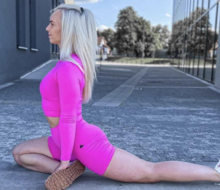
7. Backward lunges on the multipress
Back lunges on the multipress are an effective exercise for strengthening the muscles of the thighs, buttocks and lower back. This exercise can be done on a special machine called a multipress or on a multipress rack in a fitness center. Here is a detailed description of how to perform the exercise:
Execution description:
Stand in front of the multipress machine so that the multipress bar is behind your back. Grasp the bar with a wide center grip so your fingers are pointing forward. Stand so your feet are slightly spread. Your shoulders should be back, chest off and back slightly bent at the lumbar region. This is your starting position. Now take a step back with one foot so that your other foot moves back towards the multi-press. The movement should be smooth and controlled.
The bottom of your back foot should be approximately at or slightly below floor level. Slowly return to the starting position by lifting your back foot and placing it next to the other one. This completes one repetition.
Breathing during the exercise:
It is important to maintain a proper breathing rhythm when performing back lunges on the multipress. In general, you should exhale when performing the effort portion of the exercise (backward step) and then inhale when returning to the starting position. Breathing should be regular and uninterrupted, which will help you maintain stability and strength during the exercise.
Exercise Variations:
There are several variations of back lunges on the multipress that you can incorporate into your training program to make the exercise more challenging or to target different muscle groups:
- Back lunges on one leg: Performed in the same way as the basic version, but with an emphasis on one leg, which increases the difficulty of the exercise and engages more stabilizing muscles.
- Back lunges with a barbell or kettlebell: Holding a dumbbell or kettlebell in your hands during the exercise increases the overall load and strengthens the muscles of the arms and upper body.
- Forward lunges: In this variation, you lean forward before performing a backward lunge, which increases the load on the muscles of the glutes and lower back.
- Jumping back lunges: jumping back lunges are a plyometric variation of this exercise that improves muscle explosiveness and conditioning.
8. Engaging with pulley
The "Pulley Pull-up" is an excellent way to strengthen the muscles of the back of the thighs (hamstrings) and lower buttocks (gluteus maximus). This exercise is performed using an exercise pulley.
Execution description:
Start by preparing the exercise pulley. Set an appropriate weight that will allow you to perform the exercise with control and proper technique. Sit on an exercise bench, attach the anchor to your leg and place the pulley under your feet. Sit on the bench with your back straight and legs extended forward. Hold your hips with your hands for stability. Begin to bend your legs at the knees, pulling the anchor down as far as possible in stretches. As you move, imagine that you are pulling your heels toward your buttocks and focusing on the middle of your butt. Aim for a controlled movement, even as you bring your legs back to the starting position.
Breathing during the exercise:
Breathing is also important when performing this exercise. Inhale before you start pulling your legs towards you, and exhale as you pull your legs down. Follow the rule to keep your breathing smooth and uninterrupted.
Variations of the exercise "Pull-up with pulley":
- Different leg positions: You can try different leg positions, such as a wider leg stance or a narrow leg stance, which will change the load on different parts of the muscles of the back of the thighs and buttocks.
- Using different types ofhandles can also affect the execution of the exercise and engage different muscle parts.
- Single leg planking: Instead of using two legs, you can perform the exercise with one leg, which increases the difficulty and engages additional muscles to maintain stability.
- Slow motion: slowingpace of the exercise can increase the difficulty and muscle involvement.
Conclusion
Butt and glute exercises are the key to your quest for a firmer and more attractive body shape. Be sure to incorporate a few of these top eight butt exercises we've featured into your workout regimen. Strengthening your glutes, thighs and butt, and improving your overall appearance is just a step away. Whether you're a beginner or an advanced athlete, round butt exercises will give you the challenge you're looking for. So don't hesitate to start working towards your goal of having a firm and sexy butt today! Your body will thank you for it.
Recommended
Nebbia Tričko s krátkým rukávem LEGENDARY 712
Nebbia Washed-off Oversized tričko NO SHORTCUTS 369

Czech Virus SuperVita PRO 2.0
No posts have been made yet.