





The 10 biggest mistakes when performing a deadlift
 Author:
 Once again we have an article from our eastern neighbours, our brothers from Slovakia.
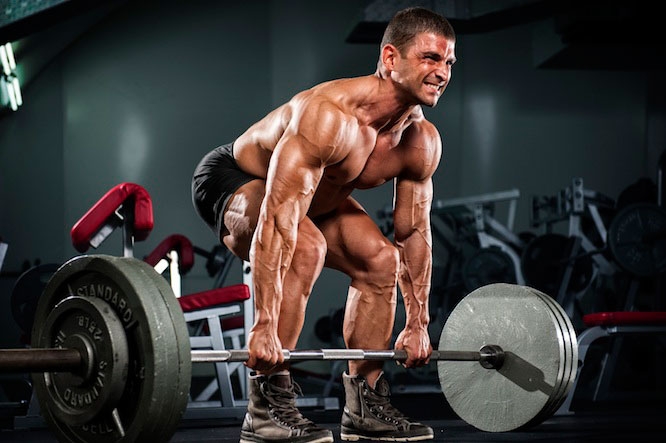
Today the author focuses on the ten most common mistakes that practitioners make during the deadlift.
Whenever I go on the road for a round of seminars, I have to find a place to practice. Most of the time this isn't a problem because I secure a gym in advance where the second part of the seminar will take place and I can usually find basic training aids there. I plan to leave on Friday nights after the dynamic squat workout and return on Sunday night so that I can get to the gym on Monday for a max effort squat and deadlift workout. That way all I have to manage is the dynamic bench press workout.
That workout doesn't require too much, so I usually don't have a problem with it.
I happened to have to fly out on Wednesday night. That meant I had to find a place to squat on Friday morning. While this may seem like a small problem to some, for me personally it is a major change. When I got to the hotel I pulled out the golden pages and flipped to the sports centers section.
I was looking for something that had "Iron Pit" or a similarly badass name in the title. It didn't take long to find that I couldn't find a similar place in the phone book, so that remained my second choice. I started looking for a Power House, World Gym or Golds. I found one place about 10 minutes away and thought I had it planned.
Over breakfast on Friday morning, I went over the workout in my head. I planned to load 405 pounds plus strong expanders for the squat box. Then I'll practice dynamic deadlifts, lower back and abs. I knew I had to find a way to attach the expanders and something to sit on instead of the box. After finishing my breakfast, I packed up my stuff and headed towards the gym.
When I pulled into the parking lot I got the feeling that today was going to be a long day. From the outside, this place looked too nice. Those of you who train at some hardcore gym know exactly what I'm talking about. I walked in (after being blinded by the neon lights) and started chatting with the girl at the bar. I signed a statement, paid my dues and made my way towards the only weight rack.
That's when I noticed something incredible. The bar in the power rack was loaded with the smallest disc on each side and some guy was there performing biceps raises! Not to be a jerk, I waited until he had completed his 10 sets and made my way to the rack.
I started by prepping a couple of one-armed bars for the sides of the rack so I could attach the expanders and picked out the best bar I could find. They even had an Okie squat bar. This made my day better because it is very difficult for someone like me to use a standard Olympic squat bar. I found a pair of aerobics steps to use as a box and started with warm up sets.
During the warm-up sets, I felt good about the environment I was training in, but I noticed a thousand pairs of eyes watching me, trying to figure out what I was actually doing. A few people even came over to ask. As I started to explain, I noticed that they were taking time away from my intervals, so I came up with a backup plan. I put my headphones in my ears, turned the DMX on full blast, and continued my workout. The squat workout went great. Speed was good, technique was good as well and all in all it was good. I put the bar down, pulled the headphones out of my ears and started setting up the background for my second exercise.
I planned on dynamic deadlifts with 405 pounds for five or six units. I mainly use this to hone my deadlift technique, so I didn't need any extreme agitation. I just had to pull it off dynamically with good technique. I learned from Louie (Louie Simmons) that you don't have to constantly practice heavy deadlifts to have a good deadlift. At first I thought they were delusional but when I improved my deadlift by 40 pounds I became a believer. Now that Westside (Westside Barbell Club) has a bunch of powerlifters deadlifting over 700 pounds and six powerlifters deadlifting over 800 pounds, there can't be the slightest doubt about the workability of this principle.
My first series was worth nothing. The bar was too far in front of me and I couldn't keep my shoulders behind the bar. I braced myself for the next set. The second series was excellent. I got my technique right and felt like I had 100 pounds less on the barbell. I was trying to hold the breaks for 45 seconds and was about to start the third set when someone tapped me on the shoulder. I turned around and there stood a kid about 20 years old in a short t-shirt, weighing about 165 pounds. My expression was trying to tell him to walk away and I went on to the fourth series.
After the series I asked him if there was anything I could do to help him. He asked a question I will never forget. He said: "What are you doing?" I thought in my head, "What does it look like I'm doing?" But I answered him very politely that I was doing deadlifts. He then informed me of the fact that deadlifts are prohibited in this gym. Now I was getting a little angry. He said that the weights hitting the floor make a lot of noise and this disturbs the other exercisers. I replied that the noise from the stationary bikes and treadmills bothered me. So why doesn't he go over and ask them to get off those machines?
At this point I must have pissed him off because he told me that I wasn't even doing those deadlifts right. I asked him what specifically he saw wrong with my technique (You never know, he might have accidentally noticed something I missed). He told me to squat lower to the ground and lift the barbell with good technique without using my lower back. He also told me that my shins needed to be as close to the barbell as possible and I should use a wider stance.
Since I didn't want to be a dumbass, I asked him where he learned this information. Then I noticed it. I couldn't believe I hadn't noticed it before, but it was right in front of my face: a gold name tag with his name on it and right underneath it said "Head Coach". At this point I asked him if I could finish my last series after which I would like to sit down with him and discuss his training concepts. He agreed, so I pulled the last and by far best series. Maybe it was the added aggressiveness of Mr. Coach that caused this change.
After I put the bar down, I began to have a friendly dialogue with Mr. Head Coach. I told him that I had come to town to work with the basketball players on their strength training. He told me that he had been in the personal training realm for three years, had been to several conferences, had interned at several places, and this is where he learned how to lift weights. Just out of curiosity, I asked him how much he could deadlift. He said he could pull 315 pounds for 5 reps. I then spent about an hour with him discussing the top ten deadlift mistakes.
The first thing I told him was the old deadlift motto: The competition isn't over until the barbell hits the floor. For a powerlifter, deadlifts can be the deciding factor that determines what position he or she is in. In a nutshell, we must learn how to lift the most weight in the safest way possible or our careers will be very short.
I also told him that a lot of people don't read too much about deadlifts for one reason: It is very difficult and challenging to train deadlifts. To be clear most people in the training/fitness training/bodybuilding field would rather train in the gym back to back with various pull-up machines, talk to girls and go home with a carb drink in hand. They like to live on the light, easy side of the game and reject the black side.
Get ready to cross over to the black side after I share with you what I told my new trainer friend.
Top 10 biggest deadlift mistakes.
Mistake #1: Constantly training heavy deadlifts.
Very few people can train deadlifts week after week and still improve. In my opinion, the only people who can make it work this way are people who were born to deadlift. If you are as built for deadlifts, then the stress put on your body is less than that put on those who are not built for deadlifts.
The deadlift is a very demanding movement and takes a lot of time for the body to recover. This is true even if you squat every week. Squats and deadlifts put almost the same load on the same muscle groups and this is also why you don't need to train deadlifts all the time. Years ago, the only deadlifts from the ground were the ones I did in competition. The rest of my time was spent training my lower back, glutes and hamstrings. While my deadlifts improved by 40 pounds in the first few years, I got into trouble because of this approach.
The main problem was when I went to a competition, I didn't know where to put my feet and if I got stuck I didn't know what to do to change it. Since I'm not built for deadlifts, these issues don't come naturally to me. I had to find a way to practice back pulls. What we came up with was training dynamic deadlifts with a moderate weight pulled for five to six singles. That way the weight was heavy enough to learn proper technique and not too heavy to overload my body. I incorporated this into the workout with 45 to 50% of my max and ranked it behind dynamic squats. You don't need to train them every week but it's good to include them if you have a competition or max testing coming up.
I still recommend including box squats as an exercise that trains the muscles for deadlifts. Dynamic box squats for two reps in sets of eight.
Leave the max effort workout for deadlift training. Deadlift in a power rack from the holders, from the mats or with the expander for one of four to six max effort workouts each time. On the second day, leave on a medium or narrow stance and do goodmornings or low box squats.
Mistake number 2: Pushing your shoulder blades together
This is a mistake I've been making for years. Standing up to deadlifts and pushing the shoulder blades together. Look where your fingertips are. Now if you relax your shoulders and rock forward a little more you will find that your fingertips are much lower. This is why we teach the rounding of the upper back. First, the bar has to travel a shorter path. Second, there is less stress on the shoulder area. This will also help keep the shoulder blades behind the bar. More on this later.
Mistake number 3: Rounding the lower back
This is another mistake I see all the time. It happens due to a weak lower back or a poor starting position. While keeping your shoulders rounded, you need to keep your lower back extended. This will keep your shins perpendicular to the ground and your shoulders behind the barbell, and your body will be in the right position to pull heavy weights while your lower back is minimally stressed.
If you are pulling with a rounded lower back, the barbell will run forward away from your legs, putting your lower back in a very difficult situation from which it will be hard to recover. As the dumbbell escapes forward, the weight will begin to work against you, causing your deadlift to be below your knees or in the middle of your shins. When you go to pull you can arch your back before you bend down to the dumbbell or after you grab the dumbbell. In either case, it's important to keep your lower back straight and tucked.
There are many ways to strengthen the lower back. Goodmornings, inverted hyperextensions and extended goodmornings are just a few exercises. You can also use an expander over the traps and under the legs for stimulated goodmornings. With this technique, you use only the expander and train for more reps (in the 20 to 30 rep range) for local muscular endurance.
Mistake number 4: Lack of air in the abdomen.
As with most exercises, you need to learn to breathe properly. Stand in front of a mirror and take a deep breath. Will your shoulders rise? If so, you need to learn to breathe properly. Learn to push air into your diaphragm, in other words, use your belly! Push as much air into your belly as you can and when you feel you have enough, push some more in. The deadlift doesn't start by pushing your feet into the floor but by pushing your abdomen into your waistband and hip flexors.
One note on holding your breath during the deadlift. You need to try to hold your breath for as long as you can, but you can only do this for a few seconds while under a lot of exertion because you could pass out. So on a long pull, you have to breathe because you will park face down on the ground and people will be watching. Although there are some people who think it's great, I disagree. It's much more awesome to have a valid attempt!
So when you get to the point where you have to fight the weight, let out small, amounts of air. Don't exhale all at once because you'll lose the strength of your torso and the barbell will drop to the floor. When you exhale in small amounts, you will maintain your strength, continue to pull and finish the attempt.
Mistake number 5: Not pulling the dumbbell backwards .
The deadlift is all about leverage and position. Imagine the swing. What happens if the weight on one side falls off? The other side goes up. So if your body falls backwards, what happens to the dumbbell? It goes up! If the weight falls forward, the barbell will want to stay down. So if you weigh 250 pounds and you can make your body work for you, it's like taking those 250 pounds off the barbell. For powerlifters born to deadlift, this is a natural thing to do. For others, it's something they have to train for.
Proper positioning is important. If you stand too close to the dumbbell, it has to go over your knees before you can push back, that is, go forward before you go backwards. If your shoulders are in front of the dumbbell at the beginning of the pull, the dumbbell will tend to go forward and not backward. If your lower back is not extended, the dumbbell will also tend to move forward.
Recommended

Nebbia Washed-off oversized tričko HERITAGE 355
Nebbia Fitness legíny s kapsou DISCIPLINE 708

Mars Snickers Low Sugar High Protein Bar
Nebbia FIT Activewear legíny s vysokým pasem 443
For some powerlifters, the inability to pull back may be a muscle issue. If you're like me, I find myself staying on my toes more than my heels during the deadlift. This is the functionality of my quadriceps , which are trying to take over the work of the glutes and hamstrings, or the glutes and hamstrings are unable to finish the attempt. Often times it will shake you up and you won't give it a shot. To remedy this, you need to incorporate more glute ham raises, pull-throughs, and reverse hyperextensions.
Mistake number 6: Shins too close to the barbell.
I don't know where specifically this started but I have an idea. A lot of times long, thin powerlifters are the best "deadlifters" and they are the ones who start with the barbell very close to their shins. But if you look at them from the side, they have their shoulders behind the barbell when they pull. This is not possible with the more robust powerlifters.
If a more robust powerlifter with a lot of mass - either muscle or fat - puts the barbell on his shins you'll see that it's impossible for him to get his shoulders behind the barbell. Remember, you have to pull the barbell backwards against yourself, not forwards. I believe many powerlifters try to copy the technique of powerlifters with a great deadlift. But what they need to do is look at how powerlifters with the same physique pull and also have excellent deadlift results.
Mistake number 7: Training with more reps.
Next time you see someone doing higher rep counts on the deadlift, take notes on what technique they have on each rep. You'll see that the later reps are nothing like the first. You only have to deadlift once in competition, so you need to learn how to build up "starting strength" on the deadlift. This is the force that is needed to get the barbell off the ground without negative movement before you start.
In other words, you don't go down with the dumbbell first like you do in the squat and bench press. If you train with more reps you are building reverse strength, which is not needed in the deadlift.
These two reasons are enough to train the deadlift in units (1 rep in 1 set). If you are using multiple reps in deadlifts, then stand up between each rep and start completely from the beginning. This way you will learn proper technique and build the right kind of strength.
Mistake number 8: Not keeping your shoulders behind the barbell.
You've already read this a few times in this article, and it's probably the most important thing right after hip position on the deadlift. Your shoulders must start and stay behind the barbell when you do deadlifts! This will ensure that the barbell will travel in the right direction and keep the weight going backwards. The deadlift is not a weightlifting discipline and should not be started as such.
I did a seminar with Dr. Mel Stiff at one of his Supertraining clubs and we showed the difference between the two stances. For the weightlifting version you want your shoulders in front of the barbell, for the deadlift you want them behind the barbell. Always. The amount of misinformation on this subject is incredible.
Mistake number 9: Looking down.
Your body will always follow your head. If you're looking down, the barbell will want to point forward. But you don't even want to look at the plank. Concentrate on a position that keeps your head straight and back with your eyes focused on a higher spot on the wall.
Mistake number 10: Starting with your hips too low.
This is the kind of mistake I see all the time. A lot of times powerlifters try to squat the weight rather than pull it. Think of how many times you've seen a big deadlift and told yourself that he could have given a lot more if he hadn't pulled it almost completely with his legs extended. I see it all the time. Someone will say, "Did you see his deadlift?" The other guy will say, "Yeah he almost pulled it all with his legs out." Am I telling you to pull with your legs out? No, absolutely not.
All I want you to do is look at the position of your hips at the beginning of the movement before you start pulling and notice how much your hips move before the barbell starts to leave the ground. This is a wasted movement that will do nothing except tire you out before the actual pull. The closer you can keep your hips to the dumbbell during the pull, the better leverage you will have.
Once again, the second time you see a good "deadlifter", stand to the side and watch how close his hips are to the dumbbell during the deadlift. If you are pushing your butt to the ground before the deadlift, your hips will be about a mile from the dumbbell. You're setting yourself up for disaster when the lever is that long. This is also the second reason why powerlifters can't get the barbell off the ground. (The first reason is pretty simple: The dumbbell is too heavy!)
You need to find the perfect spot where your hips are as close to the barbell as possible, shoulders behind the barbell, lower back extended, upper back rounded, belly full of air, and you can pull against your body. No one ever said it would be easy, but then again, what is? (Certainly not a workout at a commercial gym...)
Summary
After discussing my deadlift concepts with my new trainer buddy, he was a bit taken aback. He had never heard of it before and didn't know what to believe. After that, I took him back to the gym and guided him through the deadlifts. A few technique corrections and in no time he was pulling 405 pounds. It wasn't an easy attempt for him but he did it and his confidence grew with it.
The next piece of advice I gave him was the best he could have heard. I told him the first thing he needed to do was spend more time under the barbell and suggested he find a real gym and start training there with those who were much stronger than him. The best training secrets come from small garage gyms with very strong powerlifters, not in spandex, on neon machines training people in fitness centers. This, I told him, was his introduction to the dark side, and with hard training, he might one day enter the "deadlifter" zone.
[Source: tmuscle.com, translation: power-sport.sk]
No posts have been made yet.








