





Split training divided into 11 parts
 Author:
 A long time ago, when I started exercising, I worked in a well-known supplement shop.
It was a cool job for an 18-year-old kid. There was a very well-known gym nearby, so motivation was taken care of. Every day I met well-groomed babes and gentlemen with comic book proportions. That's also when I learned how incredibly stereotypical such a regular muscle man is.
Like most supplement stores, we sold popular workout magazines. I developed quite an addiction to them, and when I wasn't selling Saw Palmetto and Cinnamon to weird old men, I was also re-reading every one of the five titles that came our way.
If there's a bright side to all this, it's the fact that I can look back and realize what I've learned since then. It was, for example, that bodybuilding magazines can be pretty confusing for a young guy trying to put together his own workout.
Magazine 1 talked about training for a monstrous chest and I definitely wanted a monstrous chest But Magazine 2 talked about a great chest and back superset workout, which sounded great too, so why not try that instead.
I mean, every month I was pulled in a different direction and it was terribly confusing. One said to train the triceps after the back, another said to train them with the biceps, and another said to train both chest and shoulders. Who was right?
Well, looking back now, I know they were all right. When emotions are left out and bodybuilding is reduced to just the basics, the truth is as simple as "train all your muscles and they will get bigger." Really. (Yeah, yeah, if you eat right, of course. Diet, that's a whole other discipline.)
To better guide today's beginners, or even help the advanced looking for a change, let's look at a method of organizing a training split where every muscle group from the top of your traps to the bottom of your calves gets an intense and effective workout.
The overall idea of this program is straightforward - Split your body into parts, train each part directly with at least one exercise in one training unit, build big muscles, somehow be stronger overall, have a feeling of victory. Let's see how it all goes together.
All roads lead to Rome
How exactly did I come to divide the 600+ muscles of that amazing machine called the human body into just 11 workout-ready parts?
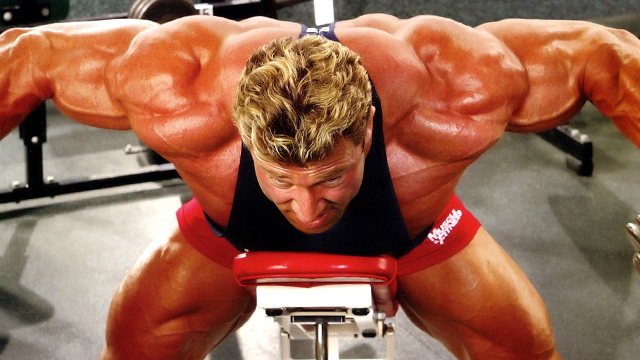
Well, they're divided into three basic categories - primary, secondary and details - it's based, actually, on reality. The muscles you develop that can, will, and should take up the most space on your body are considered primary, and it goes downhill from there.
This may not be the most scientific division, but it is practical for our purposes. Depending on how many days a week you train, each workout will exercise parts from one or more of these groups.
Primary: Back, chest, quadriceps
Secondary: Hamstrings, shoulders, triceps, biceps
Details: Abdominals, traps, forearms, calves
It is crucial to note that the labels primary and secondary in any given exercise do not necessarily imply a connection to the functional roles of the muscles as primary or secondary movers.
This influences the choice of exercises. We will discuss other details of the program as the article progresses, but these terms are used here only to make the exercises easier to organize.
Likewise, do not take the word detail to imply that she body part does not require noticeable attention. Abdominal training, for example, is essential in terms of strength, performance, and appearance. So don't take the term detail quite literally at the moment.
On the one hand, it's about priorities and time and effort management - the forearms simply don't demand the same training intensity as the quadriceps, for example - on the other hand, the muscles in the detail group are either completely neglected, trained not very often, or worse, trained without commitment.
You could argue that back training should be further compartmentalized, but don't bother. If we split it into something like upper back, lats and lower back, this whole thing would have to be called a workout, split into 13 batches, and that's just about nothing.
And in reality, if you're smart enough to include at least one type of deadlift and at least one type of overhead pulldown or bent over, you're covering more or less your entire back.
Why split?
As bodybuilding started to gain momentum, somewhere in the 1950s, many bodybuilders started to abandon full-body workouts and started leaning towards variously split splits.
That's also when, not coincidentally, various magicians started printing the first specialized articles. "Two weeks to titanic triceps!" "Shoulders that will rip your shirt!"
The body split gave room for more work and/or intensity on individual body parts in a given workout, made possible (as much as possible) by the anabolic auxiliaries that started popping up in locker rooms around the same time.
It also reflected the increased attention paid to separating bodybuilding from that traditional frame of mind saying "train strength and greatness will come." This was a holdover from the days when judges still gave points for athletic skill (most often based on the three weightlifting disciplines of the time) as well as muscularity, symmetry, and posing.
Either way, you can be sure that those hundreds of thousands of bodybuilders over the past six decades have tried absolutely every possible and impossible combination. There are no new training splits in the twenty-first century. But you can be sure you haven't tried or thought of a bunch of them.
Recommended

Nebbia Washed volné cargo šortky LEGACY 787

Nebbia Tričko GYM ESSENTIALS 380

Nebbia FIT Activewear funkční tričko s krátkým rukávem 440

Nebbia Dámský top s dlouhým rukávem INTENSE Sheer 847
I know some nitwits want to get laid. "Hey, Colucci, since we're dividing it up so much, why don't we talk about things like the external head of the biceps, calf separations, and the vastus on the quadriceps?" Well, there are a couple of reasons.
The main one is you don't need it yet.
A man who is always scrambling scrambled eggs doesn't need to bother making the perfect hollandaise sauce for his Eggs Benedict just yet. Yeah, I was talking about training for aesthetic symmetry, and that's still true.
The details that competitive bodybuilders deal with are something that regular people like us don't have to deal with until they're much closer to their goal.
For most of us, it's better to dedicate our efforts to a well-designed workout that targets each muscle group and indulges it with sufficient work volume and intensity. While I'm at it, here are some samples of how to use this plan.
Training for 3 days a week
Option 1
Day 1: Back, traps, biceps, forearms
Day 2: Chest, shoulders, triceps, abs
Day 3: Quadriceps, hamstrings, calves
Note: Yes, this is the basic split push/pull/legs. It's simple, straightforward, and rarely a bad idea. Think you're too advanced for this? It was the split preferred by three-time Mr. Olympia Frank Zane.
Option 2
Day 1: Quadriceps, chest, calves, abs
Day 2: Back, hamstrings, traps
Day 3: Shoulders, triceps, biceps, forearms
Note: A variation on the push/pull split, where day 1 is mostly push, day 2 is mostly pull, and day 3 is dedicated to direct arm and shoulder work. It's also the first time you see separate quadriceps and hamstrings. Most people could stand to train their legs harder, whether they want to or not. This is a great option for them.
The back and hamstrings can work great on the same day because the deadlift and its variations are proper exercises that work them at the same time. Quadriceps and chest go well together because heavy squats don't dramatically affect a heavy bench press.
Training for 4 days a week
Option 1
Day 1: Back, hamstrings, traps
Day 2: Chest, triceps, abs
Day 3: Quadriceps, calves
Day 4: Shoulders, biceps, forearms
Note: There will be a lot of heavy deadlifts on Day 1, so plan a good diet before it; you'll train biceps and forearms fresh on Day 4. Who doesn't enjoy getting a good biceps workout?
Option 2
Day 1: Quadriceps, hamstrings
Day 2: Back, forearms, abs
Day 3: Chest, shoulders, traps
Day 4: Triceps, biceps, calves
Note: One heavy back workout and a little work in the next workout; trapezius is relatively fresh - don't be a jerk and skip the calf workout after the arms. It is imperative to train them.
Training for 5 days a week
Option 1
Day 1: Back, traps
Day 2: Chest, biceps, forearms
Day 3: Quadriceps, abs
Day 4: Shoulders, triceps
Day 5: Hamstrings, calves
Note: Day 2 is reserved for the mirror parts. This is one of the benefits of splitting your leg workout into two training units during the week. Enjoy your day with the hamstrings and biceps, my friends.
Option 2
Day 1: Quadriceps, hamstrings, calves
Day 2: Back, traps
Day 3: Chest, abs
Day 4: Shoulders
Day 5: Triceps, biceps, forearms
Note: Another split flight-tested - legs, back, chest, shoulders; a time-tested way to go through each day of the week and work everything from the biggest muscles to the smallest.
Training for 6 days a week
Day 1: Back, forearms
Day 2: Chest, Abdominals
Day 3: Quadriceps
Day 4: Shoulders, traps
Day 5: Hamstrings, calves
Day 6: Triceps, biceps
Note: It's okay to go workout six days a week, but most people don't need to because more workouts don't normally guarantee more results.
However, if you have a season pass and aren't afraid to use it, realize that a bunch of workouts are useless without a proper diet. If there was such a thing as an advanced training split for experienced exercisers only, this would be it.
Rules
As I mentioned earlier, there are a few rules to keep in mind when doing a workout split like this. These will help you get the most out of each workout.
1. Every forearm workout should include a biceps raise with a neutral or pronated grip, to accentuate the arm flexors below the elbow, and a wrist flip with a supinated grip, to accentuate the wrist flexors, with minimal biceps involvement.
Direct wrist extensions (such as supinated wrist flicks) are not as essential, as the wrists are heavily engaged during biceps raises with a neutral and pronated grip.
This is not a departure from my theory that everything needs to be trained directly, if you thought you caught me. It's about the economics of training. If your wrist extensors really need extra work after a few sets of overhand lifts on the Scott or hammer raises with a rope, go for it. But if your forearms require that much attention, the rest of your body better be really respectable by now.
2. In back training, we've already mentioned that law of deadlifts and pull-ups. If you have biceps and/or forearms on the same day as your back, snatches are absolutely acceptable for (only) the heaviest sets - usually the last one or two - of most back exercises. This will help manage grip muscle fatigue, and thus allow for a bit more intensity.
3. The hamstrings, like the back, deserve to be trained with one of the tripping variations and one of the deadlift variations in each workout. To avoid overloading (not overtraining) the lower back, consider overtraining them by tripping.
4. In abdominal training, try to address each of its basic functions (flexion, rotation, resisting flexion, and resisting rotation) either in every workout or alternate them by week. Jim Kielbaso described this beautifully in his article. For maximum health, performance and development, make sure you practice all functions.
5. Finally, depending on what muscle group you are training in a given workout, pay attention to secondary movers. I mean, if you have chest, shoulders, and triceps on your agenda, don't do five chest press exercises, three variations of shoulder press, and then wonder why your triceps no longer have the strength to do direct work.
Moreover, this method of direct muscle attack will benefit from maximum mind-muscle connection. Make sure that with each repetition you concentrate 100% on loading the area you want to load.
Take any number of precautions - from strict form and conscious muscle contractions, to activation techniques or pre-exhaustion - to make sure you're practicing what you want to practice when you want to practice it.
When, what, how much volume, intensity and frequency
We have more than 186 articles in our archives on the best exercises. That's a fact, give or take a dozen. Add to that the countless threads about the best of the best of the best exercises discussed on the forum - most of which end up linking back to said articles anyway - and it will be clear why I'm not going to go into another tedious list of exercises you should do for each individual area.
Your needs will be based on your knee falling out, your ill-equipped home gym, or that shoulder your sister broke when you were a kid. But make sure you use the right tools for the job.
For example, if you can't feel the lats during your push-ups, they're not the right exercise for your back. If your squat technique means that your glutes and hamstrings hurt for days, squats don't belong in a quadriceps workout.
We only train each body part once a week. This is another time-tested functional method. Training a part once a week is absolutely sufficient if you are consistent with it. Higher frequency is a variable that you can use a few months later, for example.
Training each muscle once a week means that it will be a full seven days before it works again. So the intensity of each workout must be extraordinary. If you are relatively experienced, this may mean incorporating intensification techniques like rest-pause or negative reps on the last sets of each body part, or it may mean setting a really high volume of work and giving your muscles a real reason to rest each week.
If you're just starting out, it means going headfirst, giving it your all on every rep, and forcing yourself past the point where your brain says, "If I drop the weight now, I can be home at noon playing Xbox." However, I don't recommend beginners train to failure, and certainly not beyond it.
Rest days should be assigned as needed, depending on how you have your primary and secondary movers arranged during the training week. Ideally you don't go into training to train a muscle that was indirectly, yet noticeably, exhausted the previous day. What do I mean by that? Try a real biceps and forearm workout the day before a back and traps workout and let me know how the other workout was.
As with the actual exercises, I'm not going to go into too much detail on the amount of reps and sets, because of all the training factors, volume is probably the one that is most amenable to your individual goals. Bodybuilders, triathletes, and triathletes don't train with the same volume of work.
Set a rep range that will match your goals. Since we're talking about bodybuilding, most of your sets will probably be in the 6-8, 8-10 or 10-12 rep range (no surprise there), but dipping into lower rep counts will help you build strength that you'll benefit from later.
Flirting with higher rep counts is also an option to consider at times. For example, it can be used for finishing sets or as an active form of recovery for games that are giving you trouble.
Now divide and conquer!
Good old bodybuilding isn't fancy or complicated (unless you do it wrong) and it's not something you just do for a month and call it a day. It seems to me that long term goal planning is disappearing. Planning way ahead allows you to create a better overall schedule and you won't have to constantly redo your training.
Give splits an honest chance for a few months and expect results. Once you start exercising each muscle directly on a regular basis, your body will have no choice but to grow.
If you've figured out a "new" weekly split that you trust because it's gotten you results, don't be shy about sharing it with us in the comments.
Support your performance with quality supplementation!
In our shop you can choose from a lot of proteins, gainers, amino acids(bcaa, glutamine, ...), vitamins and minerals, creatines,fat burners and much more. So don't hesitate and step up a notch!
Written by Chris Colucci, translated by Jaromír Uhlíř
No posts have been made yet.








