





Seven winter sports to get you in shape!
 Author:
 Cold temperatures, icy winds, snow and the fact that it is dark before we even leave work are among the factors that can significantly reduce the motivation to engage in any outdoor sporting activities. However - moving outdoors has many benefits and over the winter this is certainly true too. Apart from the fact that moving in cooler temperatures can help you burn more calories, you'll also work on your immunity, get better quality sleep and last but not least, of course, feel great. In today's article, we'll look at seven winter activities that will really keep your body busy and get you in shape!
Article content:
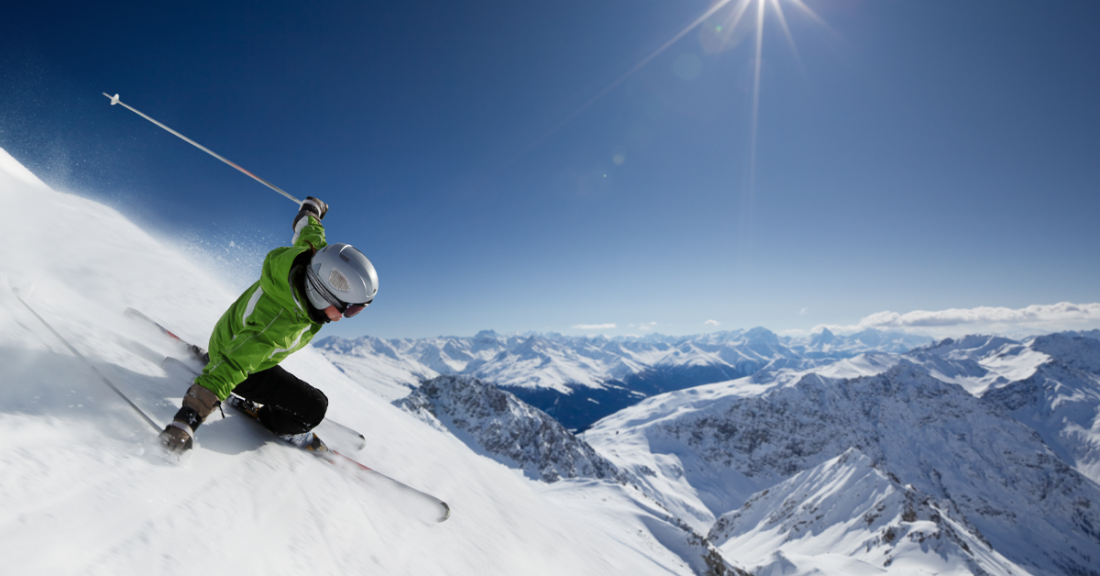
Skiing
One of the most popular winter sports is skiing. In addition to strengthening the muscles of the legs, buttocks and, last but not least, the middle of the body, we also work on greater flexibility, mobility and stability, which can be used in other sports, as well as in everyday activities. Skiing, as an outdoor activity, can also be very effective in boosting our mood, keeping us tired and thus promoting easier falling asleep and the quality of sleep itself. By moving in the fresh and often cold air, we also support the health and proper functioning of our cardiovascular system.
Last but not least, the body also burns a good amount of calories when skiing - if we choose a steeper slope and perform the movements carefully - which makes it a great activity not only when we are trying to reduce fat. On the other hand, there are more intense activities, because you can ride down a hill in a few minutes, spend another half an hour standing in line and riding the lift, so in the end, you're riding all day, but you're barely spending a third of the time being active in the true sense of the word.
Cross-country skiing
And we'll stick to skis, but this time we'll look at cross-country ones. Although it may not seem like it at first, cross-country skiing is a lot of work. An hour of intense cross-country skiing will burn a lot of calories and work the muscles of your entire body. In addition to your leg and butt muscles, you'll also engage your arms, shoulders, and mid-body and back muscles. Cross-country skiing is an extremely complex sport and if you can do it regularly, it can be a really effective way to radically improve your fitness. Moreover, running is quite demanding in terms of coordination of several movements, so it requires regular training.
It will also work on your flexibility, joint mobility and give you a real workout. As with skiing, cross-country skiing in the great outdoors is a great way to increase lung capacity, boost cardiovascular fitness and strengthen your immune system. Unlike skiing, however, cross-country skiing is cheaper, you sweat more, it's a sport you can have a lot of fun doing, and it's an activity you can use to explore your surroundings because you don't have to stay in the confines of a ski slope with a lift like you do with skiing and snowboarding.
Walking on snowshoes
And we'll stay in the mountains. If you are tempted to try something new, don't hesitate to rent snowshoes. Snowshoeing is an ideal activity when, for example, you love the winter mountains but can't ski or cross-country ski due to knee or other joint problems. And don't worry, you'll work up a good sweat. Because you're walking over more challenging terrain than a traditional walk, snowshoeing can be really challenging.
Grab your poles, find a nice hill, take the deeper snow instead of the beaten track and the intensity of the exercise, and therefore the number of calories burned, will increase radically. Besides the fact that walking on snowshoes is quite demanding, this movement will also stretch the muscles of your whole body - from your legs, to your butt, to the muscles of your arms, shoulders and back. Unlike cross-country skiing, snowshoeing is easy on the technique, so if you're not a master cross-country skier, snowshoeing may be just the thing you'll enjoy.
Skating
Another classic that no winter can be without is ice skating. Whether you're playing hockey with friends or just gliding across the pond, skating brings many benefits - from being out in the fresh air, which is a benefit in itself, skating will also strengthen your leg, butt and midsection muscles. Skating on a frozen pond or lake can be beautiful and very challenging, but when it comes to burning calories, hockey is a much better option. Skating will also work on explosiveness, acceleration, and you can practice it in the form of HIIT (like going really hard for 10s and just gliding for 50s) to increase efficiency. A challenging workout, and outdoors to boot? What more could you ask for!
Winter walk
We give walking the thumbs up in all weathers, so it's probably no surprise that despite the cold, this most natural form of exercise isn't missing from our list. After all, every movement counts, and regular walking benefits your health in many different ways. In addition to the fact that you don't need any special equipment to do it, walking is also gentle on the joints, so it's suitable even for people who can't ski or cross-country ski because of problems with their knees or other joints. And don't worry, walking is also a great way to keep fit, it's good for sleep quality, better mood, mental alertness, a stronger and healthier body and it burns a surprising number of calories - especially when moving in the winter landscape.
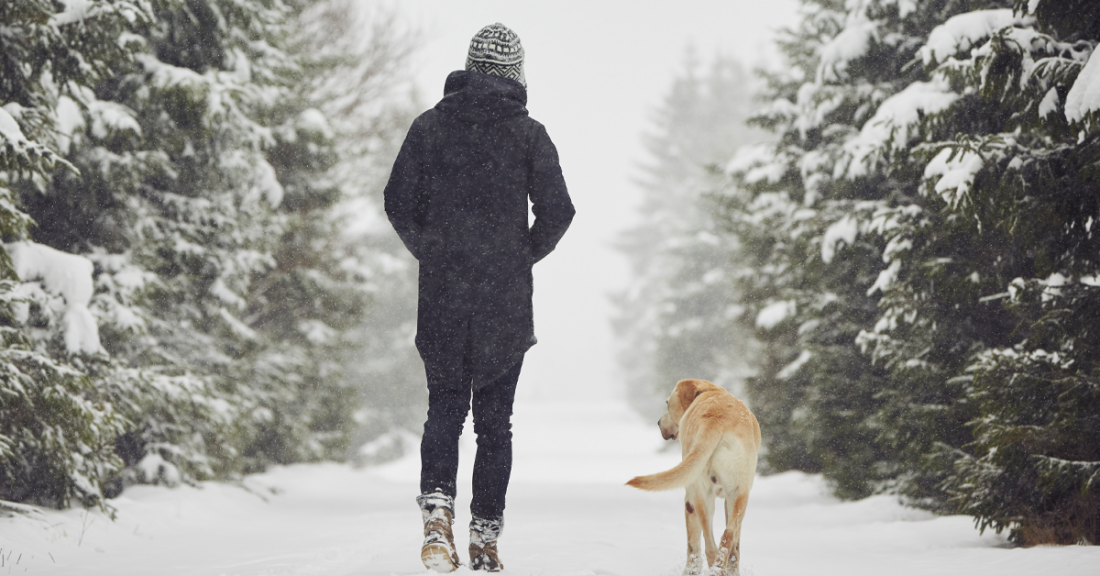

As an added bonus, you can practice it anytime and anywhere: on your way to work or school, on your way to a working lunch, on your way to the afternoon shopping, or even to the gym. You can go for a walk absolutely anytime and we're sure your body and head will thank you. A short stay in the air will also boost productivity, which will come in handy when you're working or studying for exams! Don't forget to dress well though - after all, walking is a slightly more sedate activity compared to the sports listed above, so you need to keep your body warm.
Running
Of course, you can run in winter - just like any other season, but you need to adjust your equipment accordingly. Buy proper shoes and warm clothes so that you can run well even in cold weather. As for running itself, research suggests that running in cold weather offers many interesting benefits. For example, it turns out that you can run a much greater distance in cooler weather because it takes longer for your body to warm up and sweat than it does when you run in the heat. Plus, the fresh air and coolness will promote heart health, oxygenate your brain and make you feel great.
Be sure to get a good stretch before your run and watch out for icy pavements! However, if you're not used to running outdoors, we recommend starting with a treadmill at the gym and moving outdoors in the spring. Because although running has many benefits, if you're not used to it, the combination with cold weather could be quite destructive to your immunity.
Recommended

Nebbia Tvarující šortky s V-shaped pasem STRONG BEAUTY 428
Nebbia Sportovní podprsenka se střední oporou ICONIC 230
Nebbia Legínové šortky s vysokým pasem 9” SNATCHED 614
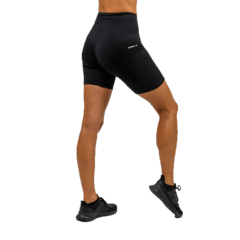
Nebbia Cyklistické šortky s vysokým pasem ELITE 467
What about activities you might not have thought to count?
If it's a winter of heavy snowfall and you have a house or cabin with a backyard, shovelling or brushing snow every day is a challenging activity. It may not seem like it at first, but think of how much you'll work, sweat and stretch every time you do it. No wonder, such a not-so-favourite activity can be quite demanding and it also engages the muscles of the whole body. Are you sorry you don't have a yard now? Offer to help your parents, grandparents or elderly neighbours down the street - as well as doing something for your health and fitness, you'll be doing a good deed. And it will pay off!
A good family snowball fight, sledging or building a snowman will also do a great service. If nothing else, spend time with loved ones and enjoy some fresh air because... hand on heart, do you have as much time in the week as would be ideal?
What to take away from the article?
It's actually quite normal to want to do a lot less sports in general and outdoor activities in particular over the winter. But being outdoors has multiple benefits for our overall health, sleep quality, fitness and mood, and that doesn't change in winter! That's why today we've talked about the best activities to do outdoors in the winter - from classic walking, which is the perfect year-round activity for everyone, to running, skiing, cross-country skiing, skating, and the hated snow shoveling.
As well as pumping fresh air into your lungs, you'll also burn a decent amount of calories in most activities, have a lot of fun and we have no doubt you'll feel great! But don't forget to wear adequate clothing and footwear!
Sources:
Pedersen, B. K., & Bruunsgaard, H. (1995). How physical exercise influences the establishment of infections. Sports medicine (Auckland, N.Z.), 19(6), 393-400. https://doi.org/10.2165/00007256-199519060-00003
Campbell, J. P., & Turner, J. E. (2018). Debunking the Myth of Exercise-Induced Immune Suppression: Redefining the Impact of Exercise on Immunological Health Across the Lifespan. Frontiers in immunology, 9, 648. https://doi.org/10.3389/fimmu.2018.00648
Molkov, Y. I., & Zaretsky, D. V. (2016). Why is it easier to run in the cold. Temperature (Austin, Tex.), 3(4), 509-511. https://doi.org/10.1080/23328940.2016.1201182
Stöggl, T., Schwarzl, C., Müller, E. E., Nagasaki, M., Stöggl, J., Scheiber, P., Schönfelder, M., & Niebauer, J. (2016). A Comparison between Alpine Skiing, Cross-Country Skiing and Indoor Cycling on Cardiorespiratory and Metabolic Response. Journal of sports science & medicine, 15(1), 184-195.
Phillips, D. P., Jarvinen, J. R., Abramson, I. S., & Phillips, R. R. (2004). Cardiac mortality is higher around Christmas and New Year's than at any other time: the holidays as a risk factor for death. Circulation, 110(25), 3781-3788. https://doi.org/10.1161/01.CIR.0000151424.02045.F7
No posts have been made yet.








