





Revolutionary Volume Training by John Meadows - Part I
 Author: Šárka Randáčková
 In this first installment, we'll explore the groundbreaking philosophy of acclaimed coach and professional division athlete under 212 pounds, John Meadows.
Nonsensical workouts abound , and most of them are just a patchwork of a few different techniques with a pretty name. However, we do have a few workouts that have built a reputation. I recall Dante Trudel's DC Training and Hannah Rambod's FTS-7, for example. And then there's Mountain Dog Training from John Meadows in Ohio.
John doesn't have stellar genetics, so he had to experiment and be innovative enough to eventually get to a level where he could compete in IFBB. He started sharing his findings online over 15 years ago, and today the main ideas are summarized in a program we call Mountain Dog Training.
Why is it so effective? What makes it different from other programs? These are just a few of the questions I asked John about this program, a program that thousands of bodybuilders would put their hands in the fire for.
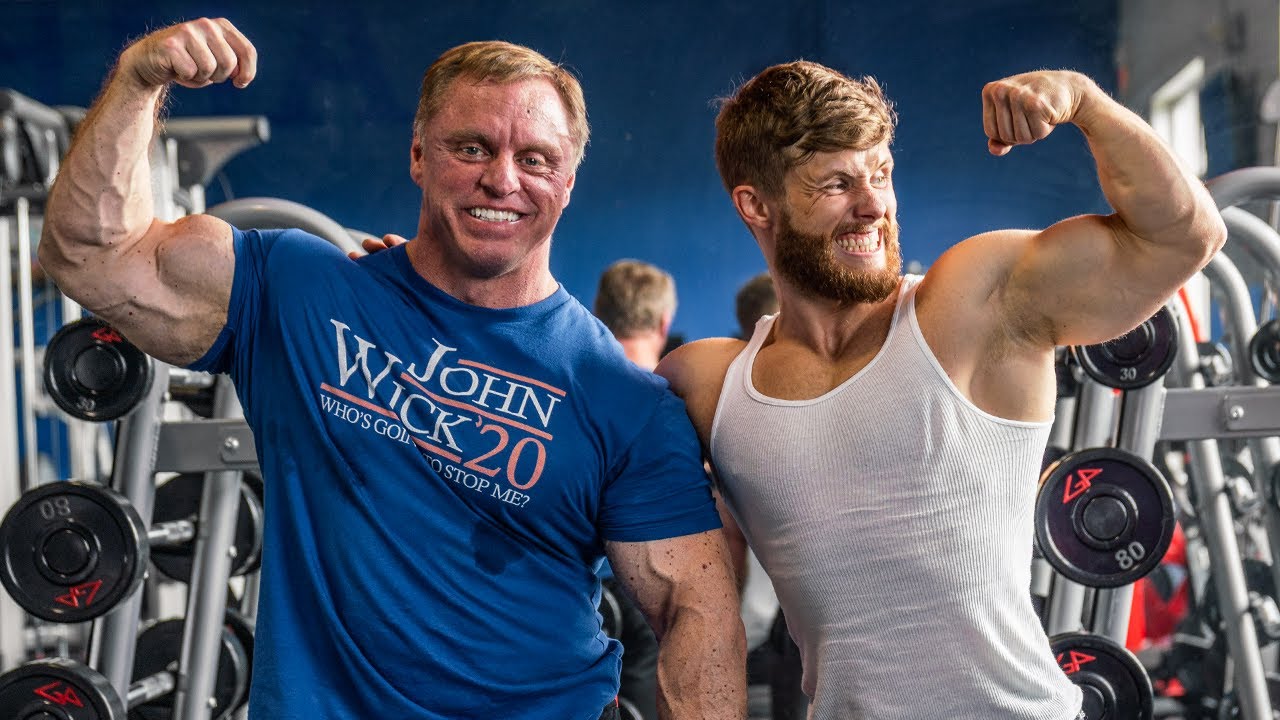
Who was your inspiration in training?
Tom Platz. Simply because of his intensity. Specifically, I was impressed with his ability to work through pain and go beyond the limits.
I was also very influenced by Louie Simmons. I spent some time at Westside Barbell as a triathlete, and I learned a lot from him. They were probably the most fun workouts of my life, too.
I should also mention Dave Tate, my partner who runs EliteFTS. Together we are always trying to improve. We're always exploring new things.
What problems have you seen in the current training systems?
The problem I see with most is that they only look at hypertrophy from one perspective. In other words, they either use progressive overload and nothing else, or it's classics like German Volume Training, 10 sets of 10, etc. What they don't take into account is that hypertrophy can be stimulated by different techniques, within a single training unit.
We can do it with mechanical loading, chemical changes in the body, lactic acid, things like that. The way I look at it, all those techniques can make the muscles grow, and I try to buy them in a way that maximizes the benefit.
What makes Mountain Dog training unique?
Two reasons. Everything in it is very logical. The second exercise builds on the first, the third on the second, and so on. The structure of the workout allows for maximum effort, with very little risk of injury.
And that's the second thing. I structure the whole thing so that people work their asses off, struggle through complex exercises, crash sets and things like that, but I try to do as little damage as possible so they can recover. So what's unique, I think, is the intelligent structure of the training.
Recommended


Prom-in CFM Pure Performance

Nebbia Crop top tílko GYM THERAPY 618

How has Mountain Dog training changed and is it still evolving?
It is constantly evolving. It never stops. For example, I have now started to incorporate higher frequency on certain body parts. In some places it works, in others not so much.
You have to keep experimenting, have good instincts and know your body. A lot of people are stuck in this idea that they just have to lift heavier weights all the time or they won't grow. Six months later, there are injuries. Or conversely, they just pump and don't build any muscle density.
I'm constantly trying to improve the program. Whether it's the exercises or the order. I'll give you an example of my lower lats. I think I've improved my back a lot. I'm doing one-handed pulldowns with a supinated grip and I'm clenching the lats very hard. I feel a lot of pressure in my lower lats.
Then I'm going to go for pull-ups with 100 or 125 pounds. But I'm clenching the bottom lats on those, which takes a lot of work off them. After that, my lats are extremely pumped. When people see it on paper, they think there's nothing special about it. But it's the technique that makes it a unique combination.
I have a pretty fragile lower back, and I do this three days a week. Touching it three times a week doesn't sound like a good idea. But I'm not packing on 300 pounds, and I'm not just throwing it from place to place. I'm actually clenching my lats, doing an isometric contraction, and my lower lats have improved incredibly by doing this. It's also rehab for my lower back, which is in good shape now. This is no coincidence, I just think of training this way.
How did you come up with so many unique exercises and variations?
You probably only know half of them. The other half sucked, so I ditched them. When you experiment, sometimes things don't work. But sometimes I find a variation that works great. When I was 20, Jim Seitzer was training at my gym. He competed with Tom Platz in the '70s.
One day he told me he'd never seen anyone more creative. Sometimes all we have to do is change the position of our elbows, and we have a much more effective exercise. So for me, it's instinct. And I've had it for over 20 years. The traditional way of doing exercises sometimes didn't work for me. And a lot of areas just didn't want to grow, so I had to come up with something for them.
The most unique exercises I use are for my back. I've had trouble with them for years. Classic pull-ups and deadlifts didn't work for them, so I had to find something else. A lot of people just ignore that what they're doing isn't getting them results. They don't give a shit. They keep practicing the same way, and they look the same. I'm different, I need and find ways to improve.
Share with us the successes of your clients.
I'm very proud of the work I've done with some of the older guys. One is Mark Dugdale. Four years ago, everyone was writing him off. He had a ton of muscle on him from his classical training, but the corresponding placement wasn't coming. After a year, he competed with me three times. He was third twice, second once, and qualified for the Olympics. He looked like he did years earlier, which people couldn't believe.
And I've now had two years with Fouad Abiad. People said he was good. The kind of second-tier bodybuilder who may never win a contest. I trained him for three competitions last year. He came second twice and won his first pro contest at the third. So he's a 30-year-old who's suddenly improved tremendously.
If you take a young man, put a ton of food in him and make him train hard, he'll usually grow. It doesn't work with older guys. You can't just tell them to squat, bench and deadlift as hard as they can. They're gonna get hurt. You can't even make them eat 6000 calories a day because they'll get fat. I think I have a knack for this. I can work with older men. I can help them improve 10-20 percent.
In part two, John will talk about the off season, improving lagging areas, and current Mountain Dog training routines.
Author: Šárka Randáčková No posts have been made yet.








