





Rest as a way to better results
 Author:
 If you exercise, then you are likely to be one of those people who are very results-oriented. This will be supported by most fitness websites, where you'll find countless articles on diet, supplements, training and posts literally bursting with motivation to further your desire for better results. But on the other hand, fitness articles rarely ever mention rest, relaxation techniques and the like. That's why today we will introduce a technique called DELOAD, which all (not only) strength-training athletes should know.
You may be wondering how the hell some silly deload, designed as a rest phase, can get you anywhere, when after all, the key to muscle growth is heavy weights. And that's exactly why. Strength training is extremely beneficial for the body and brain, but beyond that, it's also a major stressor. Stress for the joints, stress for the muscles, tendons and also for the central nervous system. It's okay to keep trying to get better and better results, to keep pushing your progress forward. But after a period of time without a break, it can result in your body being completely exhausted - physically, mentally, or both, and then it's only a matter of time before an injury or illness comes as a defensive reaction.

The period when you are on the verge of that stress exhaustion is something that every fitness enthusiast probably went through in their early days. Manifestations? You're constantly tired to the point of exhaustion, you don't feel like doing any physical activity, let alone training properly, and as far as strength goes... you don't have much to spare either. How do you get out of it? The solution is called the DELOAD phase. Simply put, take your foot off the gas when it comes to training for at least a week. Let's explain this in a little more detail.
Most fitness enthusiasts design their workouts based on the time-tested overload principle, the essence of which is tocontinuously increase the training load. This means adding weights, shortening rest periods, or increasing the number of training units. This is probably the most well-known training method and it works very well, but if you "push the envelope" too much and don't rest during the process, you can cause yourself to take unplanned long training breaks.
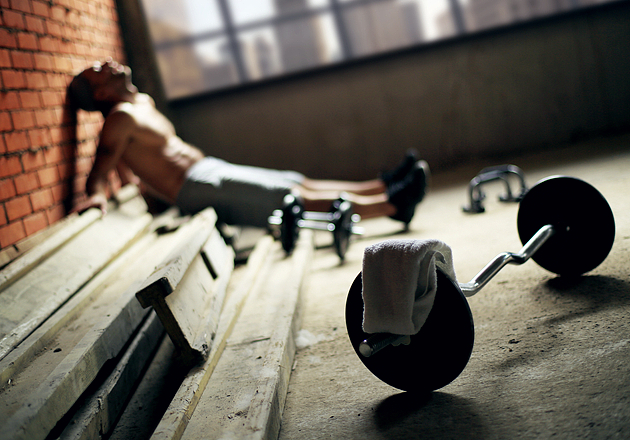
The deload phase is all about taking time off after a long period of heavy training. There are several ways deload can be applied. From total weekly "doing nothing", to replacing one - x strength workouts with cardio, to classic weight reduction. The most used form is probably just reducing the training load. Deload is ideal for when you feel really tired and can't move forward in your progression. You don't only become stronger by putting undue pressure on your body during training, but also by proper and sufficient recovery after the training is over and of course proper and sufficient diet.
Recommended

Nebbia Tepláky Straight Leg URBAN 490

Intense Šortky GOLD Nebbia print 828

Nebbia Washed bavlnený rag top GOLDEN AGE 788

Puhdistamo Night Magnesium
Well, wait a minute, but if I skip the workout, I'll go back to the beginning, right?
Yes, you may have thought of that. If you drop training, you go back to where you were, and nobody wants to go back to the beginning. But the fact that you've been training hard for a long time is the real reason to think about adding deload. Deload doesn't mean you have to stop altogether. It means you cut your weights in half, for example. Exercise will suddenly feel a lot easier, and that's exactly what you need. The human body is an amazing "machine", but it can't hold everything. If you don't give it room to recover by reducing the pressure exerted, then you are subjecting it to reduced recovery capacity, constant fatigue, which can result in injury.

Don't take this phase as some kind of evil. Think about your health and your body - deload is quite effective in preventing injuries. It gives your joints, tendons and of course muscles and nervous system room to recover. The constant need to perform at 100% can have more serious consequences than you might think. This training method will not only strengthen your physical side, but also your mental side. The rest will make you much stronger, more motivated, and make it easier for you to overcome limits you couldn't before.
Deload, during which you will lift much smaller weights than usual, can be perfectly used to concentrate on the technical execution of exercises, because the technique during lifting heavier weights is often quite lame, so to speak. With this, for example, you can modify bad training habits that prevent you from pushing the limits or are risky for developing injuries.
Also, focus on a stronger mind-muscle connection. No, I'm not saying you should meditate or God knows what while training. What I mean to suggest is that by using smaller weights, you can learn to get a perfect sense of whether you're really training that particular part and not engaging other muscles. At the same time, you can use this period to incorporate new exercises. It is always better to learn a new exercise with a smaller weight, because the body is not used to it and with a heavier load the muscles might suffer. After the deload is over, incorporate the exercise into your regular training with a heavier weight to revive the "stale" workout.

How often to include such deload?
Like most such questions - there is no clear answer. It depends on many factors, such as age, number of training units, their difficulty, injuries suffered and more. For powerlifters, it is recommended to do deload about every eighth week, some people need it once or twice a year, but such an average recreational strength athlete should include it about three or four times a year. The need for deload, like daily intake, macronutrient ratios, and other things, is very subjective, so there is no magic time to apply deload. It's about listening to your body and feeling the signals it gives you. Unfortunately, what often happens is that people only realise they need deload when it's too late.
Deload is a very effective and important technique that can help you achieve your set goals. It also serves as a prevention against injury and overtraining. As a result, you should recharge your batteries and possibly find your lost motivation. You don't have to worry about losing muscle mass during the deload phase - just as you won't grow muscle in a week, you won't lose it in a week either. Not even fat gain, unless you make deload week a week of uncontrolled cheat week.
Support your performance with quality supplementation!
In our shop you can choose from a lot of proteins, gainers, amino acids(bcaa, glutamine, ...), vitamins and minerals, creatines,fat burners and much more. So don't hesitate and step it up a notch!
Sources:
https://www.ncbi.nlm.nih.gov/pmc/articles/PMC4126298/
https://www.ncbi.nlm.nih.gov/pubmed/12580677
http://tonygentilcore.com/2012/01/the-deload-week-and-why-you-should-use...
https://www.ncbi.nlm.nih.gov/pubmed/24781888
No posts have been made yet.








