





New modified 5x5 squat program
 Author:
 I'll probably get a few kicks in the ass for writing this article. Dave Tate, Jim Wendler, Eric Cressey... I can just see everyone coming at me with their negative reactions. And not only that, but Louie Simmons only lives three hours from me. He's just gonna drive down here to Indianopolis and kick my ass, too. But what I have to say simply has to be said.
Are 5 x 5 programs really the only way to get strong? Of course not! Although a lot of people will tell you the exact opposite. Truth be told, if you're a beginner or a pro on the contrary, there are a number of negatives and shortcomings here.
But is all of this in place? Is it possible for someone to really succeed with this program? Is it really the best possible way to train for an intermediate fitness operator? I think so, and that's why I'm not afraid to put my butt on the line, because the result will be some serious, steely muscles.
Why this program is a must for you!
A lot of people think they are much more advanced than they really are. Everyone wants to play on ego and feel important. They think of themselves as having to run an advanced program because that is the only way to succeed. But is it true that they really have to? Now let's look together at the differences in what constitutes success for a beginner, intermediate and professional.
Beginner
A beginner gains strength basically no matter what exercise he or she practices. Even so, the more weight, the more success. The biggest gain for him will be a neurological gain - the more proficiency in the movements, the more weight on the bar. In other words, if you want to perform more squats right off the bat, focus on quantity, that is, simply add more reps!
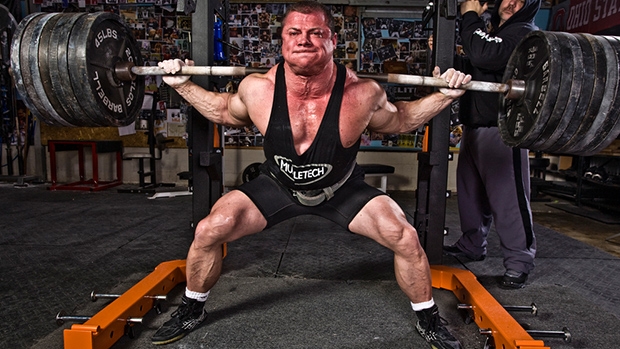
Advanced weight lifter
For advanced weightlifters, it's essential to think giant about how we're going to weight train to gain strength. If we load too much, it can be very easy to overtrain.
From a neurological point of view, advanced weightlifters are much fitter. This means that each repetition supports and "hardens" their recovery system. In other words, an advanced weightlifter needs to train more with heavy weights and needs fewer repetitions - they will only do a few weightlifting squats, but they will do so much more intensely.
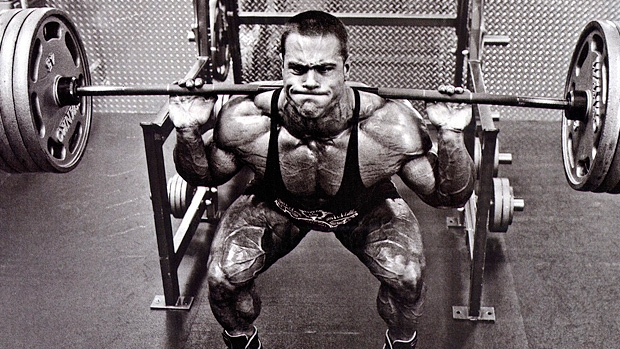
Intermediate weight lifter
What is it that intermediate lifters are on? If you say, as you might expect, somewhere in the middle, you get a gold medal for the day! While a set of 8, 10, 12 or 15 reps won't do any wonders, intermediate weightlifters don't have a strong enough strength base and don't know the proper techniques for training for intensity, not repetition volume.
Therefore, it could be said that a program that incorporates lower rep sets and focuses on increasing overall intensity will certainly lead to success. In other words, you need to be somewhere in the middle, in the range. It's about trying to increase intensity without "hurting" the number of lifts. For most of us, a 5 x 5 program (five sets of five reps) will easily accomplish its purpose.
5 x 5 until muscle collapse
I would say that far too many people consider this program to be a sort of panacea for all lagging muscles or body parts, and unfortunately, it's not uncommon for them to simply kill themselves off. Not only do they perform this exercise on all muscles, they perform it in such a way that they don't give the body any rest. Therefore, it is not surprising when one hears a weight lifter moan, "I tried 5 x 5, but I didn't make it, I overtrained, and now I'm injured."
It wasn't the program's fault, it was the individual's fault! If you do the exercises as shown in the following table, my advice is to stop sooner rather than later.
Squats, 5 x 5
Deadlifts, 5 x 5
Bench Press, 5 x 5
Deadlifts, 5 x 5
Worst of all, you only do one workout like this and you're "done." It's no wonder guys who do this end up with torn muscles and completely spent!
While my modified 5 x 5 program is based on a 5 x 5 type exercise, it is a single exercise and is only performed one week in a cycle. I personally have had an excellent experience with the program (especially when it comes to squats), so we'll look at what this program has given me later. But first, let's look at whether or not you are truly an intermediate weightlifter.
Am I even intermediate?
I know you'll no doubt ask yourself this question, so I'll address it at the outset:
My answer is, "I don't know."
It's really hard to pigeonhole weightlifters. Are we talking about chronological age or training age? Are we focusing on our relative strength qualities or our absolute ones? Even these seemingly simple questions make it clear that the answers can vary widely.
Here's a look at some of the basic rules that determine whether or not a program is right for you:
- Have you been exercising for less than three years?
- Are you able to lift twice your weight during squats using only the straps (of course, consideration should be given to lifters of larger sizes).
- Do you have good technique to lift light/heavy weight during warm-ups, but do you struggle to get more reps on subsequent sets?
It's hard to make any classifications, but I still believe that most weightlifters reading this site will benefit from a similar program.
Mike's progress with the workout
In my first weightlifting performance, I lifted 160kg in squats. And you wouldn't believe the embarrassment I put myself through. Even though I weighed around 90kg, 160kg was just too much. I'm not entirely sure, but I believe that even in women's weightlifting, there would be some that would top me (and in a light weight class at that).
I trained for a long time to get a more confident position during squats. I've tried everything from wave-loading (lifting alternating lower and higher weights), to Russian squats, to klusters, etc. Basically, you can say that whatever you can think of, I've tried. Overall though, I can say that two things have helped me:
1) Determination to get new, effective technique
2) following a cycle of squats in conjunction with well-planned assistance
In a nutshell, it went like this: when I did this cycle (3 sets for 5 reps) the first time, I ended up doing 150kg the last week with 90kg of bodyweight. The last time I ran it (about two years ago), using the same training method, I got to 200kg with about 100kg bodyweight. Furthermore, I am able to do the squat not with 220kg but 250kg.
As far as I'm concerned, I don't think a 40kg increase in squatting is any small feat. So I hope that my program will bring success to you too!
Cycle
Here is a template showing what to do and how to do it week by week:
| Series and Reps | Weight lifted | Rest periods | Equipment used | |
| Week 1 | 4x5 | 70% | 3-4 minutes | None |
| Week 2 | 5x5 | 80% | 4-5 minutes | Belt (as needed) |
| Week #3 | 3x3 | 65% | 3 minutes | None |
| Week 4 | 3x5 | 85% | As needed | belt |
Program Notes:
- The first week is basically introductory. It's all about getting in the mood and trying to do everything without the need for equipment (not including the belt). Still, it turned out that it was after the first week that I felt the most paralyzed.
- The second week is when the intensification of the workout occurs. We not only add the number of lifts (25 out of 20) but also the intensity. If you survive this, you'll see how it's possible for people to gain so much strength and muscle from 5 x 5 training! The belt can be used, but it is not necessary. I didn't use it at first, but once the workout occurred for about the fourth or fifth time, I put it on, just for this second week.
- The third week is a light rest week. At first, I was somewhere around 75% of maximum hostility, but then I realized I was getting pretty exhausted, so I slowed down. A mental and physical break is necessary here.
- The fourth week is the time when we load the most weight ever while reducing the number of lifts.
- As you'll see later, I try to periodize the use of the tools as well. I am a firm believer that brute force can transfer seamlessly to heavier gears on the implements, which is why I use both overbars and bands throughout the year. If using more gear (pendulums, double/triple buckles, etc) is common in your sporting circuit, consider it right from the start. It usually takes some time before you get to know the new equipment.
- As for rest times, we can only make recommendations here, we have no clear rules. Keep in mind that it takes the nervous system about 5-20 minutes to get back to its original position, and the muscular system is no different. Therefore, try to follow a rest routine and try to be alert and rested before each new set.
- It should also be said that this was my max using the belt (not a "competition" max). Leave your ego at the door when trying this program for the first time. It's always better to start with a small margin so your body can better cope with the extreme load. If you still decide not to heed this advice, I warned you!
About the author
Mike Robertson, M.S., C.S.C.S., U.S.A.W., is the director of Custom Athletics and president of Robertson's Training Systems in Indianopolis, Indiana. Mike received his Master's Degree in Sports Biomechanics from the Human Performance Laboratory at Ball State University and was a professional bodybuilder for five.
No posts have been made yet.








