





New exercise for quadriceps and biceps
 Author:
 Introducing the new, useful goblet squat with kettlebell barbell.
You need to know this:
- The goblet squat and deadlift combines a squat with a kettlebell barbell and a biceps deadlift. Perform a regular goblet squat and 2-3 biceps raises underneath.
- This exercise will improve your squat technique. Do a few sets before your classic squats.
- It will add volume to your workout and improve your biceps. At the end of your squat workout, still do 2-4 sets of goblet squats of 6-12 reps.
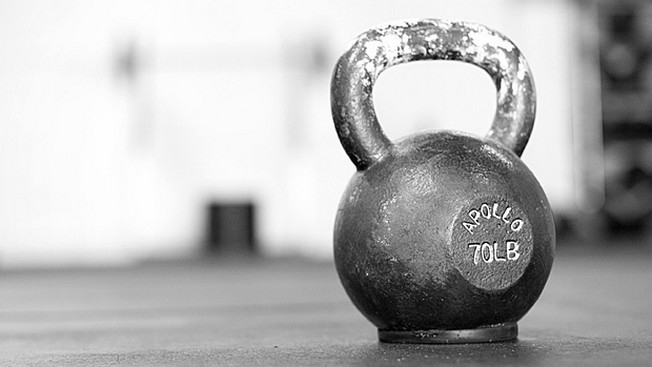
Going to the gym. So it's safe to assume you want to squat a lot as well as have big biceps. This exercise will help you with both. Which you're probably wondering, right? This is how the goblet squat and deadlift works.
HOW TO DO IT?
- Start with a classic goblet squat with the grip just below the chin. Concentrate on the correct position of the spine and shoulder blades. Keep your shoulder blades back and your chest in a neutral position.
- Engage the abdomen, keeping the pelvis neutral and the hips moving backwards. Concentrate on spreading your legs as if you were about to rip up the floor beneath you. This will engage the glutes and hips more.
- Place your elbows between your knees and hold this position to perform 2-3 biceps raises with a kettlebell.
- Lean into your heels and keep spreading the floor with your legs. Return to the starting position explosively. Make sure to always return your hips all the way forward and stay upright.
HOW TO USE IT
This exercise will help you improve your squat technique and explosiveness in the bottom position - and add a little work for the biceps. You can incorporate it two ways in your workout:
- As a warm-up before squats: you'll do 1 set (2 max) of 4 to 6 reps. This will help you with technique for heavier sets of squats.
- As an auxiliary exercise during squat training: you will give 2-4 sets of 6-12 reps to add volume to your workout and to recover your technique after heavy sets of squats. You'll also get your biceps hugely pumped here, which we all love.
You just have to decide which goal is more important to you and use the goblet squat accordingly.
HOW IT HELPS YOUR SQUAT TECHNIQUE
The goblet squat is not meant to add strength to you. You can't put enough weight on it for that. The weight won't even come close to what you can handle on a back squat. But it will eliminate classic squat technique blunders. These sins include shifting your weight forward, losing proper chest position into flexion, and moving your knees inward.
Since you have the weight shifted forward, this will help you understand the mechanics of the squat correctly. The kettlebell dumbbell position also emphasizes engaging the center of the body.
The kettlebell dumbbell position will further stress the extensors of the thoracic spine, which will need to hold its neutral position. Unlike the front squat, where the elbows are parallel to the floor, here they are perpendicular to it, allowing you to focus on the chest position while gravity, through the kettlebell dumbbell, tries to round your chest. You will then use this ability to hold the position during the back squat.
In the bottom half of the exercise, your elbows will get between your knees. This will force you to hold a neutral position with your knees, and not allow them to shift inward.
The lighter weights will again allow you to focus on your knee technique and try to "tear up the floor." This will also engage the glutes more, and make you stronger.
WHAT ABOUT THE BICEPS LIFT?
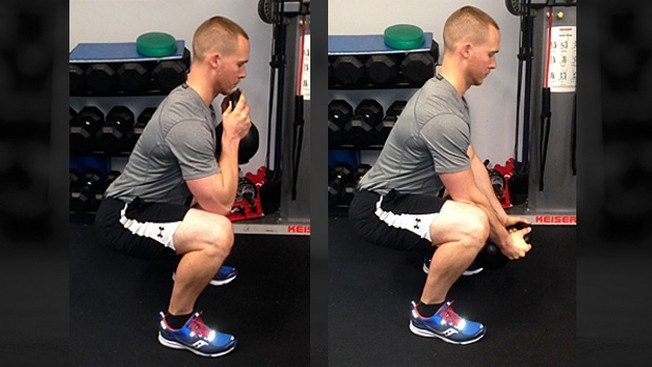
Not only will it pump up your biceps, but it will force you to be isometric in your bottom squat stance. This position will reduce the elastic response at the bottom of the squat, and you won't have to use as much explosive force at the bottom of the squat.
The lift will also force you to hinder your thoracic spine from flexing forward, which will again help prevent squatting with heavy weight from forcing you to hunch your chest forward. Try this.
Source: www.t-nation.com
By Kyle Arsenault
Translated by Jaromír Uhlíř (Cha Cha)
Original Article Title: One Exercise for Stronger Squats & Biceps
No posts have been made yet.








