





Neglected strengthening of internal muscles. Why it is worth not neglecting this training
 Author:
 Everyone who is involved in sport has probably come across the term CORE. In translation, "core" means the core, and is therefore meant the internal musculature of the body. Most people mistakenly associate this term with the chiseled cubes on the abdomen, but that's far from what we should really think of under this term. The muscles we refer to as "core" also include other muscles, such as those that protect the spine. So why should we neglect to exercise them?
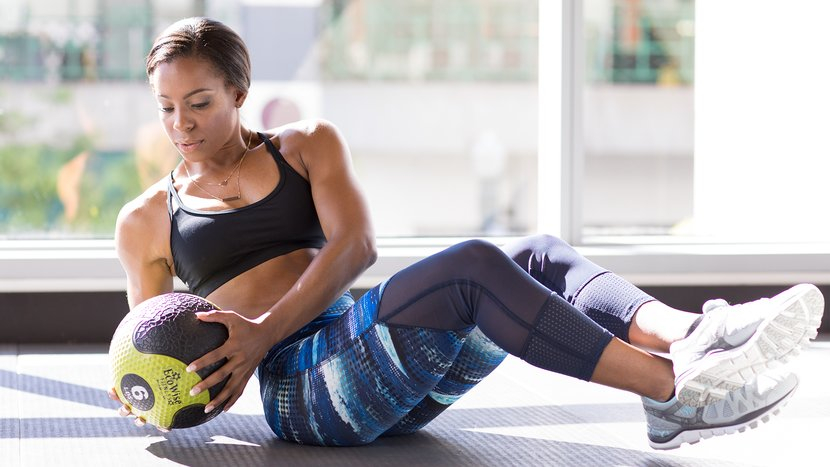
Most athletes (whether elite or recreational) make the mistake of not addressing the HSSP (deep spine and trunk stabilization system) until the end of their workout, when their body is already tired, and often skip this workout for this reason. But weak internal muscles , for example, do not protect the spine as well as they should, which rapidly increases the risk of injury, even when performing the simplest everyday tasks such as cleaning or even walking. A weak mid-body can even lead to chronic back pain. Even the most common movements we make in a day very often involve the spine in terms of bending, and this is why core training should definitely not be underestimated.
What do we mean by "core"?
As mentioned in the opening lines, in association with core, most people think of the deep abdominal muscles and perhaps therefore the muscles around the spine. But it certainly doesn't stop there! Many other muscles "work together" with the muscles of the upper body to ensure sufficient stability of the spine. Thus, the muscles belonging to the HSSP group include - the pelvic floor muscles, the hip flexors, the quadriceps, the transversus abdominis, the oblique abdominis externally and internally, the rectus abdominis, the multifidus, the trunk extensors, the thoracic muscles, the lumbar muscles and the diaphragm.As you can see, the list of muscles is quite extensive, so it is not enough to simply strengthen the abdomen with crunches. Incorporating quality HSSP training is very important for improving posture, improving breathing patterns, increasing functionality, for stabilization and better coordination of movements, and also this type of training is very effective for injury prevention.
What are the benefits of hssp training?
Many people take HSSP training lightly and only use common exercises like crunches to strengthen their abs. If the opening lines didn't convince you too much that you should pay more attention to this type of training, let's list the main benefits of internal muscle training pretty clearly.
Improvement of posture and breathing stereotype
Good posture is very essential if you want to avoid back and cervical spine pain. A strong mid-body also affects the breathing stereotype.
Improving functionality and performance
You will appreciate a strong mid-body not only as an athlete, but also when performing everyday activities.
Better stability and coordination of movements
A more stable spine means better stability of the whole body. A strong centre of the body is therefore essential for everyday activities and sports. Thanks to core training, you will be able to control all your movements better and thus simplify your daily life. Better coordination of movements can also ultimately reduce response time while increasing agility, leading to an overall increase in performance while reducing the risk of injury.
Significant help with back pain and prevention of its onset
People who spend most of their time in the office tend to unknowingly bend their backs to the computer, and as a result, develop chronic back pain. According to studies, a lot of people suffer from back pain, mostly in the lower back area, which is caused by overexertion or improper posture. The spine, especially the lumbar spine, is often overloaded and often leads to lower back syndrome. Strengthening the middle of the body can therefore help to eliminate back pain. It also reduces the risk of spinal injury, or at the very least, you can achieve a reduction in the frequency of back pain through this exercise.
Lower risk of injury
By improving posture, balance, coordination, strength and developing the muscles that support the spine, your body is stronger and much more resistant to injury.
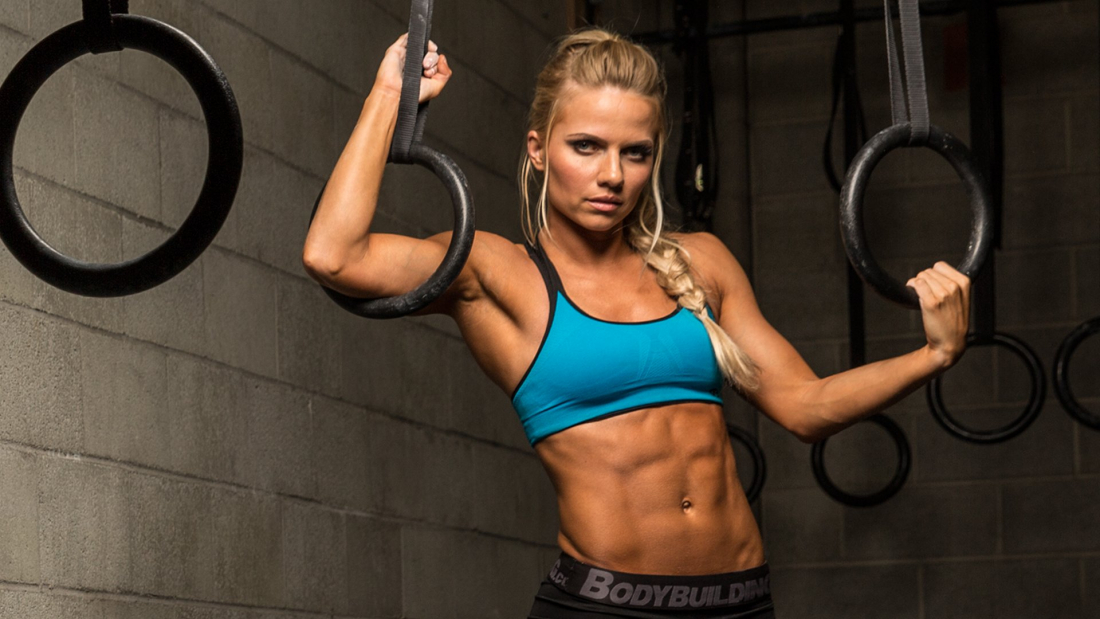
The basis for most exercises
A strong mid-body is, dare I say, an absolute necessity for most exercises, whether they are strength exercises such as the squat or deadlift, or elements of strength and endurance sports such as skating, boxing and more. If you don't have a strong mid-body, you often don't perform an exercise correctly and are much more prone to injury.
Strengthening and shaping the abdominal muscles
As a final point, we must of course not forget the effect on the abdominal muscles. If you take up core training, you are on the right track to a sculpted abdomen. However, for a perfect belly it is much more important to focus on a good diet, because as you know - "the belly is made in the kitchen" by which we mean that the visibility of the abdominal muscles is mainly determined by the percentage of body fat.
What exercises to choose?
There is a plethora of exercises for HSSP , probably more than for any other part of the body. In general, we divide exercises designed to strengthen the HSSP into static and dynamic. Balancing aids such as the bosu, gymnastic ball, overball or TRX are very often used for this exercise. Of course, it is also possible to exercise without these aids. So let's show some suitable exercises that activate the HSSP.
Recommended
Nebbia Fitness overal 5” HAMMIES 603
Nebbia Teplákové kraťasy GYM BRO 352
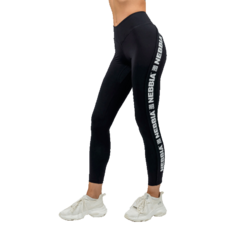
Nebbia Legíny s vysokým pasem ICONIC 209

Nebbia Intense Mini Top GOLD Mesh 830
Plank / plank
A very well-known exercise, which looks quite primitive, but few people actually perform it correctly. This exercise is one of the most complex exercises ever. The plank has two basic versions. The first is the forearm rest position, the second is the palm rest position. In these classic forms, there is no additional movement and are therefore static exercises, the aim of which is to keep the body in this position as long as possible. Let us explain the basic variation with the forearm on the ground.
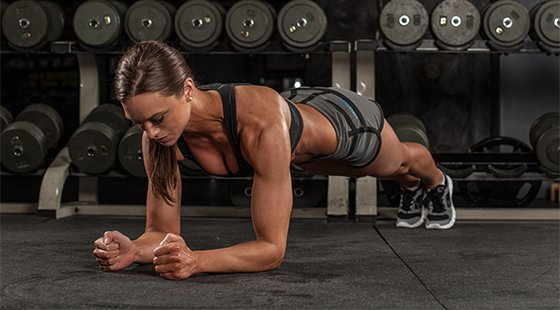
Execution. Hold onto your forearms and lift your torso off the ground. Push your butt up so that your lower body is in a stable position. At the same time, clench your abdominal muscles tightly. Your whole body should be in one plane, i.e. head, shoulder blades, back, butt up to the toes of your feet. The head should be in the same position as when standing, look at the ground and keep the neck relaxed to avoid unnecessary pressure on the cervical spine. A very common mistake is arching in the back, which is caused by insufficient strength of the internal muscles. If you are starting out with this exercise, do not try to break time records. Start with small intervals, but with precise execution.
TIP:
The plank has many variations. These two are basic and are the "easiest" (those who know this exercise will understand why the quotation marks). You can also use the side plank, which involves rolling over to one side and staying in that position. To make it more challenging, you can lift one leg, or an even more challenging version where you alternate lifting your right leg and left arm and vice versa. You can also use a TRX, bosu or other equipment to perform this exercise. There are many variations of this exercise, check out this link for further inspiration.
Knee Lift - Legs in Vis
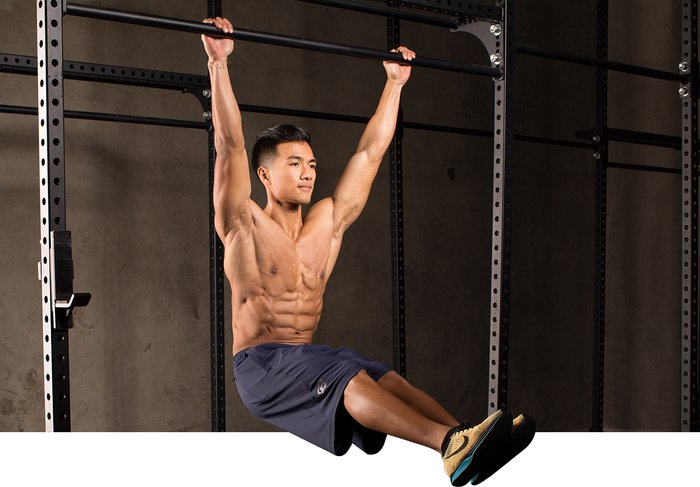
This exercise will certainly not be new to you either. Again, it has many variations, and you use a trapeze bar, ladders, or simply anything you can hang onto. Grab the trapeze bar with your hand. You can start with the easier variation where you pull your knees to your chin and gradually work your way up to the more difficult one where you pull your legs outstretched. When you raise your legs higher than 90°, you begin to engage your abdominal muscles in addition to your hip flexors.
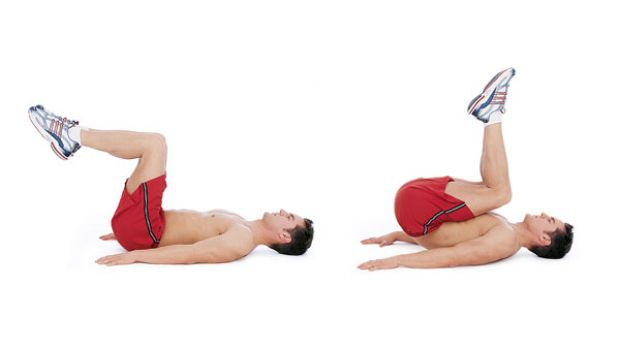
Reverse crunches
Lie on your back and stretch your legs. Keep your arms alongside your body, or outstretched, and your palms should be facing the ground. Bend your knees and lift your feet off the floor. Your thighs should now be perpendicular to the floor, while your calves should be parallel to it. Your legs should thus form a 90° angle. Keep your feet together. Slowly and steadily begin to lift your legs and bring your knees to your chin, slowly bringing them back. The lumbar part of the back must be on the mat all the time.
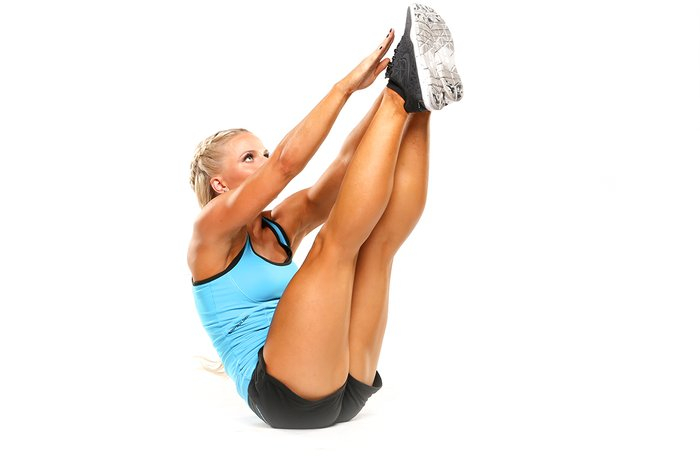
V-UP
The name comes from the fact that in the "working phase" of this exercise, the body is in a "V" shape. The starting position looks like this. Hands should be touching the floor and extended behind the head. Raise your upper torso with your arms extended while lifting your legs so that your heels are pointing towards the ground. Ideally, your hands should touch your feet and then slowly return your body to the starting position.
Glute bridge
Lie on your back, bend your legs at the knees and press your back firmly into the mat. Activate correct breathing. Then lift the pelvis and lower back up to the shoulder blades, the shoulders must remain on the mat. Keep the pelvis natural, do not force it as high as possible. Press the feet against the mat and the body at the same time. Hold the top position for a few seconds, then slowly lower yourself to the floor and repeat.
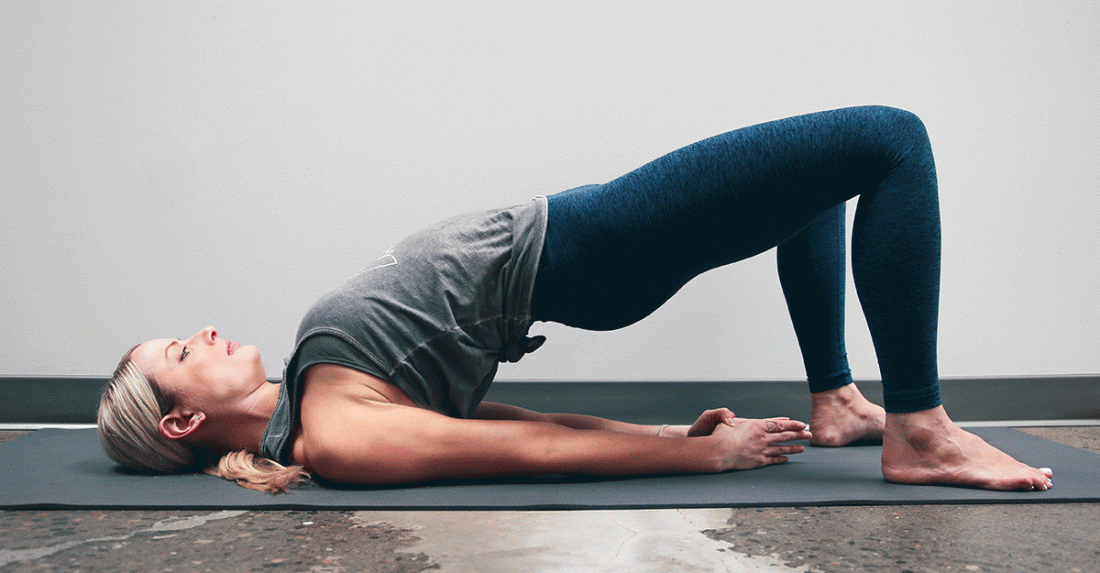
TIP:
To increase the challenge, you can lift one leg in the top position and stay for a while.
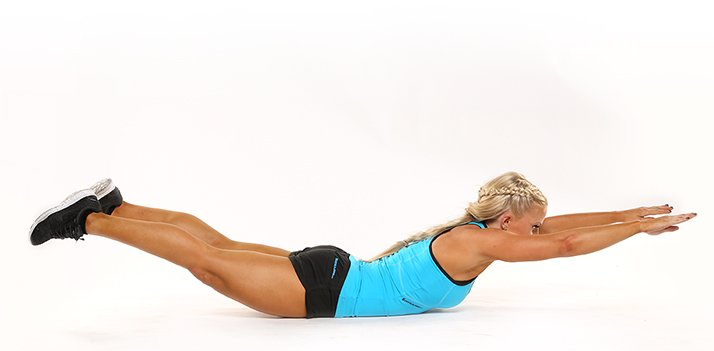
Superman
Compared to the rest, this exercise is more focused on the lumbar region of the back. Lie on your stomach and keep your arms extended above your head. Keep your feet together and your biceps should be at the level of your ears. Lift your chest and legs up at the same time. Clench your butt and push your thighs as close together as possible. Hold the top position again for a moment. Then return to the starting position and perform the next repetition.
Conclusion
Other exercises that you normally do in your training - squats, push-ups, lunges, for example - are also good for strengthening your CORE, but it's definitely worth paying more attention to strengthening your core, if only because a strong core will give you much more confidence that you won't injure yourself when performing challenging exercises. As you can see, exercises to strengthen the HSSP are not so much about weight as they are about carefully feeling the muscles in question. A solid mid-body is the foundation for most movement, not just in the gym, but in everyday activities as well. You should be doing CORE exercises at least 1-2 per week.
SOURCES:
https://journals.lww.com/acsm-csmr/Fulltext/2008/01000/Core_Stability_Exercise_Principles.14.aspx
https://www.ncbi.nlm.nih.gov/pubmed/23542879
http://www.apta.org/Media/Releases/Consumer/2012/4/4/
https://www.jmptonline.org/article/S0161-4754(09)00053-0/abstract
http://www.ncbi.nlm.nih.gov/pmc/articles/PMC3414069/
No posts have been made yet.








