





Modified Prilepin table
 Author:
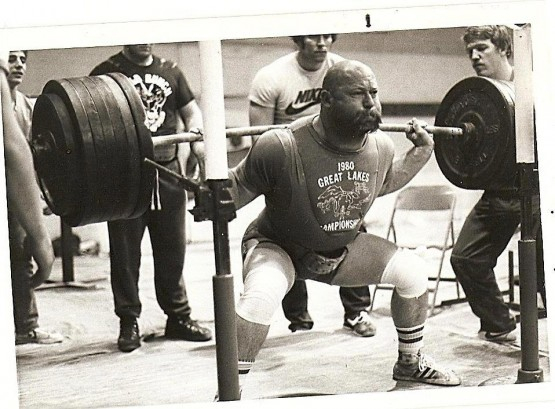
 Louie Simmons, the powerlifting guru and founder of Westside Barbell, is arguably the most influential person in the strength training field over the last 20 years. Many of Simmons' methods are influenced by the studies of A.S. Prilepin, a Soviet strength sports expert. Prilepin summarized his findings on maximal strength development in the following table:
Prilepin's table
| Percentage of maximum | Repetitions in a series | Optimal number of repetitions overall | Total repetition range |
| Less than 70% | 3-6 | 24 | 18-30 |
| 70-80% | 3-6 | 18 | 12-24 |
| 81-90% | 2-4 | 15 | 10-20 |
| above 91% | 1-2 | 7 | 4-10 |
Note: This is strictly a strength table, so lower rep numbers than normal for muscle hypertrophy are listed here.
The first box gives the percentages of the max for a single repetition. For example, if someone has a deadlift record of 500 pounds, 90% is 450 pounds.
The second box suggests the number of repetitions in one set. Notice that as the percentage of the max increases, the number of reps in a set decreases. This should keep you from possibly overtraining due to the increased load on the nervous system.
The third window emphasizes the optimal number of total reps for strength gains. Again, notice that as the percentages increase, the number of reps decreases.
Finally, the fourth window is the range of reps you can perform with a given percentage of weight. As you can see, the optimal number of reps is somewhere in the middle of the rep range. Prilepin was fond of pointing out that any number of reps below the lower limit could cause under-stimulation, and any number of reps above the upper limit could cause a decrease in movement speed due to fatigue accumulation.
Inclusion of time in Prilepin's table
One important element, however, is not included in the table - and that is time. Simmons shortened the breaks between sets due to the increase in work per time, meaning more work for less time. This made the workouts more efficient. Shortening the time between sets also positively affects muscle hypertrophy. So, if we want to increase muscle hypertrophy with the Prilepin table, we should shorten the breaks.
So, if we take time into account in the table, it might look something like this:
Modified Prilepin table - incorporating the time factor
| Percentages | Repetitions in a series | Optimal number of repetitions overall | Total repetition range | Duration of breaks |
| Less than 70% | 3-6 | 24 | 18-30 | 45-75 seconds |
| 70-80% | 3-6 | 18 | 12-24 | 60-90 seconds |
| 81-90% | 2-4 | 15 | 10-20 | 75-120 seconds |
| above 91% | 1-2 | 7 | 4-10 | 90-180 seconds |
Imagine your bench is worth 300 pounds. Take 70% of that number, which is 210 pounds. Since we know that a higher number of reps in a set should result in muscle hypertrophy, 4 sets of 6 reps with 210 pounds and 75-second breaks could be the starting point for the first week of the program. After that, progression in this form could follow. This progression should mitigate the risk of overtraining.
Week 2 : 2-4 sets of 6 reps with 210 pounds and 65-second breaks
Week 3 : 3-4 sets of 6 reps with 210 lbs and 55-second breaks
Week 4 : 4 sets of 6 reps with 210lbs and 45second breaks
in week 5 could increase the number of percentages and also increase the length of the pauses according to the table
Hypertrophy
However, 6 reps or less is not ideal for hypertrophy, so what might Prilepin's table look like if we were more concerned with hypertrophy than strength?
Prilepin wouldn't like this table, he probably wouldn't recommend it. After all, Prilepin was working with purely strength athletes and for them, more reps in a set would lack effectiveness.
Modified Prilepin table - including hypertrophy factor
| Percentages | Repetitions in a series | Optimal number of repetitions overall | Total repetition range | Duration of breaks |
| Less than 70% | 6-10 | 32 | 20-40 | 45-75 seconds |
| 70-80% | 5-8 | 30 | 20-30 | 60-90 seconds |
| 81-90% | 5-7 | 21 | 15-25 | 75-120 seconds |
| above 91% | 1-2 | 7 | 4-10 | 90-180 seconds |
The 3 middle windows have changed. By increasing the number of repetitions, the emphasis is on hypertrophy.
For hypertrophy, the basic idea is that you want to do a certain amount of work in a given amount of time with a recommended rep range and breaks. You can modify this method for yourself provided you don't perform too few reps and rest too long.
Tempo
However, even this table does not yet fully account for all the factors affecting hypertrophy. As Charles Poliquin points out, repetition rate or time under tension also plays an important role.
A repetition can be divided into 4 phases : downward movement ( eccentric phase ), transition to concentric phase, upward movement ( concentric phase ) and transition to eccentric phase.
A 4/1/2/1 tempo for the shoulder press exercise would mean that 4 seconds would be spent in a controlled movement with the barbell down to the chest, 1 second to pause at the chest, 2 seconds to push the barbell up and finally 1 second to pause at the top position before starting the next repetition.
So, the time under tension should also be factored into our table to be thorough.
Completely modified Prilepin table for muscle hypertrophy
| Percentages | Repetitions in a set | Optimal number of repetitions overall | Total repetition range | Duration of breaks | Time under tension |
| Less than 70% | 6-10 | 32 | 20-40 | 45-75 seconds | 4/1/1/1 - 3/1/0/1 |
| 70-80% | 5-8 | 30 | 20-30 | 60-90 seconds | 4/1/0/1- 3/1/0/1 |
| 81-90% | 5-7 | 21 | 15-25 | 75-120 seconds | 4/1/0/1 |
| over 91% | 1-2 | 7 | 4-10 | 90-180 seconds | No recommendation |
Thus, the time under tension ( strain ) is calculated with a time in series between 25 and 45 seconds.
You will have noticed that the emphasis is on the eccentric phase of the movement. This is because the eccentric phase causes hypertrophy more than the concentric phase. It is also a major source of muscle pain.
So time under tension makes a complete science of it. The best breaks between sets to promote hypertrophy should be as short as possible. If we want to do a lot of work in a small amount of time, this seems like the ideal solution.
It's just that if we factor in time under tension, we need to make sure that the breaks between sets are long enough to ensure adequate recovery time and thus productivity for subsequent sets. Therefore, longer breaks should be used at the beginning of the training cycle and we can move to shorter breaks at the end.
For an example, let's take shoulder presses. 200 lbs would be 68% of the max:
Week 1 1-6 sets of 6 reps with 200 lbs, 4/1/1 tempo and 75 second breaks
Week 2 2-5 sets of 7 reps with 200 lbs, 4/1/1/1 tempo and 75 second breaks
Week 3 3-4 sets of 8 reps with 200 lbs, 4/1/0/1 tempo and 60 second breaks
Week 4 4 sets of 9 reps with 200 lbs, 4/1/0/1 tempo and 60 second breaks
The number of reps increases, the number of sets decreases a bit, and the time under tension decreases a bit, but still follows the table above.
This was a basic outline of how the table might work.
A program designed with a complete hypertrophy table
Now let's take the information from the spreadsheet and build some muscle! The goal of any program aimed at muscle growth should be to do as much work as possible, but allowing time for recovery. Frequency combined with the principles of the table should guarantee results until overtraining sets in.
Day 1 : chest, shoulders, back
Day 2 : rest
Day 3 : legs and arms
Day 4 : rest
Day 5 : chest shoulders triceps
Day 6 : back, legs, biceps
Day 7 : rest
Day 8 : repeat cycle
Don't be afraid to put the different parts together in this way. To improve recovery, make day 1 and 3 more intense and day 5 and 6 less intense. Choose one exercise per batch for days 1, 5 and 6 and two exercises per batch for day 3. The rule of thumb should be to not get above 12 sets in one workout. Hypertrophy is largely a result of frequency of loading. The goal is to stimulate the muscles, leave the gym, recover, and hit the muscles again.
Use the same exercises over the course of 4 weeks. On days 1 and 3, try to keep the breaks on the exercises the same length and add percentages to the exercises each week. On days 5 and 6, exercise with the same weight, but decrease the breaks by 5 seconds each week. If you're gaining slowly, don't add percentages every week but every two weeks and use the program for 6 weeks
When you complete the 4-6 week cycle, switch exercises and choose different percentages and reps and time under tension and breaks.
Observe the fact that day 1 and 3 are heavier and 5 and 6 are lighter. Rest 2 minutes between exercises. Warm up completely before starting the workout.
Day 1 - Chest, Shoulders, Back
| Exercise | Series x reps | Percentage of max | Pauses between sets |
| Bench-press with one-arm curls | 3 x 6 | 81% | 90 seconds |
| Shoulder presses with large barbell standing | 3 x 6 | 81% | 90 seconds |
| Lower pulley pull-ups seated | 3 x 6 | 81% | 90 seconds |
Day 2 - free
Day 3 - Legs and arms
| Exercise | Series x reps | Percentage of max | Breaks between sets |
| Squat | 4 x 5 | 81% | 120 seconds |
| Deadlift with legs extended | 2 x 6 | 81% | 120 seconds |
| Overhead pulldown with narrow underhand grip | 3 x 6 | 81% | 90 seconds |
| Barbell push-ups | 3 x 6 | 81% | 90 seconds |
Keep the tempo at 4/1/0/1
Day 4 - Free time
Day 5 - Chest, shoulders, triceps
| Exercise | Series x reps | Percentage of max | Pauses between sets |
| Bench-press large dumbbell | 3 x 10 | 70% | 75 seconds |
| Shoulder presses with one-arm sit-ups | 3 x 10 | 70% | 75 seconds |
| French press with ezetta seated | 3 x 10 | 70% | 75 seconds |
Keep the tempo at 3/0/2/0
Day 6 - Legs, back, biceps
| Exercise | Series x reps | Percentage of max | Pauses between sets |
| Leg-press | 4 x 10 | 70% | 75 seconds |
| Pull-ups of the upper pulley to the chest | 4 x 10 | 70% | 75 seconds |
| Biceps single arm lifts | 3 x 10 | 70% | 75 seconds |
* 2 sets with legs high and narrow stance, 2 sets with legs low and wider stance.
Tempo 3/0/2/0
Day 7 - rest
While Prilepin's table was created primarily for strength gains, this table focuses on hypertrophy. This program should guarantee the optimal volume, intensity, and frequency of workouts to lead to muscle hypertrophy. Bodybuilding, at least as popular magazines claim, is supposedly more about feelings than rational reasons regarding muscle growth. The problem with most exercisers is that their feeling is not a reliable guide and mentor. Pumping muscles has nothing to do with their growth. Unless training is guided rationally, you can't be sure of anything. Training with rational procedures guarantees a program in which the exerciser can be sure of getting results. And it is that certainty that determines success and progress. With this program, you will get the confidence you need.
Source.
No posts have been made yet.








