





Is it okay if my knees go in when I squat?
 Author:
 One of the basic lessons of squatting is to push your knees out. You've been told this by many a coach and have seen it in many a performance athlete. It's one of those things that you're just not sure of.
Or is it not?
There is more and more debate about whether athletes should push their knees in when squatting. Proponents of this technique include renownedweightlifting coach Bob Takano, top triathlete Dan Green, and many other weightlifters. Their advice is to briefly push your knees inward when coming out of the very bottom position of the squat. Of course, you're only supposed to do this for that brief moment, not for the entire rep etition.
Do you think there's anything to this technical tweak?
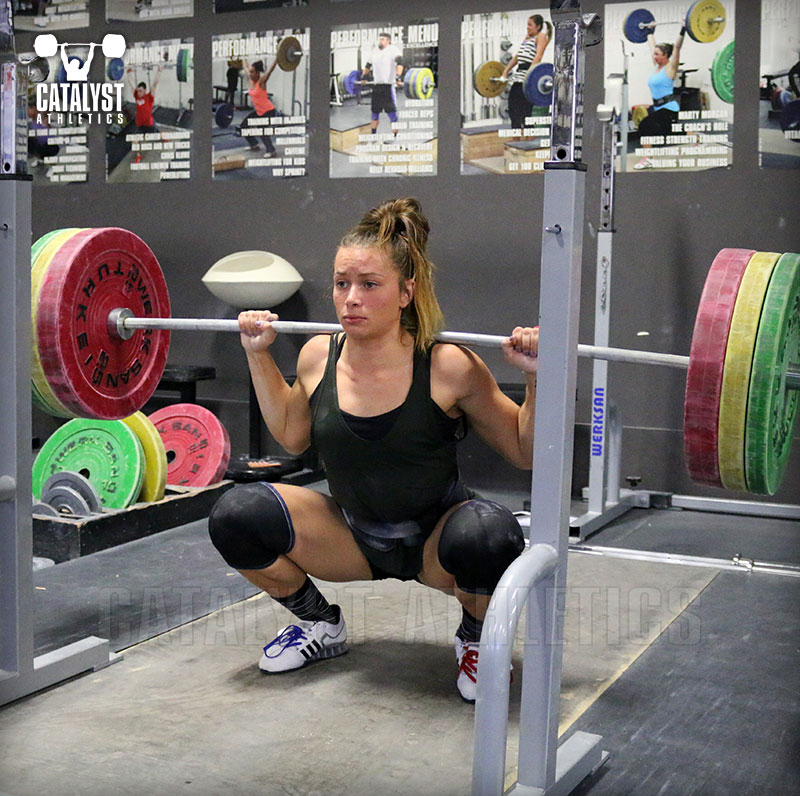
"Knees out"
Kelly Starrett explains that knees out is not a style of squatting. It's an aid that minimizesknee inwardness during the squat. This is accompanied by hip adduction (movement towards the center of the body) and hip internal rotation in the retracted position. Knee buckling can be caused by weak hips, stiff ankles and poor quadriceps or hamstring function.
If you have good mobility and can create strong torque from your hips, your knees will automatically push out when you squat. Mobility is absolutely critical to performing a squat correctly. Knees out is therefore not a technique, but an aid to engage the correct muscles and keep the lumbar spine and pelvis in a neutral and stable position. This is useful for those whose knees buckle in the bottom position of the squat, but should not mask an inability to assume the correct squat position.
"Knees in."
Again, you won't be pushing your knees inward during the entire performance. This is merely an aid that can help you overcome the most difficult position in the squat. It's a very small inward movement, only in the lowest position of the squat where the knees are usually quite far apart. Here, coaches like Green and Takano recommend squeezing your knees together (shoulder width apart) to help overcome the most difficult moment of the squat. In the rest of the execution, they again recommend pushing them out.
Green claims that athletes create more speed from the bottom this way. When you look at the elite weightlifters who use this method (such as Long Quinquan, the Chinese double Olympic champion), it's easy to see why this technique has its proponents.
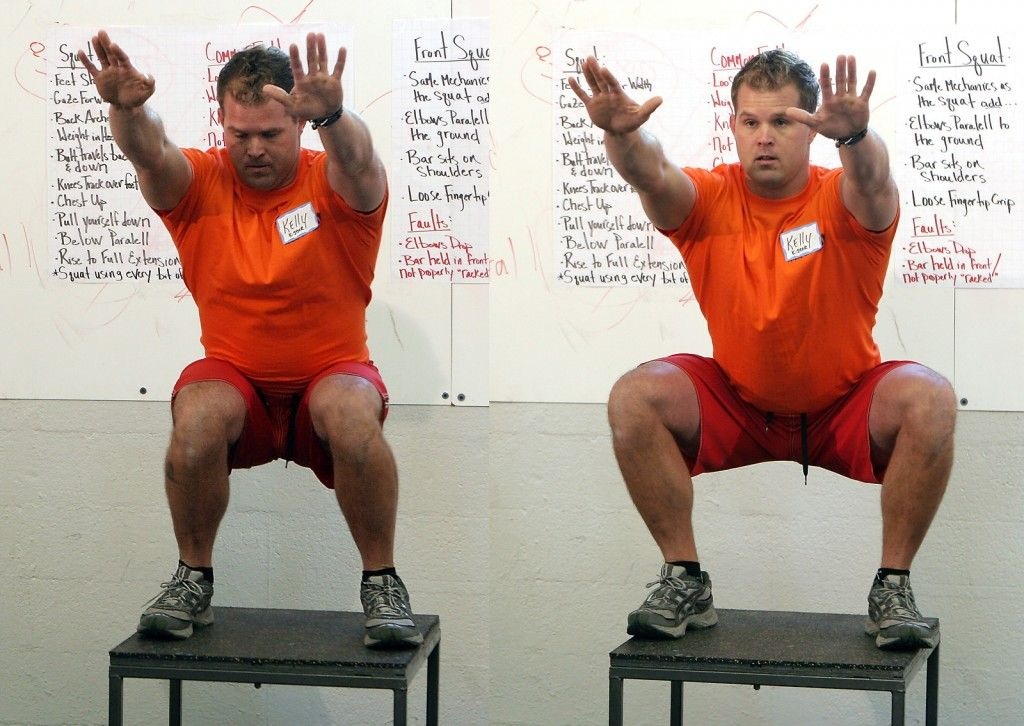
Conclusion
There is an argument that actively pushing the knees out throughout the execution of the squat goes against the body's natural movement patterns. The knees underneath want to move inward, and we shouldn't stop them from doing so. Several years ago, an email was published by Dr. Brendan Murrayha, team physician for the USA Weightlifting team, expressing his concern about the increasing number of injuries to athletes who push their knees outward during squatting.
Murray said:
"Cross fit (its spelling) practitioners have been struggling for the last two years with the technique of pushing their knees out. This technique puts a significant strain on the knees, hips and lower back. Many of these athletes don't have good control or flexibility, and compensate by modifying their technique to make them feel like they are squatting deeper."
However, we must remember that Starrettand his San Francisco CrossFit team specifically said that pushing the knees out is an aid to help athletes (with good mobility) avoid buckling their knees and engage the correct muscles while maintaining proper position.
Diane Fu, strength and conditioning coach at San Francisco CrossFit and head coach of FuBarbell, explains:
"We're not presenting a cure here, but we are trying to prevent the knee buckling that we see so often in the community. Knees out is an aid to create a stable platform for a strong upward movement."
As you can see, even respected industry experts don 't completely agree. Pushing the knees out is one of the oldest squatting aids ever. And it's not just going away. Only time will tell if more people will start pushing their knees in. In my opinion, the arguments for this technique are compelling.
Ronnie Coleman and his 363kg squat!
Recommended
HMS AirBike MP6540
Nebbia Washed-off Oversized tričko NO SHORTCUTS 369

Omega 3 240cps 1+1
Nebbia Cyklistické šortky s vysokým pasem 10” GYM THERAPY 628
Author William ImboSourceBoxlifemagazineTranslated byJaromír Uhlíř
No posts have been made yet.








