





Full body training for your symmetry
 Author: Šárka Randáčková
 A new take on the old method of exercising all body parts in every workout.
Turn on your time machine and set it to 1950. Television is a hot new thing and bodybuilders exercise the whole body in every workout. It sounds absurd, but splits weren't practiced back then. The revolution came after 1960.
Before that, greats like Mr. Universe 1950 Steve Reeves built their Herculean looks with full body workouts. Although they didn't have access to today's dietary conveniences, their physiques still enjoy immeasurable admiration today.
Let's take a look back at why full body workouts worked and how they can work for you.
"When you do a full-body workout in every workout, it forces you to think about symmetry. You always think about the whole, never the parts."- Steve Reeves
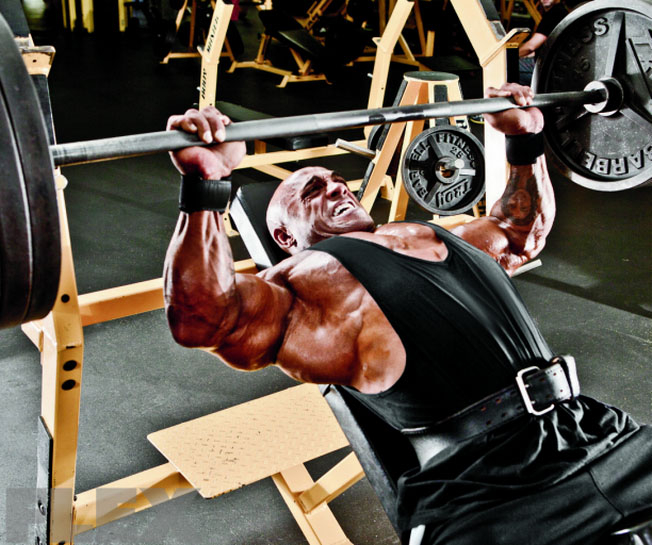
Full strength
We're back in 1950, and twenty-four-year-old Reeves is sweating it out at a gym in Oakland, California. Actually, this just comes full circle, as Reeves and his contemporaries have focused on functional strength, which has sort of come back into vogue for us in recent years.
You'll see lots of overhead relocations and push-ups, and unique exercises like Jefferson squats (a favorite exercise of Kai Greene), hacken free-weight squats and pullovers and push-ups. The workouts consisted mainly of complex exercises.
Let's compare the look then and now. Today's best bodybuilders are obviously much bigger, especially when it comes to hamstrings, back density and lower chest.
These areas were not a priority back then. The emphasis 60 years ago was on proportion - Reeves looked like today's physique competitors. All those functional and complex exercises were pretty much to blame. Reeves didn't get his famous shoulders by lifting weights.
Recommended

Nebbia Dlouhá everyday HERO mikina s kapucí 580
Nebbia Tričko THE BASE 377
Nebbia Washed crop top tričko GOLDEN AGE 782
Nebbia Crop top tílko GYM THERAPY 618
Instead, he's practiced overhead presses, positive bench presses and big axis pull-ups three times a week.
In full body training, it is simply not possible to practice 12-20 sets per muscle part. If you tried it, the workout might as well last eight hours. So you have to train multiple muscles at once. Deadlifts, for example, can do a lot.
In our sample workouts, most of the exercises are complex. You also have to train to failure. That's the only way to get decent muscle stimulation with so few sets. And never do the same exercises in two workouts in a row. So if you train on Monday, Wednesday and Friday, practice completely different exercises each day and repeat the sequence the next week.
This variety will prevent strength stagnation.
On the edge of your options
A full body system will spread the load over multiple days.
Two to three full body workouts a week can mean the same amount of sets for each body part as a split, where you train each muscle once a week.
You'll spend much less time in the gym, which is a major advantage of this system. It's not the best way to train for the best bodybuilders in the long run, but it's definitely effective from time to time. Overall, you'll do fewer workouts with less work on each part, but you'll work out each part more often. This can bring growth and a nice break from going to the gym everyday.
The basics of full body training
- We train all parts of the body in the same workout.
- You train two or three times a week and there is a minimum of 48 hours between workouts.
- Aim to have a total of 35-45 sets in one unit.
- It is an ideal system for beginners
- If you're an advanced bodybuilder, full body workout if time doesn't allow you to do your regular split when you're coming back from a long break or as an occasional diversion.
Tips
- Focus on complex exercises and larger areas.
- Supersets on non-continuous areas can reduce the length of your workout. When doing this, it is best to work the calves and abdominals in the breaks of exercises on smaller parts.
- You need variety. We have shown you two sample workouts. Note that each contains 12 exercises and none of the exercises are repeated. Alternate these two workouts. If you train three times a week, add a workout with 12 different exercises and alternate all three workouts.
Full body workout 1
| Exercise | Series | Repetition |
| Squat | 4 | 8-12 |
| Deadlift | 4 | 8-12 |
| Burying in the prone position | 4 | 10-12 |
| One-armed push-ups on the positive bench | 3 | 8-12 |
| Barbell push-up | 3 | 8-12 |
| Pull-ups of the big axis | 3 | 10-12 |
| Pulley chest pull | 3 | 10-12 |
| One-arm shoulder press | 4 | 10-12 |
| One-handed shoulder pressure | 4 | 10-12 |
| EZ axis lift in superseries with calf raises |
4 | 10-12 12-15 |
| Triceps extension in supine superseries with pulling knees in vis |
4 | 10-12 12-15 |
Full body workout 2
| Exercise | Series | Repetition |
| Leg press | 4 | 8-12 |
| Deadlift with legs extended | 4 | 10-12 |
| Hacken squat | 3 | 8-12 |
| Bench press | 4 | 8-12 |
| Shyb | 3 | 10-12 |
| Pull-up T axis | 3 | 10-12 |
| Pressure of the large axis on the shoulders | 4 | 10-12 |
| Pulling the big axis to the chin | 3 | 10-12 |
| Scott bench press in superset with seated calf raises |
4 4 |
10-12 12-15 |
| Pulley press in superseries with sit-ups |
4 4 |
10-12 12-15 |
Source: www.flexonline.com
Author: Greg Merritt
Translated by Jaromír Uhlíř (Cha Cha)
Original Article Title: Training Styles: Full Body
Author: Šárka Randáčková No posts have been made yet.








