





Fantastic exercises for hamstrings
 Author:
 A little bit of functional anatomy
The hamstrings are composed of three different muscles: the biceps femoris, the semitendinosus and the semimembranosus. The biceps femoris, also known as the lateral hamstrings, consists of a long and a short head.
The short head of the biceps femoris is the only piece of the hamstrings that does not extend to the hip because it only crosses the knee joint. The other hamstrings, specifically the long head of the biceps femoris, the semitendinosus and the semimembranosus, all extend across both the knee and hip joints (making them biarticular muscles) and are capable of both hip extension and knee flexion. The semitendinosus and semimembranosus are also known as the medial hamstrings.
The adductor magnus (adductor) contains the adductor and hamstring portions. The hamstring works very similarly (surprise) to the hamstrings and is even considered by some to be part of the hamstrings. Confused yet? Don't be.
Why should you care about your hamstrings
- They are some of the strongest muscles in the body, used for propulsion during sprinting.
- They tighten the knee joint and help prevent anterior cruciate ligament injuries.
- They put the brakes on flexion coming from the hip joint and extension of the knee.
- They transfer force from the knee to the hip joint.
- They can rotate the lower leg to either side (when the knee is flexed).
- They can even arrange knee extension during running by a complex process called the Lombard paradox.
Aesthetically, muscular hamstrings separate men who drink extra strong espresso from guys who drink decaf lattes. Lots of strength athletes have impressive quadriceps, but very few have decent hamstrings. It's no surprise. Muscular hamstrings mean hard work and consistency, not to mention good training. The fact that it makes your coworkers slap your ass at the copy machine is a bonus. Even if he is a little weird at times.
From a functional standpoint, strong hamstrings will greatly improve your deadlift and top speed. Many EMG studies show that the hamstrings are the most active propulsion muscles in fast running, as they contribute most of the moment of hip extension and swing leg knee flexion. The gluteus maximus, meanwhile, contributes most of the moment of hip extension force of the standing leg.
From a health and safety standpoint, strong hamstrings will help in preventing hamstring strains and anterior cruciate ligament injuries. The long head of the biceps femoris is the most commonly injured hamstring muscle: Individuals whose hamstring-to-quadriceps strength ratio is not at least 60 percent are seventeen times more likely to have a hamstring injury.
Four types of hamstring exercises
The most common movements in hamstring training include hip extension from the flexion position (think Romanian deadlifts), trunk extension where the legs are fixed (thinkback extension), leg extension where the trunk is fixed (imagine stumbling with legs extended 'reverse hypers'), knee flexion (imagine stumbling) and keeping the trunk in line with the femur using isometric hip extension where knee flexion is performed simultaneously (imagine a glute ham raise).
With this in mind, here are the four main types of hamstring exercises:
- Hip extensions with the legs semi-flexed: Romanian deadlifts, Romanian single leg deadlifts, good mornings.
- Hip extensions with legs extended face down and face up: back extensions, back extensions single leg, reverse hypers, reverse hypers single leg. glute bridges with legs extended, glute bridges with legs extended single leg.
- Isolated knee flexion: stumbling lying, stumbling sitting, stumbling standing single leg.
- Hip extension and knee flexion at the same time: Russian leg curls, glute ham raises, stability ball stumbles, slideboard stumbles, single leg slideboard stumbles, hanging bodycurls, hanging bodycurls single leg, inverse hamstring curls, inverse hamstring curls at a 45 degree angle with weight overhead.
Selected exercises
At this point, most strength athletes reading this have adequate education regarding the first three categories. However, most have no idea about the fourth one: hip extension and knee flexion at the same time.
This is bad because this category trains the hamstrings in both of their primary functions, and actually allows you to kill two birds with one stone.
Recommended
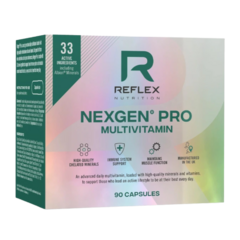
Reflex Nexgen Pro
Nebbia Bandeau podprsenka BACK CHECK 612
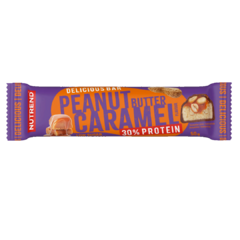
Nutrend Delicious Bar
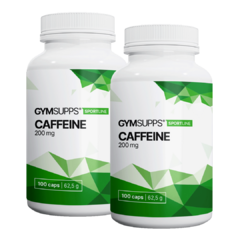
Caffeine 100cps 1+1
This category also trains the eccentric part of knee flexion better than traditional stumbling. And because it also trains the glute muscles isometrically, it's definitely more useful.
Despite these obvious benefits, strength athletes often avoid hip extension and knee flexion at the same time. Because 1) they suck at them and 2) they haven't tried them yet. Therefore, let's focus on this category and describe the selected exercises.
Stumbling on a slideboard and stumbling on a single-leg slideboard
Stumbling on a slideboard is great because it trains both hip extension and knee flexion. They are very similar to more traditional stability ball stumbling, but have two advantages. They are more stable (meaning you can focus on the movement and not worry about balance) and it's easier to add weight as you get stronger.
With your feet firmly on the slideboard, start by contracting your glutes and extending your hips into a bridge position. Your shoulders, hips and knees should form a straight line. Stay in this position for the duration of the series.
From here, simply slide your feet out until your legs are stretched out, and then pull your heels back in. Keep your hips as high as possible at all times. This exercise keeps the hamstrings in constant tension because you have to push off in the eccentric part and pull in the concentric part.
It also teaches the glutes to activate because you have to engage them hard during the set to keep your hips from sagging. When your bodyweight gets too light, add a band or disc under your feet. A disc under your feet will raise the height of the bridge and add more friction to the slideboard. It can also be done with one foot for added difficulty.
If you don't have access to a slideboard, the same effect can be achieved by using Valslides, plastic glides under furniture, carpeted floors, or just laying a towel on a wooden or slippery floor. Watch the video.
Slideboard Bodycurl
Created by Strength & Conditioning employee Mike Boyle, bodycurls on a slideboard are a great progression from tripping on a slideboard.
The position is similar, only instead of legs, the torso goes on the slideboard. Your feet stay in place while you push and pull your body back and forth, staying in the bridge. It's a little harder than the previous exercise because the leverage ratios are different and you're moving more weight. Again, additional weight can be added to the discs under the shoulders to increase the friction. Watch the video.
Hanging Hamstring Bodycurl and Hanging Hamstring Bodycurl Single Leg
This exercise is very similar to the bodycurl, but offers many benefits. The resistance here is arranged by gravity and body weight. The starting position is the same as the inverted row. You are lying facing the ceiling, with your feet on the bench and holding on to the suspension straps.
Start by contracting your glutes and lunging upwards so that your shoulders, hips and knees form a straight line. Then push your heels into the bench and pull your body forward, engaging your glutes and holding the bridge. From here, SLOWLY lower yourself back down.
It is important to keep the movement slow and controlled, to emphasize the eccentric portion and not to finish the repetition by swinging. You also need to keep your arms stretched and your shoulder blades together: this will ensure that you do not allow your upper body, by contracting your shoulder blades, to swing.This exercise can be made more difficult by using a weighted vest, lifting a bench or extending the curtains. It can also be performed single-legged.
Inverse hamstring curls at a 45 degree angle with the weight overhead
This exercise, performed on a hyperextension bench at a 45-degree angle, is not a conventional back extension. In fact, it can be a great gym alternative without a bench for glute ham raises.
As with the previous ones, the key is to keep the hips in line with the shoulders and not allow the back to hyperextend. The knees should be slightly bent and the hips should lift slightly off the mat at the top. This extra movement comes from the hamstrings and glutes and not from the lumbar spine extensors.
Holding the weight overhead increases leverage and increases difficulty. This also engages the posterior shoulder complex, lower trapezius and spinal extensors and makes this exercise more complex.
Glute Ham Raise
The glute ham raise is a very popular exercise, but most strength athletes are not familiar with its biomechanics. The video to the right will make you an expert at glute ham raises! Now go do them so that your hamstring strength matches your wisdom!
Russian tripping
The Russian tripping is probably the best eccentric, hip-bending exercise there is First, make sure you have enough padding under your knees. Initially, you can perform this exercise in a slight forward bend, which will make it a little easier and better control the eccentric part of the movement.
However, you can continue by keeping your torso straight, performing the full range of motion without the bounce at the bottom, and even adding a disc to your hands.
The seat and padded upper pulleys can be used for this exercise, but the most common method is to have your partner hold your legs.
Other ways to practice hamstrings
Hamstrings definitely train joint extensions of the hips and knees (squats) and hip extensions with bent legs (bridging), although they do not play a major role in these movements. The leg press with the feet high on the platform (known as the sumo leg press or hamstring leg press) is a great exercise for the hamstrings.
It should also be said that thirty-meter sprints, kettlebell swings, pull-throughs with legs extended, and hip extensions on the pulley one-legged are decent exercises for the hamstrings. Proven hits like deep squats, deadlifts, lunges, and hip thrusts will also give your hamstrings a decent boost. However, if hypertrophy is your primary goal, we recommend sticking to the above list of exercises.
Conclusion
After reading this article, there is no excuse for producing weak, vulnerable hamstrings that disappear when you turn sideways. For the best results in terms of development, we recommend practicing all the exercises on the list in varying numbers of repetitions. Hamstrings can be trained 2-3 times per week.
However, if you have particularly weak hamstrings, there is no reason not to practice a few sets each day until they flatten out. Many triathletes have used this method to quickly increase the size and strength of their hamstrings.
So stop making excuses for "overtraining" and get to it!
Written by Bret Contreras and Ben Bruno, translated by Jaromír Uhlíř
No posts have been made yet.








