





Extended series for pain
 Author:
 I like to hurt.
To clarify, I don't mean hurting people. I like to feel pain after I finish a series.
It's a mental thing. Hell, it's even morbid.
For some reason, that intense burning or tingling sensation in my muscles reminds me of all the hard work I've done. It's like a badge of honor that contrasts starkly with the guys I have around me in the gym. These guys are there doing their normal sets of eight or ten reps without changing their grimace or breaking a sweat.
Pussies.
Because I'm like that, sometimes I like to throw an extended set into my workout. For the uninitiated, an extended set is one in which you continue to work after you've reached failure in the movement you're performing.
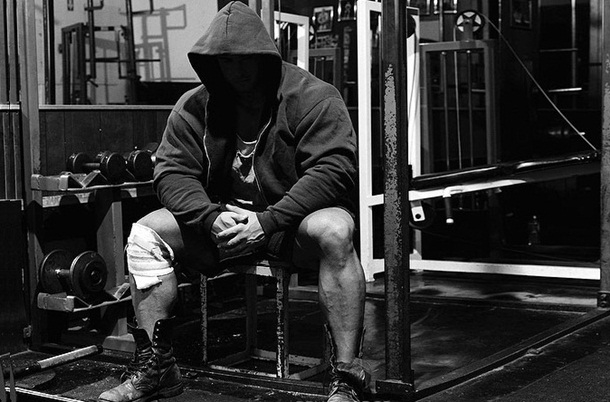
There are many ways to do this:
- You can drop the weight and keep pumping (a common crash series).
- You can put half or quarter reps at the end of the set (partial reps after exhaustion).
- You can hold the muscles in contraction as long as you can at the end of the series (isometrics after exhaustion).
- You can take the weight off and go into failure again (crash series).
- You can take a very short break and continue with the same weight (intermittent "rest-pause" series).
The problem is that these methods are BORING. At least for me. I prefer two other methods that I think are better both mentally and physically. They are called mechanical crash series and tri-series after exhaustion.
Mechanical crash sets also mean doing extra reps after failure. Only instead of losing weight, you simply make small changes to the execution of the movement that allow you to continue.
As an example, consider the following trio of single-arm biceps exercises: overhand biceps raises, underhand biceps raises, and hammer biceps raises. The overhand lifts are the hardest to perform, followed by the underhand lifts, and the hammer lifts are the easiest.
When you reach failure on the overhand one-arm lifts, you flip your wrist and can continue with the underhand lifts. When you fail the underhand as well, you should be able to squeeze out a few more reps of the hammer raises.
It's so easy it's hard.
The tri-series after exhaustion involves doing a second and third exercise on the same muscle group without a break.
Again, it's so easy it's hard.
The scientific rationale is simple: the more muscle fibers you fatigue, the more muscle you grow.
Any potential downside? You can easily do too much work and impair your recovery. This won't be a problem, of course, if you use it in moderation. I'd take one exercise for each body part that I'd do like three or four extended sets of.
Whether you want to use them regularly, or to punish yourself from time to time for sins against man, nature, or God, here are my favorite exercises.
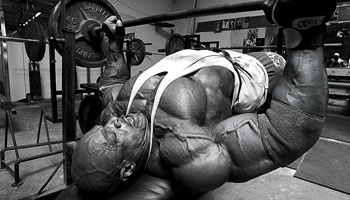
I have adopted many from Christian Thibadeau, some from Charles Poliquin, and one from Dr. Clay Hight. Others I dreamed up on lonely nights at my gym.
Remember to move from variation to variation without pause during the series, but rest for about 2 minutes between sets.
Shoulders
Mechanical Crash Series 1
- Military press (do not use legs)
8-10 reps - Push press (use legs a little)
Same weight; reps as many as possible - Expressions without scissors (push jerk) (use legs a lot)
same weight; repetitions as many as possible
Mechanical shuffle set 2
- Standing one-arm push-ups
8-10 reps - One-arm standing forearm raises
Same weight; repetitions as many as possible - One-arm chin-ups
Same weight; repetitions as many as you can
Mechanical lunge series 3
- Standing one-arm forearm raises
8-10 reps - Standing one-armed arm raises
Same weight; repetitions as many as possible - One-handed push-ups
Same weight; repetitions as many as you can
Tri-series after exhaustion 1
- Dumbbell chin-ups
10-12 reps - Standing one-arm handstand push-ups
8-10 reps - Dumbbell overhead presses (use the same dumbbell as for overhead presses)
as many reps as you can
Note: Right, right. Chin-ups and overhead presses are avoided by some training experts. But we're talking relatively high reps here, so the weight used probably won't hurt you. Unless you already have shoulder problems.
Chest
Mechanical Crunch Series 1
- Single arm presses on a very positively inclined bench
8-10 reps - One-arm push-ups on a slightly positively inclined bench
Same weight; reps as many as possible - One-handed push-ups on straight bench
Same weight; repetitions as many as possible
Mechanical push-up series 2
- Countermovement pulldowns on a highly positively inclined bench
8-10 reps - Counter pulley rows on a slightly positively inclined bench
Same weight; reps as many as possible - Counter pulley stretch on a straight bench
Same weight; repetitions as many as possible
Quadriceps or exercises where quadriceps are essential
Mechanical Throwing Series 1
- Front squats
8-10 reps - Narrow back squats (shoulder width)
Same weight; reps as many as possible - Back squats wide
Same weight; repetitions as many as you can
Mechanical lunge series 2
- One-arm lunges (short steps)
8-10 reps - One-arm lunges (long strides)
Same weight; repetitions as many as possible - Squats with one-handed squats
Same weight; repetitions as many as possible
Mechanical dump series 3
- One-legged lunges
8-10 reps each leg - Half front lunges (up two legs, down one leg and 5 seconds)
Same weight; repetitions as many as possible - Lunges
Same weight; repetitions as many as you can
Hamstrings and hip exercises
Mechanical lunges series 1
- Deadlifts with market grip
8-10 reps - Romanian deadlifts
Same weight; reps as many as possible - Sumo deadlifts
same weight; repetitions as many as you can
Mechanical Throwing Series 2
- Single leg stumble
8-10 reps each leg - Half stumble (up two legs, down one and 5 seconds)
Same weight; repetitions as many as possible - Stumbling
Same weight; repetitions as many as you can
Mechanical lunge series 3
- Siffie lunges (toe lunges)
8-10 reps - Lunges (short strides)
Same weight; repetitions as many as possible - Lunges (long strides)
Same weight; repetitions as many as you can
Biceps
Mechanical push-up series 1
- Bicep EZ axis lifts on scott bench (hammer grip)
8-10 reps - Bicep EZ axis lifts on scott bench (45 degree grip)
Same weight; reps as many as possible - Standing biceps raises
Same weight; reps as many as you can
Mechanical shuffle series 2
- One-arm overhand lifts (both arms at the same time)
8-10 reps - One-arm underhand lifts (both hands at the same time)
Same weight; repetitions as many as possible - Hammer lifts (both hands at the same time)
Same weight; repetitions as many as possible
Triceps
Mechanical dips series 1
- Extra narrow bench press (20cm)
8-10 reps - Narrow Bench Press (35cm)
Same weight; reps as many as possible - Benchpress (55-60cm)
Same weight; reps as many as you can
Tri-series after exhaustion 1
- Overhead pulley press with underhand grip
8-10 reps - Overhead pulley overhead press
8-10 reps - Triceps extensions with rope overhead (attach rope to lower pulley)
8-10 reps
Note: Lower weights are needed for the number of reps required.
Back
Mechanical crunch series 1
- Front dumbbell pull-ups (torso parallel to the floor)
8-10 reps - Dumbbell pull-ups in prone position (torso 45 degrees from the floor)
Same weight; reps as many as possible - Front dumbbell pull-ups (light cheating)
Same weight; repetitions as many as possible
Mechanical dumbbell series 2
- Wide overhead pulldowns
8-10 reps - Upper pulley pull with medium overhand pull
Same weight; repetitions as many as you can - Upper pulley pull with narrow underhand
Same weight; repetitions as many as possible
Tri-series after exhaustion 1*
- Lunge overhead overhead squats with overhead press (narrow grip)
6-8 reps - Forearm Lunge Squats with laying down (wide grip)
Same weight; reps as many as possible - One-arm forearm pull-ups
6-8 reps
* Prepare to be gasping for air after this one.
Translation.
No posts have been made yet.








