





Exercise in pregnancy
 Author:
 Exercise in pregnancy? Is it possible or not? Find out in this article.
Probably every woman who is about to become a mom in the future is very excited about her baby and in excitement awaits its arrival in the world. She certainly tries to take care of her health as much as possible, eat healthier, don't drink, don't smoke and in general do everything to make sure that the baby is born healthy and well.
But she may also be worried about how the pregnancy will affect her figure and whether she will be able to reduce her weight to an acceptable weight after the birth. That is why most women who are active in sports before pregnancy do not want to give up this activity even during pregnancy and exercise or train as long as their current health condition allows. At the same time, however, there are concerns about damage to the baby, with incorrectly chosen dose of load or performing incorrect exercises.
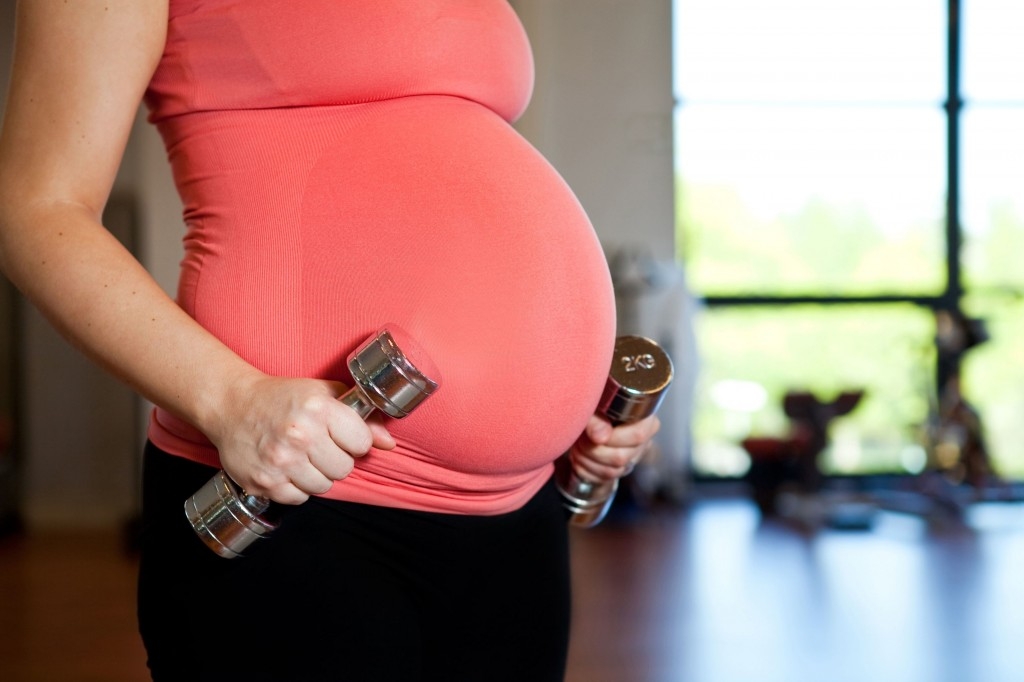 Therefore, here are some rules and advice on what pregnant women should avoid or focus on. This is just general advice that applies universally. However, every pregnancy is different and therefore everything should be consulted with a doctor who can best assess the suitability of continuing training. It is true that many people are "a priori" against it, so I recommend to consult this problem even with several specialists - I think it is always possible to find an optimal solution that will be acceptable to both parties.
First of all, let's talk about the changes that take place in the body of the future mother, which must be taken into account during training.
From the very beginning, pregnancy places increased demands on the body. There is perhaps not a single organ or system that is not involved in the security of motherhood. In this article, we will ignore the changes that take place in the uterus and throughout the pelvic area, but rather focus on the changes to the musculoskeletal system and related systems.
The circulatory system
The circulatory system is very stressed. Both pressure and heart rate are increased. These changes are exacerbated by exercise. When observing a group of pregnant women exercising, fetal tachycardia ( increased heart rate ) was found. Some experts claim that this is due to reduced blood flow through the uterus. Others attribute it to an increase in the heart temperature of the exercising mother.
However, there is no reliable evidence and therefore this phenomenon is not considered a sign of fetal exhaustion. Nevertheless, care should be taken in drinking so that a decrease in circulating blood does not occur. The body could begin to suffer from overheating, which is very often associated with premature birth.
The locomotor system
The effect of estrogen and progestogen during pregnancy is mainly felt in the joints, bones and muscles. The biggest changes occur at the junction of the pelvic bones and at the lumbar and sacral spine. Under the influence of these hormones, the ligaments relax. This increases the mobility of the joints and the expansion of the pelvis. Also, the body's centre of gravity changes - this is often compensated for by increased lumbar lordosis and a more upright gait, which puts more strain on the muscles of the trunk and also often results in back pain.
Certain types of exercise can exacerbate these pains as they are an additional stimulus to loosen the joints.
Also, the sense of balance changes and it is necessary to move more carefully and slowly.
After the 12th week, lying exercises such as sit-ups and benchpress should be avoided. There could be a decrease in blood flow to other parts of the body, such as the brain and muscles, causing fainting. This danger is especially great after 12. The uterus becomes an abdominal organ.
The respiratory system
Respiratory functions are also altered. Total lung volume is reduced, but respiratory and inspiratory capacity. Pregnant women breathe more deeply, not more deeply. Oxygen consumption is increased by 14%.
Psychological changes Of course, the psychological state also changes, both in a positive and negative direction. Mostly, however, there is an increased sense of self-confidence, optimism, at the same time self-denial and dedication towards the child and the joy of anticipation .
Recommendations for pregnant practitioners :
- Ensure adequate fluid intake to avoid dehydration and reduced blood volume.
- Wear sports clothing that ventilates well and sucks sweat.
- Do not exercise if you feel unwell, have a cold, etc.
- Avoid lying down exercises (especially in the third trimester).
- The same applies to lifting heavy weights.
- Focus more on exercises in the aerobic zone - swimming, low aerobics without jumping, riding a stationary bike, walking, etc.
- Choose the number of repetitions very carefully when strengthening the abdominal muscles (in the first trimester, cut out abdominal exercises altogether).
- Exercising on balloons is also very good for relieving back pain.
- Do not hold static positions for long and avoid static weight training.
- Eat a carbohydrate-rich diet to replace glycogen from the muscles and prevent fetal ketosis.
No posts have been made yet.








