





Do you rest for just one minute between sets? That might be exactly why you're holding back your muscle growth!
 Author:
 There’s still a persistent notion in gyms that a proper workout has to hurt, burn, and ideally leave you completely exhausted. Short rest periods therefore seem like the ideal way to increase intensity and get the most out of every minute. But muscle growth isn’t that simple. One of the main stimuli for hypertrophy is the mechanical tension that muscles generate during challenging repetitions. Adequate training volume and a gradual increase in intensity are also important.
Imagine you can do ten reps on the bench press. After a one-minute rest, you manage seven, and in the third set, barely five. If you rested longer, you might be able to manage more reps with the same weight. That doesn’t mean every extra rep will automatically lead to bigger muscles. But it does mean that the length of your rest directly affects how much quality work you can get done during your workout.
Article Contents:
- One Minute or Three? Scientists Have Found an Interesting Difference
- So how many minutes should you actually rest?
- Want to improve your performance? Think about what you do between sets, too
- Try one simple change next time at the gym
- Rest isn’t laziness. It’s part of progress!
One minute or three? Scientists have found an interesting difference
This is precisely the question Brad Schoenfeld and his colleagues addressed in a study published in 2016. They enrolled 21 experienced exercisers in an eight-week experiment, during which the participants did strength training three times a week.
The difference was simple. One group rested for 60 seconds between sets, while the other rested for a full three minutes.
The results showed that the group with longer rest periods achieved greater improvements in maximum strength during the bench press and squat. The researchers also observed a more significant increase in the thickness of the quadriceps muscles.
An even more interesting perspective was offered by a 2024 meta-analysis that evaluated nine studies. It suggested that rest periods longer than 60 seconds may offer a slight advantage for muscle growth. However, it did not confirm any clear additional benefit from extending rest periods beyond 90 seconds.
What’s the takeaway? You don’t have to sit for five minutes between each set. However, if you’re training hard and short rest periods are compromising your performance, extending them may make sense. The evidence for the exact optimal rest duration is not yet conclusive.
So how many minutes should you actually rest?
There’s no one-size-fits-all rule for all exercises. Heavy squats, which engage a large number of muscles, require a different recovery time than one-arm bicep curls. The following overview can serve as a practical guide:
| TYPE OF WORKOUT | RECOMMENDED REST PERIOD |
|---|---|
| Heavy multi-joint exercises (Squats, bench press, deadlift) |
2–4 minutes: Demanding exercises require a longer recovery period. Adequate rest will help you maintain your working weight, rep count, and proper form. |
| Standard Hypertrophy Training (Building muscle mass) |
90–180 seconds: A practical range that can help you maintain high-quality performance across sets without unnecessarily prolonging the entire workout. |
| Isolation exercises (Biceps, triceps, lateral raises) |
60–120 seconds: For less demanding exercises, a shorter rest period is often sufficient. However, make sure you can complete the next set without a significant drop in performance. |
| Maximum Strength Training (Heavy weights, low number of repetitions) |
3–5 minutes: When working with heavy weights, adequate recovery is important so you can focus on maximum performance and safe execution of the exercise. |
* The times listed are approximate. The optimal rest duration depends on intensity, training goals, and individual recovery ability.
It’s also important to monitor your own readiness. If you’re still gasping for breath after two minutes and know you won’t be able to perform the next set with proper form, feel free to rest longer. Conversely, for a lighter, isolated exercise, you don’t have to wait three minutes just because the chart recommends it.
Want to improve your performance? Think about what you do between sets, too
Rest duration is just one piece of the entire training puzzle. If you want to improve your performance over the long term, it also depends on adequate energy and protein intake, quality sleep, and a well-balanced training program overall.
For repeated short-duration, high-intensity efforts, creatine may also be beneficial. At a daily intake of 3 grams, it has been shown to increase physical performance during consecutive short intervals of high-intensity exercise. A practical option is GymSupps Creatine Monohydrate, which, according to the product label, contains creatine monohydrate alone.
If you have trouble getting enough protein from your regular diet, GymSupps XWhey Protein can also be a useful addition to your diet. However, neither protein nor creatine can replace quality training or the necessary rest between sets. Dietary supplements are not a substitute for a varied diet.
Recommended

New 100% Whey Protein 800g 1+1

Creatine Monohydrate 500g 1+1

Next time at the gym, try one simple change
You don’t have to change your entire workout plan. Pick one more challenging exercise—like the bench press or squats—and over the course of a few workouts, see how your performance changes with different rest periods.
Keep track of your working weight, number of reps, and rest duration. If you usually rest for just one minute, try taking two to three. You might find that this allows you to complete more high-quality reps and you won’t have to reduce the weight as much in your final sets.
And if you don’t notice any difference? That’s useful information, too. It’s more important to find a system that works for your specific workout than to blindly follow one-size-fits-all recommendations.
Rest isn’t laziness. It’s part of progress!
Pauses that are too short can turn a quality strength training session into a race against your own fatigue. At the same time, longer rest periods don’t necessarily mean you’re training less intensely. Sometimes, on the contrary, they’ll allow you to perform better when it really counts.
So the next time you finish a tough set and feel the urge to keep going right away, try to put the stopwatch aside for a moment.
Because at the gym, it’s not just about how hard you can push yourself—it’s also about how smartly you can train.
Recommended

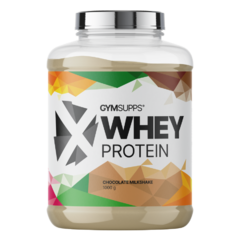
GymSupps XWhey Protein
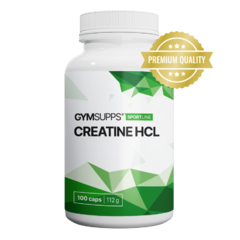
GymSupps Creatine HCL
References:
- Schoenfeld et al. (2016): Longer Inter-Set Rest Periods Enhance Muscle Strength and Hypertrophy in Resistance-Trained Men
- Singer et al. (2024): Give It a Rest – A Systematic Review with Bayesian Meta-Analysis
- EU Regulation No. 432/2012 – Authorized Health Claims for Creatine
No posts have been made yet.








