





Machines vs. Dumbbells: Science Reveals What Really Makes Muscles Grow!
 Author:
 Do you spend hours lifting heavy weights because you believe you’ll never build big muscles without proper squats and bench presses? You might be overcomplicating your workout. Modern research shows that weight machines can be just as effective for muscle growth as traditional free weights. And if you’re avoiding them just because you consider them inferior, maybe it’s time to rethink your approach.
Forget the old weightlifting dogma that real muscle is built only with compound exercises. Your body can’t tell whether you’re holding a dumbbell weighing a few hundred or pushing against the resistance of a modern machine. What matters most to it is the mechanical tension and the intensity of the workout. And that’s exactly why a guy who works hard on the chest press can build a chest just as impressive as the one who swears by the bench press.
Article Contents:
- Scientists compared machines and free weights. The result was surprising
- Why Can Machines Be Your Secret Weapon?
- Three situations where it pays to choose machines
- How to combine machines and free weights for maximum results?
Scientists compared machines and free weights. The results were surprising
In 2023, a meta-analysis was published in the journal BMC Sports Science, Medicine and Rehabilitation that compared 13 studies involving a total of 1,016 participants. The researchers wanted to know whether free weights truly have the edge when it comes to building muscle, developing strength, and improving explosiveness. The result? No statistically significant difference in muscle mass gain was found between the two training methods. However, only five of the included studies specifically measured hypertrophy, so the results cannot be considered proof that all exercises are completely equivalent.
Does this mean you can ditch the dumbbells and switch exclusively to machines? Not at all. The research also confirmed an important principle of strength training: you improve mainly in what you train regularly. If you want to bench press 150 kilograms, you have to train the bench press. But if your main goal is bigger chest muscles, a high-quality chest press can do a comparable job. What matters isn’t the equipment, but how well you can load the muscles.
Why can machines be your secret weapon?
Imagine the last rep of a heavy squat. Your legs still have some strength left, but your lower back is already protesting, you’re struggling to catch your breath, and maintaining proper form is getting harder and harder. With the leg press or hack squat, some of these problems are eliminated. The machine provides support and allows you to focus on your leg work without being limited to the same extent by the need to stabilize your entire body.
Stability is one of the biggest practical advantages of machines. With many exercises, you can more easily control the movement, target a specific muscle group, and push closer to muscle failure without having to constantly monitor your balance. However, this doesn’t automatically mean greater muscle growth. It means that machines can be a more effective tool for performing high-quality sets in certain situations.
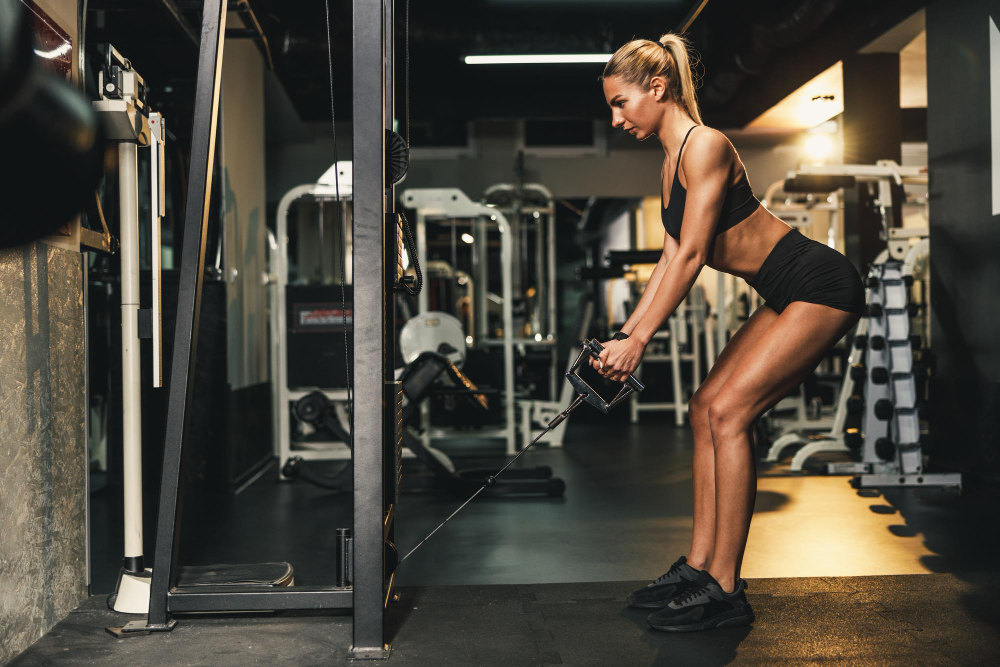
Three situations where it’s worth giving machines the edge
You don’t have to stop squatting or cut the bench press from your workout plan. You just need to know when a machine can make your workout easier and when, on the other hand, it makes more sense to stick with free weights.
1. When stability, not the muscle itself, is limiting you
During heavy bent-over rows, you may feel your lower back before you feel your latissimus dorsi. Rows on a machine with chest support allow you to reduce the strain on your lower back and focus more on the pulling motion itself. The result? You can effectively work your back without being stopped prematurely by fatigue in another muscle group.
2. When you want to really push through that last set
Imagine the last set of bench presses. The barbell stops a few centimeters above your chest, and there’s no spotter in sight. On a properly adjusted chest press machine, you can usually finish the set more easily. Machines are therefore a practical choice for challenging sets close to muscle failure, especially when you’re already tired. However, that doesn’t mean you have to push every set to your absolute limit.
3. When You Want to Target a Weak Area
Are your quads lagging behind, but your back limits you during squats? Incorporate front raises or hack squats. Do you need to put more load on your chest muscles, but the classic bench press doesn’t work for you? Try the chest press or peck deck. The best exercise isn’t the one that looks the toughest, but the one that allows you to train effectively and improve over the long term.
Stop worrying about the equipment and give your muscles a real reason to grow
Whether you swear by heavy barbells or prefer working out on machines, one thing is certain. Your muscles won’t grow just because you’re doing the “right” exercise. They need a sufficiently challenging workout, a gradual increase in load, and quality recovery. And this is exactly where you can support your progress with the right dietary supplements.
Experienced bodybuilders know that results don’t end with the last rep. If you want to get the most out of your workout, focus primarily on two things:
- High-quality creatine monohydrate: More strength for demanding sets. Creatine is one of the most thoroughly researched sports supplements. It helps boost performance during short-term, intense exertion, so you can handle higher intensity during your workouts and create better conditions for muscle growth over the long term. Whether you’re lifting a heavy barbell or finishing the last rep on the chest press, creatine can be your reliable ally.
- Whey Protein: The building blocks for bigger muscles. No matter how hard you train, if you don’t provide your body with enough protein, you’re unnecessarily limiting your muscle growth. High-quality whey protein is a simple way to supplement your daily protein intake and support recovery and muscle-building. It’s especially useful on days when you don’t have time for a full meal.
Stop wasting time at the gym arguing over whether machines or free weights are better. Real results come when you combine hard work, quality nutrition, and long-term discipline. Choose exercises that work for you, give your body the nutrients it needs, and focus on what matters most—pushing yourself a little further every month.
Recommended
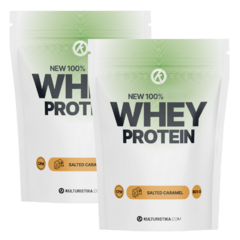
New 100% Whey Protein 800g 1+1
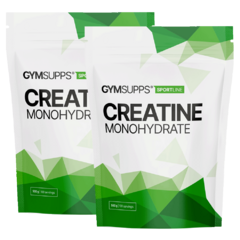
Creatine Monohydrate 500g 1+1
How can you combine machines and free weights for maximum results?
The biggest mistake is dividing equipment into “good” and “bad.” If barbell squats work for you, there’s no reason to rule them out. Likewise, it doesn’t make sense to struggle with an exercise that doesn’t suit you just because others consider it a mandatory staple of bodybuilding. It’s much more sensible to choose exercises based on your goals, comfort, and potential for long-term progress.
| YOUR GOAL | FREE WEIGHTS | WEIGHT MACHINES |
|---|---|---|
| Larger Muscles
(Muscle growth)
|
The good old classic: You work hard, gradually increase the load, and give your muscles a solid reason to grow. Dumbbells work great, but they aren’t the only way. | No second-rate substitute: Research has shown no significant difference in muscle growth compared to free weights. You can build serious muscle on machines, too. |
| Maximum Strength
(Strength Performance)
|
Want to lift more? If you dream of a heavy bench press or squat, you need to train these exercises regularly. Strength is, after all, largely specific. | You’ll get stronger, too: On machines, you can gradually add substantial weight. Just don’t expect your performance with free weights to automatically improve as much. |
| Targeted Training
(Movement Control)
|
You have to keep an eye on more things: In many exercises, you’re not just pushing or pulling—you’re also stabilizing the load and controlling your form. Sometimes, it’s stability that can limit you. | Focus on the muscle: To a certain extent, the machine guides the path of movement. This allows you to better focus on the target muscle group and perform a high-quality set. |
5 Simple Rules for Getting the Most Out of Your Workout
Forget the pointless debate between free weights and machines. If you want to build muscle as effectively as possible, stick to a few basic principles:
- Start with what matters most to you: If you want to improve your bench press, put it at the beginning of your workout. If hypertrophy is your main goal, choose the exercise that suits you best.
- Don’t be afraid of machines: Chest presses, leg presses, or chest-supported pull-ups can be just as valuable a part of your workout as traditional free weights.
- Train with sufficient intensity: Try to perform most of your working sets with high effort. However, you don’t have to reach complete muscle failure every time.
- Track your progress: Are you gradually able to do more reps, handle heavier weights, or maintain better control of the movement? These are useful indicators that you’re moving in the right direction.
- Don’t forget about recovery: Without quality sleep, sufficient energy, and an adequate protein intake, you won’t fully realize the potential of any workout.
The conclusion is simple: Big muscles aren’t built by specific equipment, but by high-quality, long-term, challenging training. Available studies do not show a clear advantage of free weights over machines in terms of muscle growth. Instead of blindly following gym dogmas, choose exercises that suit you, allow you to gradually increase the intensity, and—most importantly—deliver results. The next time someone tells you that you’ll never really grow without using the big three, you’ll know that science sees things a little differently.
Recommended
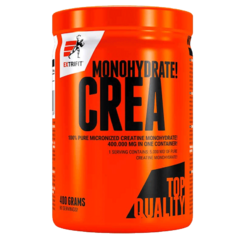
Extrifit Crea Monohydrate

Sources:
Haugen et al. (2023). Effect of free-weight vs. machine-based strength training on maximal strength, hypertrophy, and jump performance—a systematic review and meta-analysis. BMC Sports Science, Medicine, and Rehabilitation.
No posts have been made yet.








