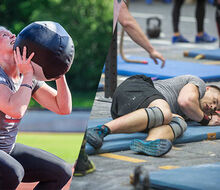
Do you know how to improve the Over Head Squat? We have 6 interesting tips for you!
 Author:
 For many CrossFit enthusiasts, the overhead barbell squat is the most complicated exercise. It exposes deficiencies in flexibility, balance, strength and coordination. For these reasons, not many athletes are willing to do it at all. They prefer to focus on the back squat, deadlift, etc. All right. It's just a personal choice. But before you go that route, read what CrossFit founder Greg Glassman has to say about the overhead barbell squat.
"The overhead dumbbell squat is the best exercise for the midsection, is the heart of the market, and is unmatched in developing effective athletic movement. This functional gem trains efficient energy transfer from large to small muscle groups, which is the foundation of movement in most sports. For this reason, this exercise is indispensable for developing strength and speed. It also requires functional flexibility and develops the classic squat by severely punishing errors in stance, execution and stability."
These are excellent reasons why you should stop neglecting the overhead barbell squat. Here are six tips to help you perform this exercise.
Article Content:
- Identify mobility issues - and work on them
- Develop mid-body stability
- Start with the right weight - but not a PVC pipe
- Push into a barbell
- Stabilize at the bottom of the exercise
- Practice squats with a pause
Identify mobility issues - and work on them
You've probably heard this one before, but if you can't do a proper classic squat, there's no point in tackling this more difficult variation. Learn how to perform a classic squat properly, and try a few reps with the training axis overhead. You'll probably discover a few mobility issues (especially in the shoulders). This squat execution requires excellent flexibility in the shoulders, hips, hamstrings, glutes and adductors. It is unlikely that mobility in all of these areas abounds. That's why so many people avoid this exercise. In short, you must mobilize the muscle groups mentioned above to be able to have the extreme hip rotation that is required for the overhead axial squat.
Develop mid-body stability
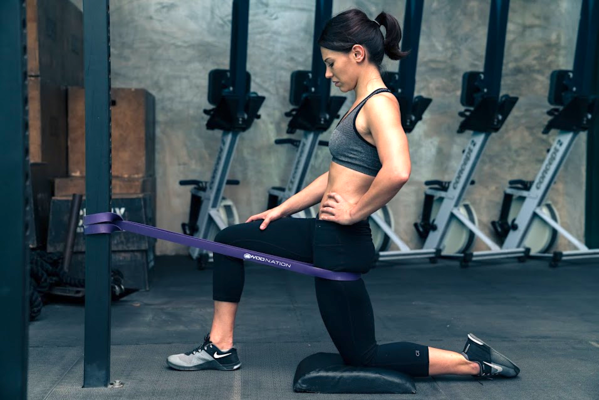
This is absolutely essential for the overhead barbell squat. In short, you need to keep the heavy dumbbell in the overhead position. If you don't have this stability, any overhead weight exercise will be a problem, especially as you will be prone to hyperextending your lower back, which will create an undesirable overhead weight position and risk injury. You need to mobilize your lower back and strengthen your mid-body as often as possible. Whatever exercise you use for this, think of the following: glutes contracted, chest down. This will help create a neutral pelvic position, instead of an anterior hip tilt.
Exercises for mid-body stability:
- Hip mobility
- 50 Hollow rocks
- 50 Sit-ups
- 50 Single Leg Bridges
- 25 Toes to bar/Knees to elbows
Start with the right weight - but not PVC pipe
Why not? Tamara Reynolds, competitive weightlifter, coach and founder of the Weightlifting Academy, will explain .
"Part of the problem with the overhead squat is holding the axle over the middle of your body. You can hold the PVC pipe wherever you want, even in the wrong places. You have to feel the weight in your hands to be aware of where the barbell is supposed to be correctly.
Many CrossFit coaches disagree with this. However, I do. PVC pipe is simply too light, and you can form bad habits with it. Only an axle that has at least a little weight will reveal mobility deficiencies and mid-body involvement."
Push into the barbell
When squatting with a dumbbell overhead, you should try to constantly lift/push the dumbbell, not just hold it. Competitive weightlifter and coach Kat Ricker will explain .
"Squatting with the barbell overhead sometimes goes counterintuitive because the body wants to move as a unit. Gravity forces the muscles holding the barbell to relax and contract as you move down. The shoulder blades try to squeeze, the upper traps switch from concentric contraction to eccentric contraction so the body can catch the falling weight."
Of course, you don't care about relaxed muscles. They should be clenched and supporting the weight. Next time, try pushing into the axis you have overhead. I'm sure you'll see an improvement.

At the bottom of the exercise, stabilize yourself
Don't rush from the bottom position and stabilize yourself and the barbell first. Make sure you are standing on the full surface of your feet, your weight is on your heels and your elbows and shoulders are turned out (armpits pointing forward). This will reduce the risk of losing control. However, do not stand for too long to avoid losing tension in your muscles. You could get stuck at the bottom and give up the attempt.
Practice squats with a pause
The comfort at the bottom of the movement is probably the hardest part of the whole exercise. It's important to get used to the overhead barbell position at the bottom of the squat. You can train this by practicing squats with a break. These can help with strength from the bottom, mid-body strength, relieve the knees and add confidence and comfort.
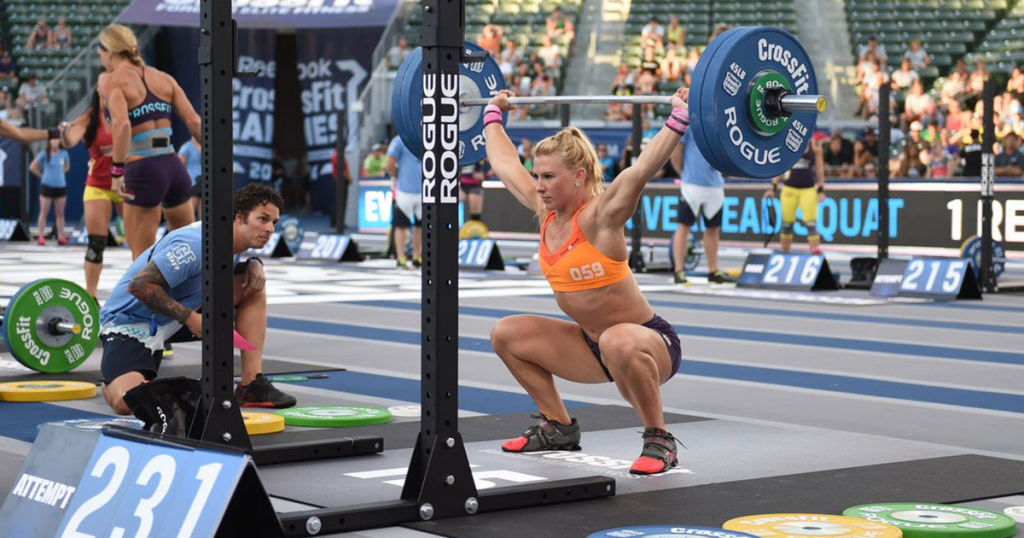
Squats with a pause have different variations. I personally like the 4 second pause the best. Start with a weight that would be extremely light for 3-4 reps, get into position with the barbell overhead, squat down as far as you can (with good technique), count to four, and then get back up. Do a total of 4 reps, 5 sets, adding weight each time.
Recommended
Nebbia Push-up šortky se šněrováním STRONG BEAUTY 429
HMS Twist Stepper s úchopy S 3085

Nebbia Washed-off volné baggy tepláky s kapsami GYM BRO 373
Author William Imbo, Source Boxlifemagazine, Translated by Jaromír Uhlíř
No posts have been made yet.