





Discover the magic of swimming, a sport that can effectively engage the whole body!
 Author:
 Not only in summer is it the perfect opportunity to go swimming. Swimming is even the fourth most popular sport in the USA. In our country, the popularity may be a little behind, but maybe this article will convince you that swimming should be part of your routine for its multiple benefits. So let's take a look together at how swimming can benefit your body.
Swimming is an ideal way to engage the whole body.
Swimming is a cyclical, continuous form of exercise and one of the best types of exercise that engages the entire body comprehensively from head to toe. With swimming, you can increase your heart rate but without excessive stress. It can help you build muscle, strength and increase your performance. There are many styles you can use when swimming to achieve maximum variability in the muscles involved. So you can swim breaststroke, breaststroke, butterfly, crawl, or freestyle, each style engages a slightly different group of muscles while the water offers gentle resistance. Regardless of which swimming style you choose, you are using most of the muscle groups to keep your body moving through the water. Another benefit is that, due to the relatively unconventional body position, we use different muscles than normal and we also use them in a completely different way.
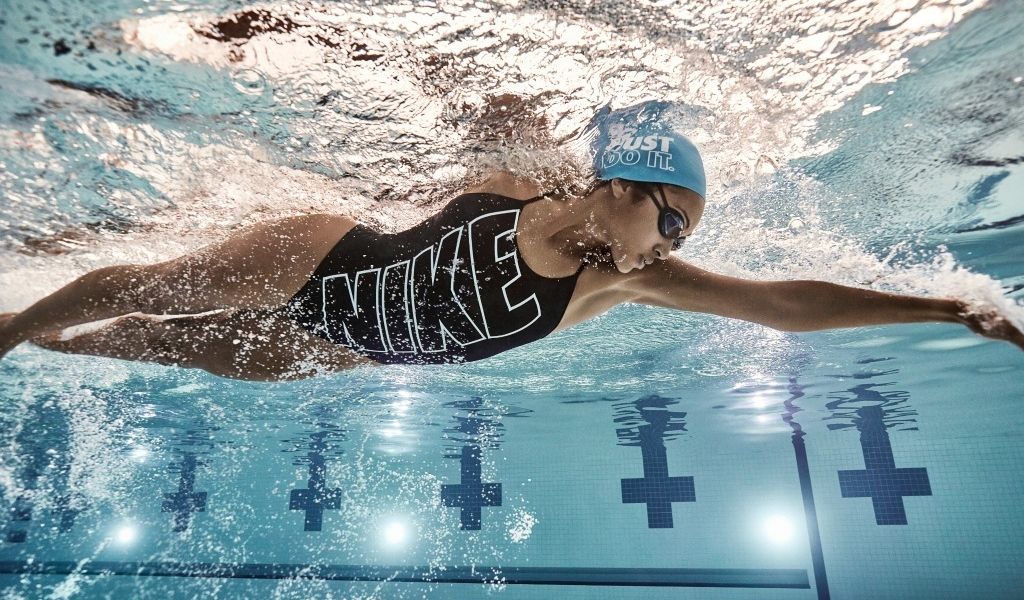
But it's not just about muscles! Swimming also offers benefits in terms of cardiovascular health. In fact, an integral part of swimming training is proper breathing, which affects your aerobic capacity and makes your heart and lungs stronger. Increasing your aerobic capacity is very beneficial because it means increasing the maximum volume of air you can exhale after the previous breath. So we are able to "pull in" more oxygen and then use it better and faster, leading to increased endurance.
Moreover, scientists believe that regular swimming may even be beneficial in terms of reducing the risk of developing heart disease. According to some studies, swimmers have up to half the risk of developing cardiovascular disease and mortality due to it compared to inactive people. With regular swimming, you can actually get a stronger and more efficient heart. Some other studies have shown that swimming can help lower blood pressure and regulate blood sugar levels.
Swimming is a very good sport for people after an injury or people with joint disease.
Swimming can also be a very suitable and safe activity for people suffering from arthritis, or other joint conditions that make them unable to perform exercises that cause shock. Compared to land-based sports, swimming develops and maintains flexibility in the joints and spine without unnecessary strain. It can also be a good complement to rehabilitation exercises, relieving pain and speeding up recovery. And thanks to its gentleness to the musculoskeletal system, swimming is a very popular exercise for physiotherapists, which they prescribe to their charges to speed up recovery after injuries or in the treatment of joint diseases.

Some institutions even offer special exercise programmes for people suffering from joint disease, so if swimming doesn't quite take your fancy, try looking for something like this. Swimming can also help you improve your posture and help with back pain and hunching. Styles such as the kraul or the sign are ideal, as they keep your head in a neutral position and don't put too much strain on your spine. At the same time, swimming is a great option for increasing joint mobility and overall flexibility. Besides, swimming is also a very good exercise for the elderly.
It can help with the treatment of asthma.
The humid environment of indoor pools makes swimming a great activity for people with asthma. But not only that, breath-holding also occurs during swimming, which when done properly can be a good breathing exercise for asthmatics that can help increase lung capacity and gain better breathing control. Conversely, however, some studies suggest that swimming may increase the risk of asthma due to the chemicals used to maintain swimming pools. Talk to your doctor about the potential risks of swimming if you suffer from asthma, and if possible, seek out an environment where you can find salt water instead of chlorine - ideally the sea.
Even swimming burns calories!
Swimming can also be an effective way to burn some extra calories. A 70 kilogram person burns approximately 423 calories per hour when swimming at a low to moderate pace. An equally heavy person can burn up to 715 calories per hour at a faster swimming pace.Compared to other low frequency types of exercise such as yoga or an elliptical trainer, the same person burns only 183 calories in an hour of yoga and around 360 calories in an hour on an elliptical trainer at a constant pace.
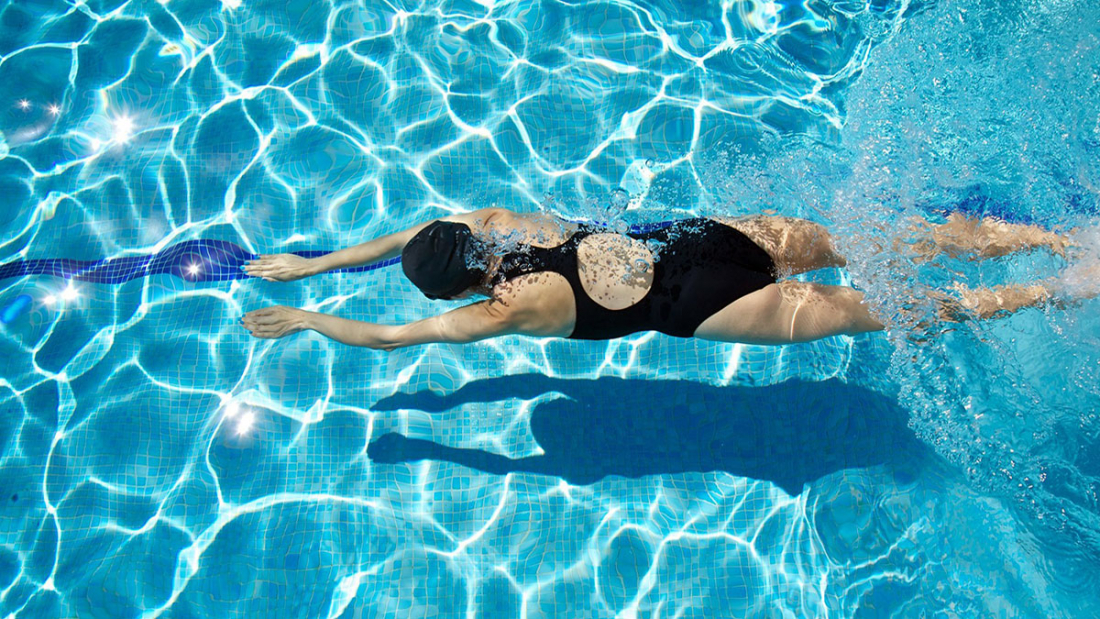
The number of calories burned depends, of course, on the length you swim, the style of swimming you choose, how long you swim and at what frequency. Ideally, combine several styles in one workout to engage all muscle groups and alternate lower frequency swims with styles that exhibit higher intensity and speed of movement. Of course, it is not advisable to overdo it and get to the stage where you will be gasping for breath or drowning while swimming. For effective reduction, it is also important to pay attention to proper diet.
Do you have trouble sleeping? Try swimming!
Movement is generally a very good tool for better sleep. And swimming is no exception! Yes, swimming can actually be a helpful tool in eliminating sleep problems. In a study conducted on elderly people with insomnia, they concluded that after starting regular aerobic exercise in the form of swimming, the participants showed an improvement in the quality of their sleep, and life overall. Swimming is accessible to a wide range of people who suffer from a variety of physical indispositions that make other exercises, such as running, out of the question for them. This makes swimming a good option for older adults who want to improve their sleep.
Swimming = exercise = endorphin boost = mood improvement!
The fact that exercise releases endorphin, known as the happiness hormone, is probably nothing new to you. Research suggests that swimming can be a good way to reduce stress levels. Thanks to the endorphin that is released through activity, your mood can improve significantly. By concentrating on proper coordination of movements, correct breathing and technique, stress can be relieved. Swimming can therefore be a great relaxing exercise that can help you to get rid of stress quite quickly.
Swimming is also a very good way of active relaxation. So if your body is aching due to hard workouts, but you don't want to just roll around at home, head to the pool to relax your muscles! However, choose a more moderate pace.
Swimming is one of the most suitable movements for pregnant women
Even during pregnancy, it is possible to go swimming. In one study (conducted on animal subjects, of course), swimming by a mother rat was shown to alter brain development in her offspring. It may even protect children from a neurological problem called hypoxic-ischemic encephalopathy, but more research is needed. Aside from the potential benefits for the baby, swimming is an activity that can be done in all three trimesters, which cannot be said for all sports.

Another study concluded that it found no adverse effects of swimming in chlorinated pools during pregnancy. In fact, pregnant women who swam during early to mid-pregnancy had a significantly lower risk of preterm birth and birth defects in their offspring. Keep in mind, however, that while swimming is generally considered safe during pregnancy, some women may find the activity taboo due to complications in pregnancy. Consult your doctor before starting swimming in pregnancy. If you have complications, ask about safe activities you can do.
Swimming - a very affordable and age-appropriate sport!
Swimming is also very often quite affordable compared to other sports activities. Many swimming pools have prices set at a comfortable level, so you won't be too financially burdened by regular visits . In addition, you can go swimming in outdoor water areas during the summer, where admission may even be free. In the case of rehabilitative swimming needs, your insurance company may even reimburse you for it. Plus, swimming is not an age-restricted sport (not that other sports are, but not all can be done), so older people who may no longer be able to do sports that involve concussions may find swimming a great way to stay active and keep their bodies in good shape.
A great way to 'get' children moving
Nowadays, there is an increasing percentage of children who suffer from obesity due to lack of exercise. Not to mention when they spend their days playing computer games and social networking. In many cases, children love the water, so swimming is a very good way to get them moving at least occasionally. Swimming is quite a fun activity that does not have to be as demanding for them as other forms of exercise. Moreover, swimming is a good activity for promoting proper growth and development because, as mentioned above, it is a movement suitable for stabilising the spine.

Potential risks of swimming
Swimming is a perfectly safe activity for the vast majority of the population. However, as with any exercise, there are some risks associated with swimming. If you are injured or suffer from certain health problems, check with your doctor or physiotherapist before starting swimming to see if the activity is suitable for you. Caution should be exercised by people suffering from skin problems such as psoriasis or those with sensitive skin, for whom the chemicals used in swimming pools could cause complications. In this case, it is again highly advisable to consult a doctor about the activity.
Want to start swimming? Then do it with gusto!
The most important thing is to learn the correct technique. Therefore, ideally find a swimmer or, if you need to use swimming as part of your rehabilitation, a physiotherapist who can teach you the correct technique. Only swim in areas designated for swimming, such as swimming pools and parts of lakes and other bodies of water. Remember to drink water even if you are not thirsty, especially if it is hot outside. While you may feel fine when you are in the water for an hour, swimming can also dehydrate you.
What can you take away from this article?
Swimming is a great activity that has many benefits for the body - from positive effects on the muscular system and strengthening it, to improving endurance and strengthening the heart, regenerative effects, stress relief, and fat burning. Try incorporating swimming into your regular routine, not just over the summer, to reap the benefits of this specific exercise!
Recommended

Protein bar 50g 3+1

Nebbia Clubhouse half-zip mikina CLUB D’OR 644

Nebbia Dámská mikina na zip INTENSE Warm-Up 833

Nebbia Bezešvé push-up legíny s vysokým pasem 303
Sources:
http://www.jrheum.org/content/43/3/666.short
https://www.usms.org/fitness-and-training/articles-and-videos/articles/dont-do-swimming-specific-exercises?Oldid=3164
https://www.ncbi.nlm.nih.gov/pubmed/24521103
https://www.nature.com/articles/pr2017110?foxtrotcallback=true
https://www.ncbi.nlm.nih.gov/pubmed/20110815
https://www.ncbi.nlm.nih.gov/pmc/articles/PMC2992829/
https://www.usms.org/fitness-and-training/articles-and-videos/articles/dont-do-swimming-specific-exercises?Oldid=3164
http://www.nature.com/pr/journal/vaop/ncurrent/abs/pr2017110a.html?foxtrotcallback=true
https://www.cdc.gov/healthywater/swimming/swimmers/health_benefits_water_exercise.html
https://www.cdc.gov/healthywater/swimming/swimmers/health_benef
No posts have been made yet.








