





Controlled overtraining to muscle mass
 Author:
 Reverse cycling is the conscious achievement of a temporally brief state of overtraining followed by a rapid step back allowing your body to supercompensate the accumulated training stimulus into muscle growth. This is not the same idea as "muscle confusion" which is simply a random change in routine for no particular reason. Instead, back-cycling is much more of a "controlled overtraining" that is based on manipulating training volume, specifically high volume and then lowering training volume.
In the increased training volume phase, you increase the number of sets and reps and exercises performed per unit of training time, all over a three-week period. Therefore, in order to be able to do more things in a given amount of time, we need to shorten the breaks between sets and use advanced methods to intensify the training. We need to keep this in mind as we switch to a higher gear.
However, you can't go full out all the time. You have to knock out, or reverse cycle. At this stage you focus, rather than just reducing training volume, on working with training intensity. This means heavier weights, lower rep counts, longer breaks, fewer sets and exercises.
There are many ways to "back cycle", however the following three are the most effective:
- Undercutting the training volume
- Working with training frequency
- Shortening the workout
1. Subcutting the training volume
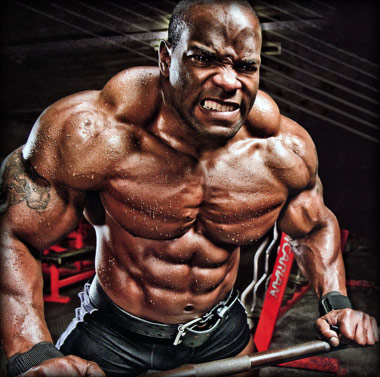 In this "back-cycling" method, you train with a high number of sets and reps for two to three weeks and then undercut your training volume by at least 40% for another two to three weeks.
A simple way to use the method is to add reps for each part you train. Once the total number of reps gets to the highest feasible level, you move to a low rep count.
Sample program:
| Weeks | Series | Reps | Breaks | Total volume |
| 1, 2 | 10 | 10 | 1:00 | 100 |
| 3, 4 | 6 | 6 | 2:00 | 36 |
| 5, 6 | 8 | 8 | 0:30 | 64 |
| 7, 8 | 5 | 5 | 3:00 | 25 |
| 9, 10 | 4 | 12 | 1:30 | 48 |
| 11, 12 | 8 | 3 | 1:00 | 24 |
The sets and reps in the table are for each of the parts you are training. In other words, 10 x 10 means 10 sets of 10 reps for the chest, 10 sets of 10 reps for the back, and so on.
Stick with the scheme for a few weeks and then move on to the next one. What split you choose is up to you.
2. Training frequency
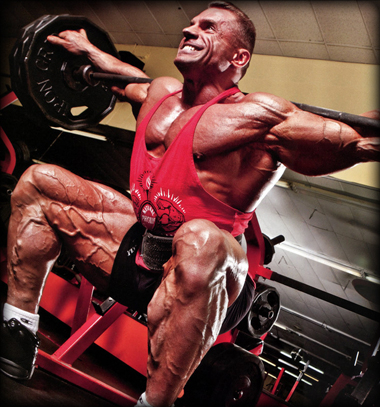 In this method, you will work at a very high training frequency for one to two weeks and then reduce the frequency, again for one to two weeks.
The method can be used very well during the asymmetry balancing phase, specializing in a specific part.
So let's say you have adequate muscle mass everywhere except the calves.
The following is a table with an explanation and examples of the program:
| Saturday | Sunday | Monday | Tuesday | Wednesday | Thursday | Friday | |
| Week 1 | Training A | Training B | Training A | Training B | Training A | Training B | Off |
| Week 2 | Training A | Training B | Training A | Training B | Training A | Training B | Off |
| Week 3 | Training C | Off | Training C | Off | Training C | Off | Off |
| Week 4 | Training C | Off | Training C | Off | Training C | Off | Off |
Training A
Single leg lunges, 100 reps with minimal breaks on each leg. Start with a high number of reps and add more reps with minimal breaks. If the number of reps you are able to perform drops below 10, extend the break to 30 seconds.
Use 3 sets of 6-8 reps for the rest of the workout.
Workout B
Standing lunges on machine 5 x 10-12 reps
Leg press lunges 3 x 20 reps
Sit-ups 2 x 25 reps
Workout C
One-arm push-ups 5 x 10-12 reps
Sit-ups 3 x 20 reps
Remaining parts 3 x 6-8 reps
3. Shortened training routine
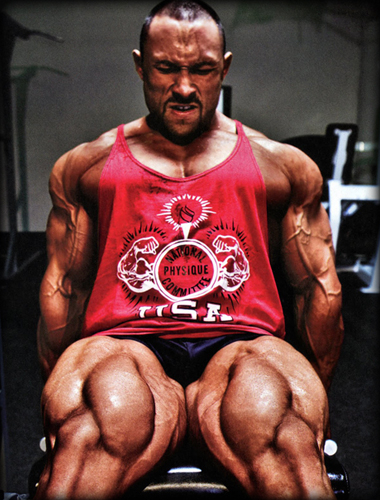 Let's describe a common situation in today's gyms. A skinny kid starts doing a high-volume workout by a pro, copied from a magazine. All those multiple sets for each muscle part. He trains for some time and makes progress, but soon reaches a point where he is unable to improve, or on the contrary, he starts to become overtrained.
Then some strength enthusiast advises him to scrap the isolation exercises on the machines and include basic exercises with a big barbell - and lo and behold - more progress!
Alternating training that exercises a part from many angles with abbreviated strength training is a form of "backward cycling". From a bodybuilding perspective, you need to work the muscle from many angles, for the sake of maximizing their development.
But from a strength training perspective, you get little benefit from using more than one exercise per batch. You'll get low returns from such training because you'll be tired to death.
Alternating phases of bodybuilding training with strength training will allow you to develop muscle symmetry as well as muscle mass. Here is a two-phase program that alternates typical bodybuilding training with abbreviated strength training.
WEEK 1,2
Alternate workout A,B,C. Train in a 3+1 system.
Workout A
Breasts
- Bench press - 5 x 8-10 reps
- Overhead press with one-armed push-ups - 5 x 8-10
- Peck deck - 4 x 10-12
Back
- Pull-up pulley - 5 x 10-12
- Single arm pull-ups to waist - 4 x 8-10
- Pull-ups to waist on pulley - 4 x 8-10
Workout B
Thighs
- Squat - 4 x 10-12 reps
- Legpress - 4 x 10-12
- Lunges - 4 x 10-12
- Lunges - 4 x 10-12
Calves
- Standing lunges - 4 x 15-20
- Donkey lunges - 4 x 15-20
- Sit-ups - 4 x 15-20
Workout C
Shoulders
- Standing Press - 5 x 8-10
- Arm raises - 5 x 10-12
- Lunges - 4 x 10-12
Biceps
- Biceps with one arm - 4 x 8-10
- Biceps with one-arm sit-up and incline bench - 4 x 10-12
- Biceps on Scott bench - 4 x 8-10
Triceps
- French Lying Press - 4 x 8-10
- Overhead pulley extension - 4 x 10-12
- Close Lying Press - 4 x 10-12
WEEK 3-6
Alternate A,B workouts at a frequency of 3 times per week with weekends off
Workout A
- Bench press - 6-8 sets x 3-6 reps with 3 min break
- Deadlift - 6-8 sets x 3-6 reps with 3 min break
Training B
- Shrugs - 6 x max reps with 3 min breaks
- Squat - 6-8 sets x 3-6 reps with a 3 min break
Summary
You know that growth comes with change, many exercisers are confused about when and how to change routines. Leave the confused exercisers to their method of muscle confusion and use a backward cycling strategy to add more reels and gain more muscle mass.
No posts have been made yet.








