





Circuit training and its effect on growth hormone - Part 1
 Author:
 Lose fat and gain muscle at the same time. For almost a century, fitness enthusiasts have been searching for this holy grail.
Why gain weight and diet when you can do both at the same time? As illogical as it sounds - the two goals are exact opposites of each other - it fits the impatient mood of the typical fresh-faced gym-goer who plans to go from skinny-fat to super hero in eight weeks or less. Then, of course, his weekends will be free for running after girls and eating cheeseburgers. With a schedule like that, there's little room for logic.
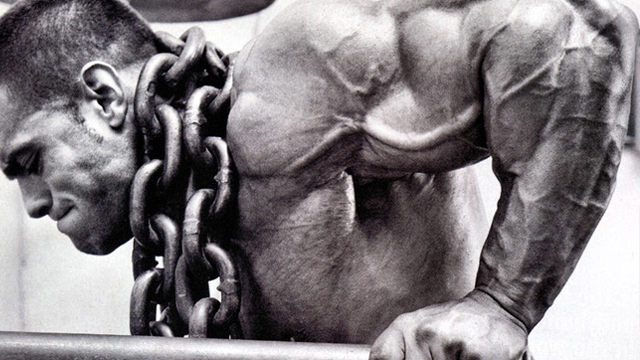
To this end, countless workout programs and supplements have been marketed to help these people on their journey to miraculous physical transformation, in exchange for a few dollars, probably initially intended for college or new socks.
Unfortunately, the results have been disappointing. The average exerciser emerges from months of various cyclical diets and repetitive training programs to find that he or she is essentially in the same place they started, only half as motivated and twice as angry.
The fact is, experienced exercisers doubt that it's even possible for a natural who has a life outside the gym to lose fat and gain muscle at the same time - so the old system of separating gaining and losing weight remains the choice.
But here's the thing: despite what the gurus tell you, training hard and eating properly, followed by calorie-restricted weight loss and cardio, is not the best method for building a chiseled, muscular body, nor is it ideal.
So back to the question. Is it possible to build muscle and reduce body fat at the same time and somehow live a normal life in the process?
The answer is yes! But in order for this to happen, you must choose a training program that facilitates fat loss (lipolysis) while simulating muscle growth (proteosynthesis). Easier said than done, yes, but it's not a pipe dream.
To fully understand the process, let's take a closer look at the demands of fat loss and muscle growth.
Maximizing fat loss
How to do it? The following list is taken from the work of Dr. Mauro DiPasquale: Increase the release of fat from its stores by jumpstarting lipolysis through hormonal modulation and physical activity.

Increase oxidation and elimination of released fatty acids (body fat) by maintaining metabolic levels and maximizing fatty acid transport to the mitochondria. Reduce fat accumulation or lipogenesis by reducing excessive inflammation, improving insulin sensitivity and optimizing cortisol secretion. Focus on fat loss while maintaining (in our case, accumulating) muscle tissue; this is achieved by maximizing anti-catabolic hormones and growth factors (GH, Testosterone, IGF-1). Avoid the metabolic slowdown associated with single-ingredient diets, followed by high-protein diets.
What to take away from this:
You need to increase growth hormone secretion, optimize insulin peaks, improve muscle sensitivity
to insulin, keep training units short, and you'll lose fat.
Maximize muscle growth
To cause muscle growth, we need to stimulate protein synthesis in muscle tissue.

Proteosynthesis is caused by proper training that: engages all available muscle fibers with a variety of exercises, creating sufficient muscle tension, in an optimal range of motion. It fatigues as many muscle fibres as possible, with a sufficient volume of work. Ensures adequate availability of amino acids and energy to enhance proteosynthesis.
Takeaway:
Engage and fatigue as many muscle fibers as you can, as fast as you can, and make sure adequate amino acids are available during the process
Another wrinkle
How do we make these two processes work together to create an anabolic environment in which we use body fat stores to help meet energy demands?
1. We stimulate muscle growth with complex exercises for 6-20 reps to failure.
The rep range will determine which muscle fibers get engaged. We want to engage as many as possible, including slow, medium and fast fibers. As with all strength exercises, the slow fibers are engaged first, as the muscle fatigues, the medium fibers come in, and finally the fast fibers are engaged. However, this is only if and when the series is performed to failure.
Muscle growth is best achieved when exercises are performed with controlled, eccentric movements and sustained tension. Try to minimize swing movements unless the exercise directly calls for it.
Recommended
Czech Virus Liver Max V2.0

Nebbia Boxy fit košile s kapsami STREET ICON 599
Nutrend Magneslife instant drink powder
Maxsport Protein X-Cream
2. We improve insulin sensitivity with sufficient volume of work.
Many sets in the 6-20 rep range are the best for depleting muscle glycogen stores (and stimulating protein synthesis). During high-intensity strength cycles, muscle glycogen is broken down very quickly if the volume of work is sufficient.
This results in improved muscle insulin sensitivity and increased LPL activity on muscle tissue, ensuring that nutrients are directed primarily to muscle tissue.
Insulin sensitivity in muscle cells increases when glycogen stores are low. When this occurs, nutrients are directed to muscle tissue and fat stores are broken down.
3. We maximize GH production by taking short breaks
Traditional split training (upper body, lower body) has a beneficial effect on anabolic hormones and growth hormone (GH), but we need to maximize GH if we are to reach our goal.
An effective way to maximize GH release is by practicing circuit strength training in which you stimulate both the upper and lower body and hold short breaks.
Properly performed circuit training leads to a noticeable drop in blood pH, which will cause increased GH production. The rapid breakdown of glycogen will cause the release of hydrogen ions. These ions accumulate in the system and the pH of the blood drops because of them.
Despite the belief that lactic acid causes burning in the muscles; it is actually the lowered pH that creates an acidic environment, leading to burning and muscle fatigue. The brain senses this situation and increases GH production
What's so great about growth hormone?
GH has been shown to stimulate fat breakdown (lipolysis), increase fat utilization, and decrease the use of carbohydrates as fuel.(1) GH has beneficial effects on muscle mass, bone density, body fat, and can reverse some of the age-related changes in lean muscle mass.
GH has a suppressive effect on myostatin, and myostatin inhibits muscle growth and is a negative regulator of muscle tissue. Higher GH release means a lower myostatin effect; less myostatin can translate into increased anabolic activity and more androgen receptor.
Research shows that circuit strength training (and high-intensity sprint training) are both effective methods of naturally increasing GH secretion in healthy adults.
In the next article, we will move on to a detailed description of circuit training
For a continuation of the article on circuit training, click here
Article written by Erick Minor and translated by Jaromír Uhlíř
Reference:
Doug McGuff, M. (2009). Body by Science. New York: McGraw Hill. Loren Cordain, P. (2005). The Paleo Diet for Athletes. RODALE. Pasquale, M. G. (2008). Amino Acids and Proteins for the Athlete. Boca Raton: CRC Press. Specialist, R. T. (2001). physics, The Engineering of the Musculoskeletal System and the Mechanics of Load Application. Oklahoma City: Focus on Fitness. Yuri Verkhoshansky, M. S. (2009). supertraining, 6th edition. Ultimate Athlete Concepts. Zatsiorsky, V. M. (2006). science and practice of strength training. Champaign: Human Kinetics.
No posts have been made yet.








