





Are you fit? Are you? Maybe you only think so!
 Author: Šárka Randáčková
 Conditioning is definitely not just about muscle and fat. Just because you're running marathons or doing CrossFit doesn't mean you can't be derailed by injury, sleep, or other things (if you haven't already).

You think you're fit, maybe you're right, maybe you're not. Let's take a look at two typical examples and show you how to improve your fitness and physique without the added sweat.
1. I am the definition of fit ... I do CrossFit, marathon, etc.
People like that are hard to study with studies. There aren't enough marathons being run and complying with the study conditions would be trivial. Not to mention the differences in initial health, diet, supplements, etc.
CrossFit definitely improves fitness, motivation, and a sense of group cohesion.
Marathoners are healthy. Long term marathon running improves cardiovascular health for men and women. Running improves cardiovascular health, and the longer you run, the more its effects increase.
So what's the problem? It's my favorite refrain: watch the dosage.
- More marathon runners have more knee problems
- There are rarely problems with rapid muscle breakdown in CrossFit.
- Long-term marathon running may increase the risk of fibrosis of heart tissue, although the evidence is quite conflicting as to whether this is actually dangerous.
- In addition, older men need to account for the risk of death during the marathon itself.
- The group of people who have had a heart attack directly during a marathon has been growing in recent years.
2. My cholesterol levels are really low, so...
LDL cholesterol levels predict the risk of heart problems. If it's low, you can call yourself fit.
But there are a few catches.
Your doctor measures your cholesterol level (LDL-C), which doesn't always account for all the cholesterol particles traveling through your bloodstream.
There's another cholesterol (LDL-P) that better predicts your risk of heart disease. Most importantly, several studies have even linked increased heart risk to very low cholesterol levels.
But this is a very complex topic on which you should educate yourself more.
Want optimal fitness? You don't have to sweat it out!
Both of the examples above take a very narrow view of fitness. It's not just about getting sweaty. You don't have to have perfect abs and work out for two hours every day.
There are several components to fitness:
- Optimal functioning of the cardiovascular system
- Joints that don't hurt
- Enough muscle and low enough fat to match your goals
- Good hormonal balance
- Enough sleep to support all of the above.
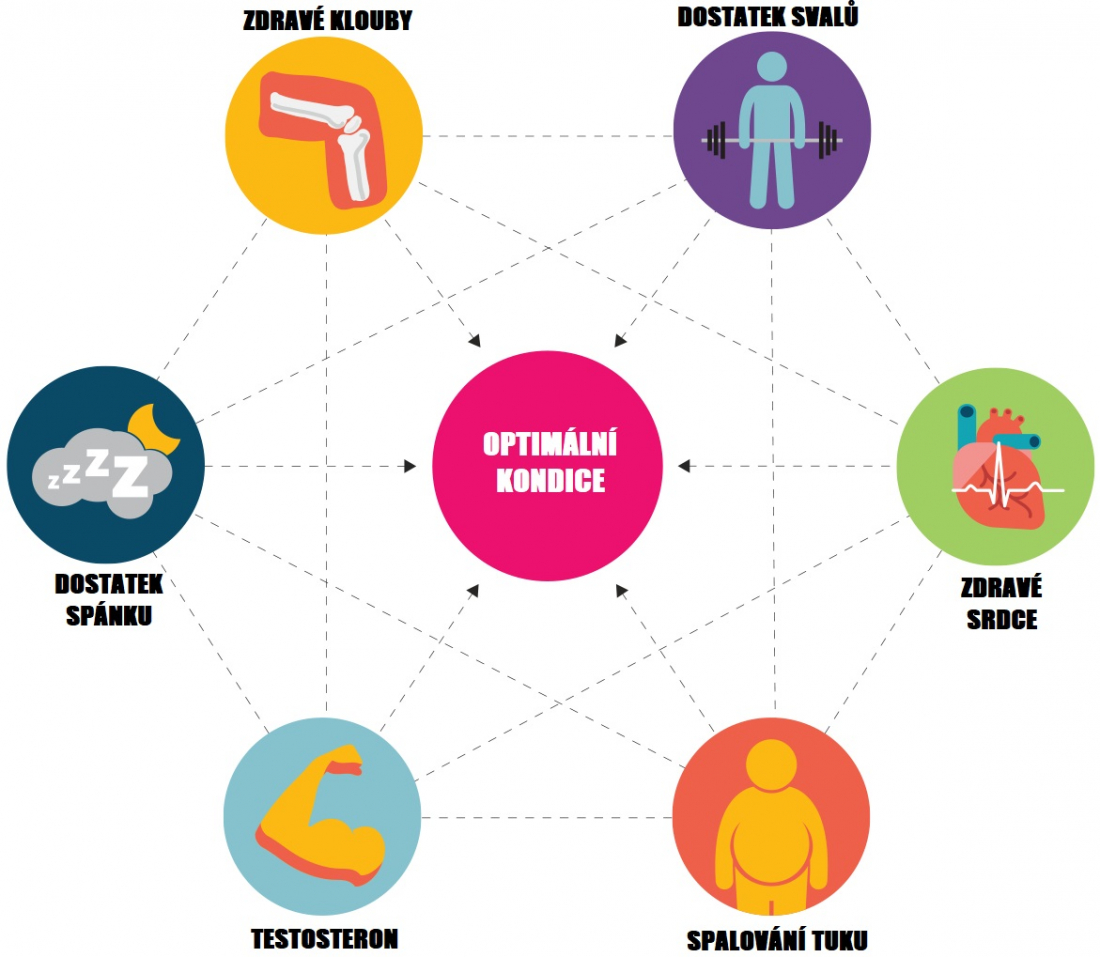
Many people think that the only way to a better body is to exercise. Not true! Few people are truly limited by lack of training. More often it's lack of sleep or chronic joint pain.
We've been piling up studies on this topic for years. This is a simplified output of a combination of over 300 studies:
- Address common problems with diet and supplements
- Delve into the psychology of eating, an incredibly common snag
- Understand the latest findings on popular types of eating
- Discover the answers to the most common questions about eating
- Pay attention to your body's movements outside the gym (for example, what position you sit in at work)
- Set realistic goals and improve
- Keep your joints healthy so you don't suffer pain when building fitness.
Author of article:Kamal Patel, Translated by: Jaromír Uhlíř, Source: link
Author: Šárka Randáčková No posts have been made yet.








