





Annual plan of periodization of volume training of a bodybuilder
 Author:
 For this reason, I clearly disregard for use in bodybuilding the ideas of linear and non-linear periodic strength training plans, WSB methods or specialized Sheiko type strength training. These plans are great, however they are designed for improvement in powerlifting type sports, not bodybuilding. This is because in bodybuilding competitions, it's not how much you lift that matters, it's the muscle development you've achieved. In the words of a friend: "I'm not able to lift a bag of cement, but I won the WC."
Since I "sniffed" the barbells sometime in high school in the very early 90's, uninformed but totally fascinated by Arnold and later other bodybuilders and their workouts, I spent a substantial part of my "bodybuilding" adventure gradually discovering the training and dieting magic. (I recently found my notes from '92, which I don't remember at all). I didn't "discover" periodization until several years later, but I am convinced that it is the only possible path to continuous improvement. I was the first to discover "training periodization" which is probably why I eventually got into powerlifting. Bodybuilding, however, requires more than training periodization, it requires a system of training manipulation based on dietary periodization.
From a dietary point of view, training periodization can basically be conceived as a phase of gaining muscle mass, a phase of losing fat, and possibly a phase of maintaining muscle mass. In other words, the emphasis of the diet has at least 70% weight in planning the periodization plan. Strength training will be adapted to this basic skeleton. So here we come to bodybuilding training periodization and methods of developing strength and muscle capabilities.
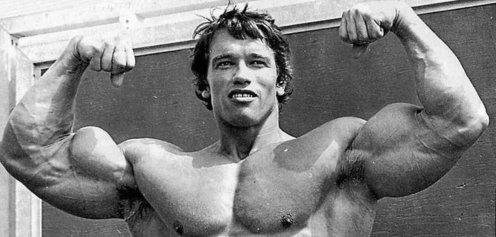 As far as methods go, this is a pretty straightforward observation. Bodybuilding training simply has to be based on the repetitive effort method (the "bodybuilding method") in the repetition range ideal for hypertrophy - that is, between 6-12 reps. Thus, nothing new. A repetition range of less than 5 to around 3 will only be used in one of the training phases, serving to develop strength abilities, which are also important because the development of muscle mass is related to the load used. A repetition range above 12 will be used marginally to shock the muscle fibres and is used to develop strength endurance skills. However, for example, the legs deserve a range of 8-15 reps because of the composition of the muscle fibres.
Personally, I don't see why I would use, for example, the maximum effort method in bodybuilding training and why I should elaborate on it here. In bodybuilding "hypertrophy" training, it simply depends on the time length of the series, i.e. the time when with a certain limit weight we exert muscular tension and thus affect the energy economy of the muscle fiber (cells).
In my periodization proposal we will work with several phases of training.
1. Adaptation phase (4 weeks)
This is actually the preparation phase after the training break. The organism is rested but not yet accustomed to the high volume of work that will come in the following phases.
Level | Dividing the body | Frequency of training | Range of op | Exercises |
| Beginner | Full body | 3 x per week | 10-15 | Multi-joint (technique training)* |
| Advanced | Two halves | 1+1v | 10-15 | Single joint (technique + shaping) |
| Advanced | Split 4 groups | 2+1 | 10-15 | Isolated (muscle shaping) |
*these are more machine exercises
Phase length 4 weeks
The volume of training (working a muscle part) is not too high yet. For a beginner 1exercise per muscle group for an advanced 1-2exercises per muscle group, for an advanced 2-5 exercises per muscle group.
The intensity is not high. The beginner learns the technique, the advanced and mature practitioner uses more isolated exercises. The length of breaks is about 60 seconds.
2. Volume-strength phase (week 5-8 )
Begins to pick up the volume of work per muscle part. The beginner learns the technique of basic exercises with a barbell. Beginner's volume is 1-2 exercises per part. The advanced performs 2-3 exercises per muscle part and the advanced between 3-5 exercises per muscle group. The number of sets is 3-4 per exercise.
As the intensity increases, it is moderate for 8 to 12 repetitions (approx70%), multi-joint exercises with a heavy barbell are included in the workout. Break length from 60-90 seconds.
Phase length 4 weeks.
The diet is adapted to the growth of muscle mass. A surplus of calories is taken in relation to the need.
Cardio should be shorter lasting about 20-30 minutes 2-3 times a week, ideally on days off.
| Level | Dividing the body | Training frequency | Range of op | Exercises |
| Beginner | Top/bottom | 3 x per week | 8-12 | Multi-joint and heavy barbell + isolation |
| Advanced | Split 3 groups, e.g. Arms+Breasts, Legs, Back+Shoulders | 1+1v | 8-12 | Isolated + heavy dumbbell |
| Advanced | Split 3 groups, e.g. Arms+Breasts, Legs, Back+Shoulders | 2+1v + 1+1v | 8-12 | Isolated + heavy dumbbell |

3. Strength-volume phase (week 9-12)
High volume work on a muscle part. Beginner with 2-3 exercises per part. Advanced will do 3-4 exercises and advanced between 3-5 exercises per muscle group.
Intensity increases again, training more like a strength routine than at other times. There should be an increase in strength. Weights up to 85% (exceptionally 90%) of the maximum for 1 repetition are used.
Phase length 4 weeks.
Diet is tailored to muscle growth. A surplus of calories is taken relative to the need.
Cardio should be shorter lasting about 20-30 minutes 2-3 times per week, ideally on days off.
Level | Dividing the body | Frequency of training | Range of op | Exercises |
| Beginner | Two halves Top/bottom | 1+1v | 6-10 | Heavy dumbbell + one-arm dumbbell 1 exercise per batch |
| Advanced | Split 3 groups Arms+chest, Legs, Back+shoulders | 2+1v 1+1v Alternate between light (8-12op) and heavy (4-8op) workouts | 6-10 Exceptionally 3 and 12 | Basic exercises heavy dumbbell, occasionally supplemented with isolation exercises |
| Advanced | Split 4 groups e.g: Arms+Shoulders, Breasts, Legs, Back | 4+1v | 6-10 Exceptionally 3 and 12 | Basic exercises heavy dumbbell, occasionally supplemented with isolation exercises |
4. Volume phase (week 13-16 )
The aim is to speed up recovery after the strength phase and work on lagging areas, e.g. in the form of embedded sets or even double blast training (two-phase training of the same area). In addition to multi-joint exercises, isolated exercises on machines and pulleys are included to achieve maximum blood flow to the muscles. High volume of work per muscle part. Beginner with 2-3 exercises per part. Advanced performs 3-4 exercises and advanced between 3-5 exercises per muscle group and number of sets from 3-5 per exercise.
The intensity is medium, multi-joint exercises are still included in the training, but work on lagging muscle groups also begins, which is adapted to the choice of exercises. The length of the break is 45 seconds.
Phase length 4 weeks.
The diet is still adapted to muscle growth. A surplus of calories is taken relative to the need.
Cardio should be shorter lasting about 20-30 minutes 2-3 times a week, ideally on days off.
Level | Dividing the body | Frequency of training | Range of op | Exercises |
| Beginner | Split 3 groups Arms+chest, Legs, Back+shoulders | 1+1v | 8-12 | Isolated + multi-joint |
| Advanced | Split 3 groups Arms+chest, Legs, Back+shoulders | 2+1v 1+1v | 8-12 | Isolated + multi-joint |
| Advanced | Split 3 groups Arms+chest, Legs, Back+shoulders | 2+1v | 8-12 | Isolated + multi-joint |
5. Competition Volume Phase (Week 17-28)
Begins a period of reducing caloric intake and trying to burn fat.
Very high volume of work per muscle part and overall in the week (microcycle), which is matched by both split and training frequency. The beginner performs 2-3 exercises per part. An advanced performs 3-4 exercises and an advanced performs between 3-5 exercises per muscle group and training unit. The number of series from 3-5 per exercise.
Intensity is generally medium to higher. Alternating light 8-12op and heavy 6-10op workouts can be used. Break length is reduced to 45 seconds. Transition to the use of supersets or even multiple sets. It is not good to eliminate "heavy exercises", on the contrary, the inclusion of multi-joint exercises with a barbell will have a positive effect on the preservation of muscle mass. However, due to the diet, expect a decrease in strength, the stricter the diet, the harder it will be to use the same loads as in the volume phase.
A mature bodybuilder usually switches to two-phase training. The second phase can be aimed specifically at the lagging part.
The length of the phase is 8-12 weeks.
The diet is reductive. Fewer calories are taken in compared to the need. At the end of the phase, the use of a strict diet with waves of minimal carbohydrate intake is increasingly common.
To increase the fat loss effect, increase cardio to 45-60 minutes after training. The approach to cardio tends to vary, depending on the body's disposition. There are bodybuilders who can prepare for a competition almost without performing cardio. The approach of including cardio before or after training also varies. It really depends on your body's disposition and your beliefs.
Level | Body compartmentalization | Frequency of training | Range of op | Exercises |
| Beginner | Split 3 groups Arms+chest, Legs, Back+shoulders | 3+1v | 8-12 (6-10) | Multi-joint + Isolated + Barbell |
| Advanced | Split 4 groups e.g: Arms+Shoulders, Chest, Legs, Back | 4+1v | 8-12 (6-10) | Multi-joint + Isolated + Barbell |
| Advanced | Split 4 groups e.g: Arms+Shoulders, Breasts, Legs, Back | 4+1in, two-phase training can be included, | 8-12 (6-10) | Multi-joint + Isolated + Barbell |
6. Transition Period (Week 29 )
Last phase - rest after competition or after reaching maximum form. Complete break in training. Preferably active rest with another recreational sport. Transition to a free diet.
Summary:
Because this is the skeleton of the workout, I do not mention the inclusion of intensification techniques and other procedures that would be part of more detailed schedules depending on the client's training.
The periodization plan can be repeated approximately 2 times per year, meaning having 2 peaks during the year. This is one possible periodization suggestion to use as inspiration for creating your own plan.
No posts have been made yet.








