





A proper centre of the body
 Author:
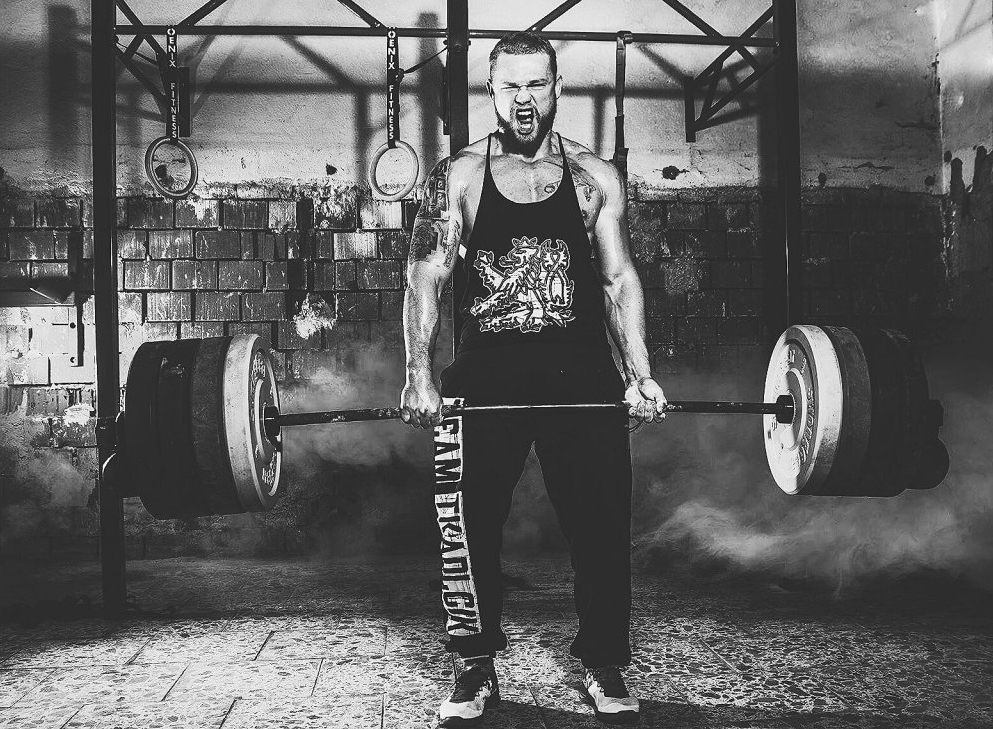
 Do you ever meet any of those fools who have incredible strength? Guys who can push 300 on reps, pull 500, hang on a basketball hoop, and carry heavy furniture like it's plastic lawn chairs? In the Czech Republic, I'm sure everyone knows the representatives of a strong middle body, for example, the legend Jiri Tkadlcik. His performances are often beyond the comprehension of ordinary mortals :-)
Apart from the fact that such physical strength is impressive - it also comes in handy when you need help with moving - he is a shining example of exceptional mid-body strength.
And I've done it. I said "center of the body," which immediately conjures up images of 30-second commercials and skinny men in spandex curling up on Bosu balls.
However, I prefer to use the word center of the body as the dictionary defines it: "the essential or most essential part; the base." Applying this definition to training, it implies that your seemingly strong physique is nowhere near its true potential unless you're brimming with proper mid-body strength.
There's no shortage of articles on good training and literally dozens of mid-body exercises. However, one of the problems with even good training advice is the lack of focus on what you need to improve. Considering you read our site, there's a decent chance you're interested in improving your squat, bench, and deadlift. So what do you get out of mid-body exercises where you're lying on the ground?
The answer is, very little. You may improve your "isolated" midsection strength, but your performance in the big three exercises will quite likely remain unaffected. I don't do rote sets for 8-10 reps in my mid-body training, but rather choose specific exercises that eliminate weaknesses.
Here's an example: if your back rounds up during squats and deadlifts, it's a deficiency. And because you haven't stabilized your torso enough, you're losing out on energy transfer between the floor and the axis. The consequence of this is injury, or a failed and ugly attempt. So you need to find a mid-body exercise that will take care of this deficiency.
How to create a proper center of the body
The following steps will help you create a proper mid-body before you know it. However, under no circumstances should you skip a step. Imagine if you were a child and tried to skip the walking stage. You would take it from crawling straight to sprinting. Swallow your pride, take those steps one at a time and take away all the benefits that are offered to you.
I'll also give you two types of example exercises and workout sequences. You can use both, or pick the one that fits your workout better.
Step 1: Create Tension
The first step is all about creating tension. Isometric contractions are a good way to master this skill - most people are familiar with plank and other propped up cunt moves - but I've found that moving a short distance with resistance is better
Rotations - moving only the arms
Start by holding the plank position with your glutes and thighs clenched. Squeeze the axis, push forward with one hand and pull the axis with the other to create tension in the upper body. This helps prevent weaknesses in the shoulders and elbows. Slowly rotate your arms to one side, take a second to pause and return to the starting position before switching sides. The goal is to be able to hold the position with maximum tension while demonstrating slow arm movement and not allowing any other part of the body to move noticeably.
Rubber band rotation - arm movement only
This was taught to me by Nick Tumminello and is a great way to teach athletes that the center of the body is irreplaceable. Start with what is known as the "pallof press" position with maximum tension in the glutes and abdominals, then rotate the arms between the shoulders.
Note: These should be small, rhythmic movements. Avoid using your hips and swing when producing the movement. Try it in front of a mirror and make sure your belly button doesn't move. If you can do this, you are stable.
Step 2: Slow pull
The second step is all about slow pulling. An often used analogy for slow pulling versus explosive movement is a tow truck and a sports car. When you're stuck in a snowdrift in the winter, you want a truck to come rescue you, not a Ferrari.
To lift heavy weights, you need to be able to generate a decent amount of tension. It's tempting to take on heavy weights at top speed, but it's not always effective, because the faster you move, the less force you produce. You can always try to move faster through the point where you often get stuck, but what happens when you explode to that point of stuckness and end up there?
The key is to learn to pull slowly and control the force with the following pulling movements.
Slow pull - rotation
Rotation also involves the movement of the hips. In the first exercise you worked with a braced torso, here you will move your hips and also hold tension. This will teach you how to produce force as a complete unit while moving, stopping, slowing down and speeding up. Start rotating to one side and pivot with your legs. Lower the axis close to your thigh and bring it back up in a controlled, energized manner. Make sure the movement comes from the hips. The movement is very similar to what happens when you punch and throw.
Slow rotation of the hips with the rubber
This exercise is very similar to the rotation. From the same starting position, rotate the hips towards the point of attachment, remembering to keep the tension and not let the energy escape from the torso. Then rotate in the opposite direction and perform the same movement with the hips as in the rotation mentioned above.
Step 3: from slow to fast
You've learned how to slowly generate maximum tension, now it's time to explode! This step is strikingly similar to the oft-touted system of "controlled eccentric phase and explosive concentric." This is an effective cadence for both hypertrophy and maximal strength development, but you still need to be able to stay clenched! Here's how you achieve it.
Rotation - from slow to fast
This exercise is performed like its previous variation in step 2 , but now you slowly lower the axis and take a one-second break before exploding back up. Be sure to build up maximum tension before the explosive part of the movement. If you can't do that, start with something lighter.
Controlled rotations with the rubber - from slow to fast
This is also done like the version from point 2, but again, take a second break before exploding to the starting position.
Step 4: fast and furious
Reactive training methods are a very essential part of training, especially for athletes who need to be able to react when heavy objects (such as a 100-pound defender) are coming at them quickly. To effectively decelerate a high-momentum object, you need to be extremely hardened, quickly - essentially, you need to create an immediate pulse of maximum tension, as you don't have time to build it up slowly. In this fourth and final step, you will learn to develop this essential skill. As mentioned, you must not skip steps. Jump straight to step 4 and you will only achieve injury. You have been warned.
Explosive Rotation
While the basic movement is the same as the one you have already performed, here you must "jump" from position to position. This achieves less control, as the individual repetitions will be slightly different from each other. Because of this, you must be able to demonstrate proper body center despite slight deviations from the planned trajectory of the movement.
Explosive rotations with the rubber
The execution is again the same, but with a faster eccentric phase. Although it is easier and less dangerous than the above rotations, you will certainly have to work hard to avoid flaws.
Now what?
Now it's up to you. Are you willing to allow inadequate mid-body training to sabotage your strength and volume gains? Or will you embrace the power of intelligent mid-body training? It should be an easy decision. By learning to develop absolute control over a given resistance, you will master the power of energy transfer, and maximize your strength potential.
You can do all this by getting a proper body center.
Written by Eirik Sandvik, translated by Jaromír Uhlíř
Photo JiriTkadlcik.cz
No posts have been made yet.








