





6 reasons why your calves are below average
 Author:
 Are you telling yourself that your calves will always remain your weakness because they are genetically determined and there is nothing you can do about it? Don't immediately blame it all on bad genetics and see if you are making any of the following 6 mistakes in your training.
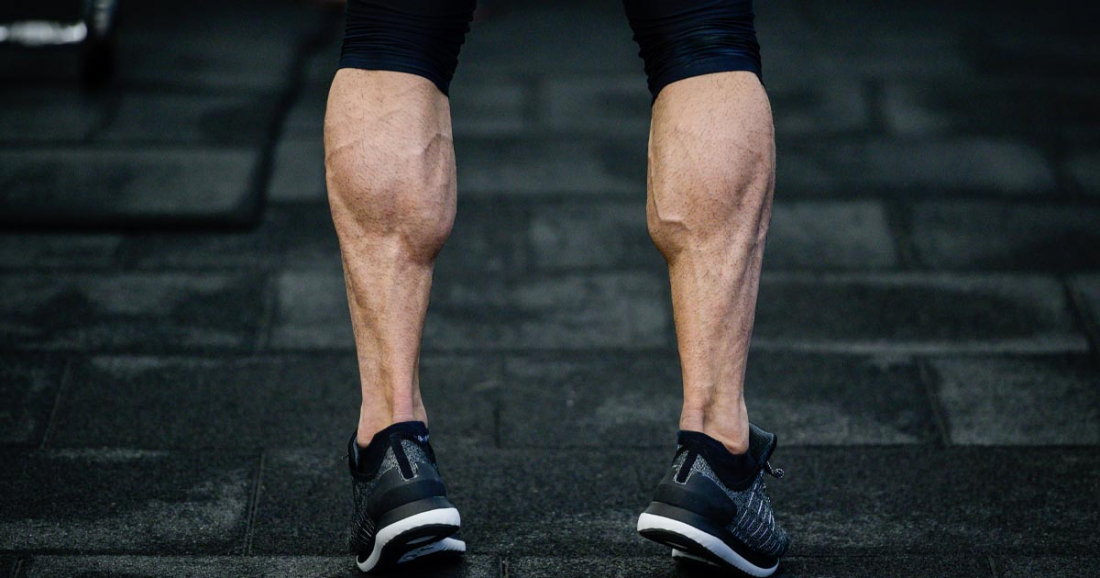
Your genetics may not be as bad as you think, you may just not have given your calves the right stimulus to grow.
6 reasons why your calves are below average
1) You're putting your calves at the end of your workout
Many exercisers neglect their calves or include them at the very end of their workout, when they're exhausted and barely able to get a few slack sets in. As you know, muscles don't grow unless you give them enough incentive to do so. If your calves are to grow, you need to train them as hard as you train, say, your chest or back - from different angles and to exhaustion, and with the same intensity as your quadriceps or hamstrings. You don't have to have your calves only as part of your leg training, try to include them at the start of your training of other areas when you have enough energy for them.
2) Increase the number of reps
Forget the 10 - 15 reps recommended for other parts when training your calves. For the calves, you need a higher number of reps (20 - 30), this will not only give you more growth but also better pumping.
3) You are not training all calf muscles with the same intensity
The calf is made up of the musculus gastrocnemius (double-headed calf muscle, on the back of the calf, attaching to the lower inner and outer part of the thigh bone) and the musculus soleus (oblique calf muscle, on the side, attached to the upper end of the tibia). For standing lunges, you mainly engage the biceps femoris, whereas for seated lunges you engage the oblique calf muscle. Therefore, always include multiple calf exercises in your workout, not just one, to achieve even development.
4) You only focus on the heavy weight, not the correct technique of performing the exercise
To grow your calves, you need to train with heavy weights, as many reps as possible, but never at the expense of technique. How do you know if you've put more weight on your calves than you're able to work out with proper technique?
- During the exercise, your ankles point significantly outward
- In standing lunges, you bend your knees
- For seated lunges, you use your arms to help you
- You feel pain in the arch of your foot or Achilles tendon
5) You forget to fully contract your calves
Just like for other muscles, stretching and contraction (shrinkage) is important for the calves, many people make the mistake of only performing incomplete repetitions where there is no contraction in the top position at the toe and full stretch in the bottom position. But stunning calf growth cannot be achieved with this style, full range is needed. You can also try holding the contraction in the top position for a few seconds during the workout and then slowly returning to the starting position.
6) Poor posture
The correct technique for performing the exercises, including posture, can be found below, or you can study it in the literature or ask an experienced trainer for advice. You may have come across different toe postures in calf training (outward, inward, straight) that allow you to target different parts of the calves (e.g. the outer). For proper development, the classic stance of the toes pointing straight ahead is sufficient; alternative variations put more stress on the ligaments and connective tissues in the ankles and knees.
Recommended
Nebbia Legíny s vysokým pasem LEG DAY GOALS 248

Viridian Saffron Extract

Czech Virus Protein Pancakes

Puhdistamo Collagen Beauty
Sample training
Standing lunges
4 sets of about 20 reps
- Stand with your toes on the machine's foot pedals, adjust the machine's arms so they are down on your shoulders. With an exhale, you go to a toe position, where you stay in the peak contraction for a few seconds, and then with an inhale, you come back down, heels slightly below the level of the foot pedals.
Demonstration of the correct execution of the exercise - Standing lunges
Sit-ups
4 sets of about 20 reps
- You sit on the machine, chest out, toes on the edge of the mat, place a weight structure on your thighs above your knees. With an exhale, you perform a lunge, pushing the weight up, and with an inhale, slowly return down.
Demonstration of the correct execution of the exercise - Seated lunges
Donkey lunges
4 sets of about 20 reps
- Arnold Schwarzenegger's favourite exercise, stand on the floor, with your elbows locked in front of you and your sparring partner on your back. As you move up you stand on your tiptoes as much as possible and exhale, as you move down you inhale and go heels to the floor.
Leg press lunges
4 sets of about 20 reps
- Place the top of your feet on the bottom of the legpress board (heels are behind the level of the board), legs extended. With an exhale, perform a lunge, stay for a few seconds, and slowly return to the starting position with an inhale.
No posts have been made yet.








