





10 tips for better sleep, which is necessary for quality recovery after physical activity.
 Author: Šárka Randáčková
 Sleep is important. It allows your body to recover and carry out essential metabolic processes. And during the REM phase, your brain creates long-term memories from short-term memories.
Sleep deprivation is associated with many diseases. It increases inflammation, impairs concentration, weight loss, insulin signaling, testosterone production and cardiovascular health. More recently, sleep deprivation has also been associated with a higher likelihood of inadequate hydration.
Getting enough quality sleep will also improve your mental, physical and sexual performance and definitely make you much happier.
So let's take a look at how you can improve your sleep.
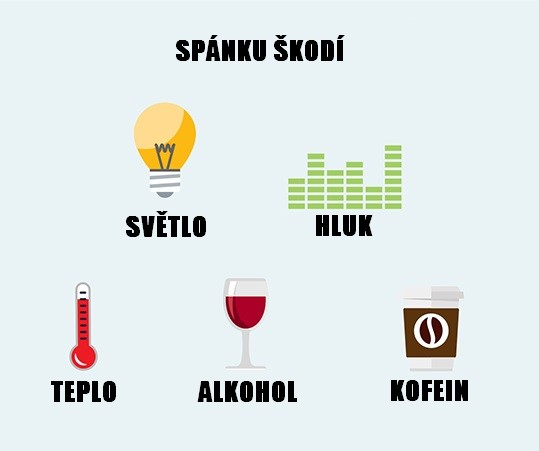
WHAT CAN HARM YOUR SLEEP
LIGHT
Light regulates the human biological clock, especially through melatonin, which signals sleep. The blue light emitted by the sun, but also by monitors, TVs and phones, interferes with melatonin production.
One study has even confirmed that even a small light source like a phone is detrimental to sleep. Not that the phone can manage to lower melatonin levels, but it does reduce the feeling of fatigue. So if you can't do without electronics before bed, install a program that will reduce the amount of blue light emitted after dark. Some machines already have a night mode pre-installed.
If you don't have this option, consider wearing blue light reducing glasses for a few hours before bed. One more thing. Any bright light is harmful, not just blue light. If you live in a heavily lit place, get proper curtains.
VOICE
Sound is the same as light. Even if it doesn't wake you up directly, it can have a negative impact on the quality of your sleep.
Not all sounds have the same effect. Sudden noises are likely to disturb you, while monotonous sounds can be soothing. The most disturbing sounds are those that have meaning. The sound of a conversation or a crying baby will wake you up most easily.
So if you have to sleep in a noisy environment (and you're not a parent), consider earplugs. These will protect you from higher frequencies, such as honking cars.
Generally we should block out lights and sounds, but both can have their uses. A small night light can soothe children and soft, quiet music can help adults.
HEAT
Increased body temperature is associated with insomnia, so you may have trouble sleeping in a room that is too warm.
Conversely, you might fall asleep more quickly in a cool room. However, the temperature must not be too low. Even if sleeping in the heat doesn't give you problems, you should try to keep the air in your bedroom cooler. Heat has a detrimental effect on the quality of your sleep.
ALCOHOL
Alcohol suppresses the activity of the nervous system, causing relaxation. You may even think it makes you sleep better. Research shows the opposite.
Yes, it does make you fall asleep faster, but this effect also goes away if you drink too much before bed. The quality of sleep is definitely impaired by alcohol.
Alcoholism is actually associated with insomnia. However, it is not clear whether alcoholism is the cause or the effect in this equation.
COFFEE
Caffeine is mostly safe and helpful, but it has its negatives. It can increase attention and dopamine levels, which improves mood.
The increase in attention does not go away even with long-term use, but the mood improvement does. This is why some users cycle caffeine. It just doesn't stimulate them as much. Die-hard coffee drinkers also think that caffeine doesn't affect their sleep.
Yes, enough people have trouble sleeping with caffeine coursing through their veins. But caffeine also increases attention during sleep, reducing the quality of sleep. For this reason, caffeine is not recommended 6 hours before bedtime.
WHAT CAN HELP SLEEP
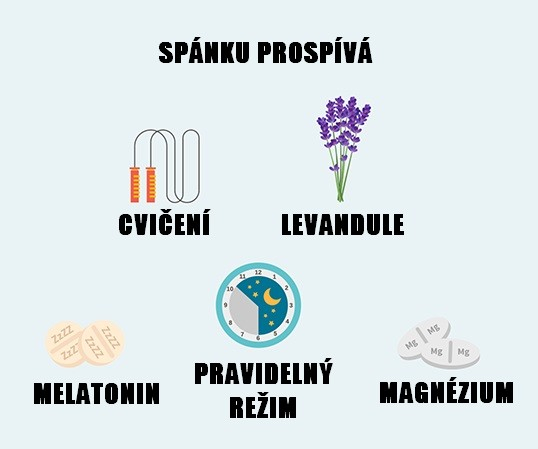
EXERCISE
Sleep more, and you'll get better at training. Train more, and you'll sleep better. Is this true?
Studies don't always agree. One from 2013 found that for 11 ladies, training helped against insomnia. Another, this time from 2014, did not confirm this result.
Sleep more, exercise better. This holds true. Tired people will be more prone to skip workouts, and even tire faster, according to a 1989 study. And when exercise hurts, a bad night makes skipping a workout a big draw; the 2014 study confirms this. Then there's the 2008 study that linked poor sleep and poor workout performance.
Exercise more, sleep better. We may not understand the mechanism, but studies support this claim, especially when stressed. Different types of exercise - from the easy stuff, like yoga and tai-chi, to the harder stuff, like aerobic training, to the gym - have the potential to improve sleep and mood as well as overall health.
Recommended
GreenFood Melatonin
Extrifit Magnesium Chelate
Nocturnal exercise is bad, right? Yes and no. Exercise raises your body temperature, which is bad for sleep, but the increase is only temporary. You'll also have a temporary increase in adrenaline levels after a workout, so don't jump right off the bench and into bed.
In addition, night training has the potential to disrupt your sleep rhythm because the body somehow associates the activity with the day, not the night. However, it seems that exercising (even at night) is always better for sleep than doing nothing.
However, everyone is different. If you find it hard to sleep after a night out, exercise at another time.
A REGULAR SLEEP SCHEDULE
Your body is like a giant clock and everything is recorded in it. Most bodily processes are programmed for 24-hour cycles.
Sleep is no exception, and it's best if it always takes place at the same time.
If your body is used to something, you will fall asleep faster. Even small associations like brushing your teeth or meditating before bed will help. Your bedtime routine should not include any stimulating activities. Playing games, for example, is a bad idea. Of course, remember again the blue light from screens is harmful.
MELATONIN
The absence of blue light signals the time for the body to produce melatonin, the sleep hormone. It is a good idea to give the body 2 hours before bedtime to produce melatonin. If you do this and still fail to fall asleep, try it in supplement form.
The oral form of melatonin helps against insomnia and improves sleep quality even in children and the elderly. It also helps fight jet lag, which is why it is often taken by travelers.
Don't think, however, thatsupplementing with melatonin will allow you to fiddle with your sleep rhythm as needed. It doesn't work that well. The good news is that supplementation doesn't seem to interfere with your own melatonin production.
Melatonin supplements don't have the amount of melatonin written on the packaging. Some have quite a bit of it, and some, much worse, contain a lot of it. Several studies even point to contamination in supplements, which is, for example, the neurotransmitter serotonin.
MAGNESIUM
Magnesium deficiency is essential for brain function and therefore sleep. Magnesium supplementation improves sleep in the elderly, who usually have a rather poor intake of their own.
Young people are not entirely out of danger either - especially athletes, who lose magnesium through sweating. However, getting up to the recommended daily intake shouldn't be too difficult.
Supplements are more likely to cause adverse effects, that is, compared to dietary intake. The upper limit of magnesium intake for adults is set at 350 mg. You also want to avoid magnesium oxide because its utilization is low (only 15% in mice, even only 4% in humans) and it can cause digestive upset.
LEVANDULE
The biggest problem today is stress and the fact that people simply don't plan enough time for sleep. They then sleep in on the weekend, which doesn't work very well. No pill is going to make six hours of sleep into eight. However, supplements for stress do exist. Magnesium works, but only if you have low levels in your body.
The scent of lavender also works against insomnia and improves the quality of sleep.
However, studies are not very supportive of aromatherapy, but rather favor the extract, which is supposed to improve sleep quality and prolong sleep.
One more thing. There is some evidence that lavender promotes estrogen production and the development of gynecomastia in men. If you're a man and you start having sensitive nipples, stop using lavender.
Source: www.examine.com - Ten tips for better sleep
Author: Zad Chow
Author: Šárka Randáčková No posts have been made yet.








