





10 best exercises for mass - part 1
 Author: Šárka Randáčková
 Dennis Wolf presents five of his ten favourite exercises. We'll bring you the other five in the next episode. They don't call him "The Big Bad Wolf" for nothing!
He comes in at 183 centimeters tall, weighs 122 pounds, and is usually the biggest guy on stage. So he'll probably know a thing or two about volume. These ten exercises will help you get huge, too. He'll add some good advice and the rest will be up to you. Whether you'll be as big as Denis Wolf, we'll see. But these exercises will definitely get you closer to your potential max.
1) Bench press with big axis
This exercise has become an absolute icon over the last 70 years, not just for bodybuilders, but anyone who lifts weights. It starts with kids in basements and ends with professional athletes. The bench has been the yardstick by which people compare strength since time immemorial.
For our purposes, of course, the bench is a complex exercise that builds pectoral muscles. Denis calls it "the king of chest exercises. " "It allows you to load the most weight and engage the most muscles. Do the reps slowly and push your chest, otherwise you'll get stronger, but your chest probably won't grow much." For the first 12 years of his training, Wolf benched in almost every chest workout. In recent years, he's replaced the bench more often with single-arm machines and machines, but he hasn't eliminated it completely."Now I bench once a month and don't go too heavy. " 140 pounds for 10-12 reps would be heavy for most people, but for Wolf, it doesn't put much strain on connective tissues, and that's the point. "I like to train very strictly, clenching my pecs hard at the top of the movement and fully extending them at the bottom by slowly lowering the axle."
Denis doesn't bench as much anymore, but he still recommends the bench as the number one exercise for beginners."It's the best exercise for building a solid foundation. Just watch your technique and don't just aim for heavy weight and low reps."
2) Bench Press on Hammer Strength machine
What on earth is a machine doing here? I agree that free weights are essential, but some modern machines are simply incredibly efficient. Both Dorian Yates and sub-100kg legend David Henry used a fair amount of machines, mainly for chest and back, and it didn't stop them from building thick, massive muscles. However, the hardcore bodybuilding community still insists that machines are not as effective for building volume as free weights.
Denis used to look down on machines, too, but then he started caring about himself and not what others think and do."The Hammer machine is very valuable to me because it targets my upper chest perfectly," he says. "If I avoided it because others say machines are bad, I wouldn't have as much muscle volume in that area."
Denis likes this machine so much that he finds his way to it, even when he starts his training with the single-arm on a positively inclined bench. "Sometimes I want to target the outer or lower chest area, so I go to wide push-ups or negative incline machines."
In my experience, all Hammer machines are great for push-ups. With all of them, the arms work independently, which is the same as with single-arm machines, where the stronger side can't take the lead. The movement is toward the center of the body, allowing for intense, full contraction of the pecs. You don't have to worry about balance, and can just focus on feeling the muscle. Ideally, bench first with a large axis while you're fresh, and then move on to the Hammer machine.
3) Rowing with the big axis
We often ask the pros which is the best exercise for this or that part. Denis didn't hesitate to say that this exercise added the most mass to his back. "Haney, Dorian and Ronnie had great backs and practiced a lot of heavy rowing. That's no coincidence. For back mass, this exercise is close to a deadlift. Mine even added more mass than that."
Denis doesn't use the underhand grip made famous by Dorian Yates, but pulls the axle very low, below the belly button."My upper back is decent, I concentrate my efforts on the mid and lower lats, which need more mass." He insists on strict execution and doesn't use more than 165 kilos. That's not much for a guy who wears around 135 pounds most of the year."I don't care about weight," he says."I want the muscle in question to grow, and for that I need good contraction and feel. I could load 230 pounds in there and throw it up and down, but that would be useless."
Read those last lines several times. Technique is what determines whether you are stimulating the lats effectively or just tickling them. I feel compelled to mention that Lee Haney himself strongly insisted on perfect technique, and usually never loaded more than 100 pounds, 125 pounds at most, throughout his reign at Olympia.
The last thing is that you should beware of being too upright, which would turn your pull-ups into half-hearted shoulder shrugs. The range of motion would be shortened and the horizontal angle of the deadlift is essential to engage the lats. In other words, you'll be significantly better off with about a 70-degree incline and half the weight than you could manage with an upright stance.
4) Rowing with the T-axis
Denis does at least one free-weight rowing exercise in every workout, as these are essential for back mass. He admits that he does T-axis rowing about once every three workouts, while he practices big-axis rowing almost every time. While he likes the T-axis, he doesn't consider it a full range of motion because a chunk of the contraction is cut off by the size of 20-pound discs.
"With both types of rowing, I'm always careful not to be too upright, and the upper part of the movement doesn't start to feel like a deadlift." He never exerts as much as he could if he didn't care about range of motion and quality of contraction. "I lifted heavy weights for years and it didn't do my back any good, " Wolf revealed. "One day, I stopped focusing on the weight and started only caring about the feel, and I finally grew again."
Denis' insight about range of motion is a good one. With big discs, you simply can't get your elbows as far as you need to because the discs will hit your chest or abdomen. The solution is to use smaller discs. The only problem is that someone as strong as Wolf probably won't have enough room on a conventional T-nose to load enough discs. Most gyms don't have a T-axis rowing station anymore, so enough of us have to resort to the adaptation made famous by Ronnie Coleman, the one in the corner of the gym and with the Olympic axis.
Every problem has a solution.
If you're so strong that seven ten-pound discs aren't enough for you on this exercise, put it at the end of your workout where you'll be so tired from all the pulling that it'll be enough. Squeeze the most out of it by squeezing the lats at the end of the movement coupled with a small pause in the same spot.
5) Deadlift
Many people claim this is the absolute best full body volume exercise because it probably gets closest to the desired description of "full body." Let's think about that. The push-off engages the entire lower half of the body: quadriceps, hamstrings, glutes, and even calves. As the axis gets past the knees, all the pulling muscles of the body come into play: lats, traps, spinal extensors, rear delts, and biceps. Holding all that weight even engages the forearms. The back is becoming an increasingly important part of bodybuilding. Haney, Yates and Coleman have shared a total of 22 Mr. Olympia titles. Most of them were won by back poses.
Denis didn't move up a level until he worked on his back volume. "You'll probably never achieve a proper back without deadlifts - that's the way it is," he says. "I don't think you have to lift 360 pounds like Coleman, but you have to load up as much as you can for 8-10 reps."
That's how Yates did it, too. He practiced deadlifts at the end of workouts when huge weights were no longer possible.
We often hear that deadlifts widen the waist, and make people look stocky. Denis agrees with this in principle."I think if you're built for strength rather than an aesthetic body type, a massive midsection is what you're going to end up with anyway. " He's done some stretching and squatting in his life, and his waist still remains narrow."I don't recommend avoiding deadlifts for fear of your waist," he says. "They're excellent for back volume. The concern about your midsection is misplaced. If you have to grow, they will grow with or without a deadlift."
Recommended
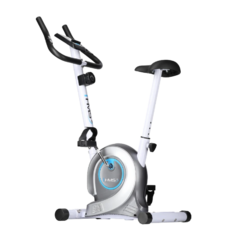
HMS Magnetický rotoped M8750
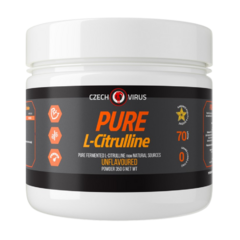
Czech Virus Pure L-Citrulline

Nebbia Crop top mikina MUSCLE MOMMY 619
Denis also doesn't recommend training purely for strength."Whenever you're going for maxes in the deadlift or squat, your midsection and glute muscles are going to have to work just as hard, maybe even harder, than your legs and back. That's fine for triceps lifters, because those are only concerned with loaded weight, but a bodybuilder shouldn't go below eight reps on these exercises, in my opinion."
Deadlifts from the rack or half range of motion are a good choice here, because taking away the bottom part of the movement makes it a purely back exercise. Most of you will find that the loaded weight on this exercise will be significantly higher than on any other exercise, which will pay you back with volume results.
As mentioned in the introduction, we will offer the remaining five exercises in part two.
Author: Šárka Randáčková No posts have been made yet.








