





Vegan milks: a real breakthrough in nutrition or another money-maker?
 Author:
 Doesn't it seem like vegan milks have been on a tear lately? Almond, coconut or oat milk is now offered by dozens of companies as a plant-based alternative to the classic and much demonised cow's milk. But have you ever wondered if it is just a money-maker? And have you ever read the ingredients? In today's article, we'll take a closer look at all sorts of vegan milks and decide whether it makes sense to buy them at all.
Article content:
- What do the ingredients of these plant-based drinks look like?
- How can the body use plant-based drinks?
- There must be something positive about plant-based drinks, right?
- What to take away from today's article?
What does the composition of these herbal drinks look like?
While most of us have naturally become accustomed to using the term "milk" for these vegan alternatives, logically, this is an all-natural food that has little to do with milk. And just as spreadable butter can't be called butter (and manufacturers often just state "Spreadable" on labels), vegan milk can't be called milk either. So in practice, we usually see the somewhat nondescript "beverage." But have you ever read the ingredients?
Water comes first. Mostly.
Although the price for plant milks is always more or less overpriced, one of the more affordable companies is Alpro, whose products you can also find in regular supermarkets. But if we look at the ingredients of their Almond Drink, for example, we can read that in it we find:
- Drinking water
- Sugar
- Almonds (2%)
- Calcium phosphate
- Edible sea salt
- Stabilisers (carubin, gellan gum)
- Emulsifiers (sunflower lecithin)
- Vitamins (riboflavin (B2), B12, E, D2).
And perhaps we should not forget that the price per litre of such a drink reaches, depending on the seller, from 50 to 70 CZK. Thus, although it is more than 4 times more expensive than cow's milk, except for two percent of almonds, it consists primarily of sweetened water. Of course, there are also more expensive variants, for example, the same product from Optimistic has a 7% almond kernel content, with date syrup and a pinch of salt used for flavouring. The rest, however, is still water, and you'll pay CZK 89 for 750ml of the product.
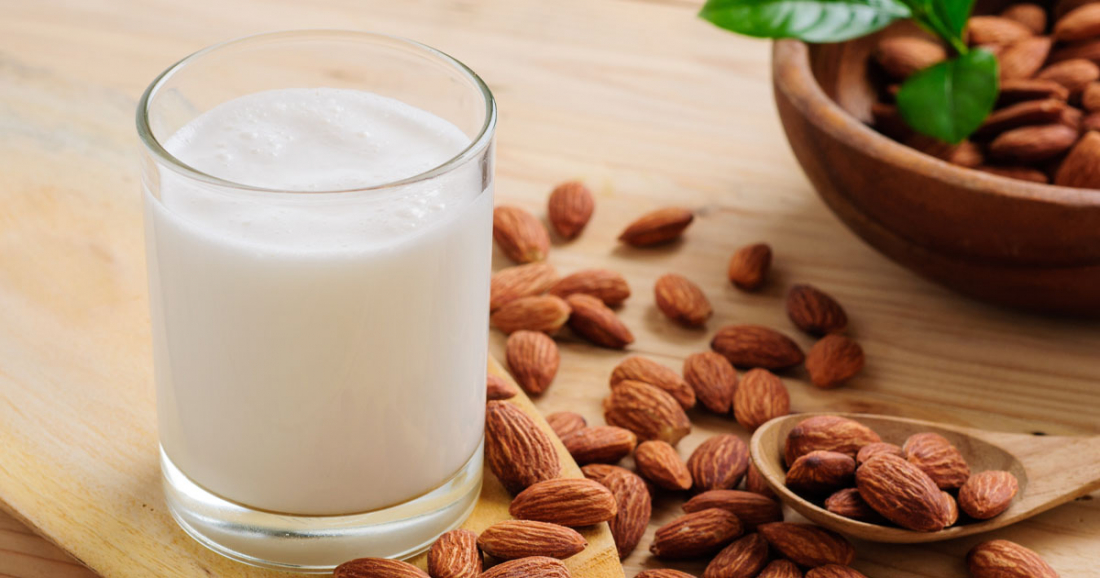
Although almond milk looks like cow's milk, it actually contains only 2% almonds in some products.
Are they more nutritious than cow's milk?
Although the nutritional content of different plant-based drinks varies quite a lot, none of them can actually be said to be any more nutritionally rich than cow's milk. The most comparable is soya milk, which is reported to contain very similar amounts of protein and even lower amounts of carbohydrates than conventional semi-skimmed cow's milk. However, this does not necessarily imply any significant difference in the micronutrient spectrum. While plant-based beverages often need to be fortified with various vitamins, cow's milk is naturally rich in calcium, vitamins A, D and B and a wide range of micronutrients. However, almond milk also contains some vitamins A and E, soya drinks offer plenty of vitamin D and rice drinks are usually fortified with calcium, for example.
How can the body make use of herbal drinks?
Although today's article should definitely not sound like a pure criticism of herbal drinks, it must be objectively admitted that the negatives outweigh the positives (which we will introduce you to in the next paragraph). Besides the fact that most of these products contain added additives and a lot of sugar, they also offer artificially added vitamins and minerals. The problem, however, is their usability. Natural and synthetic minerals and vitamins have the same structure and therefore their use in the body is the same. However, it should not be forgotten that many legumes and plant sources contain anti-nutrients - for example, oxalates, which, according to expert sources , can interfere with the proper absorption of calcium.
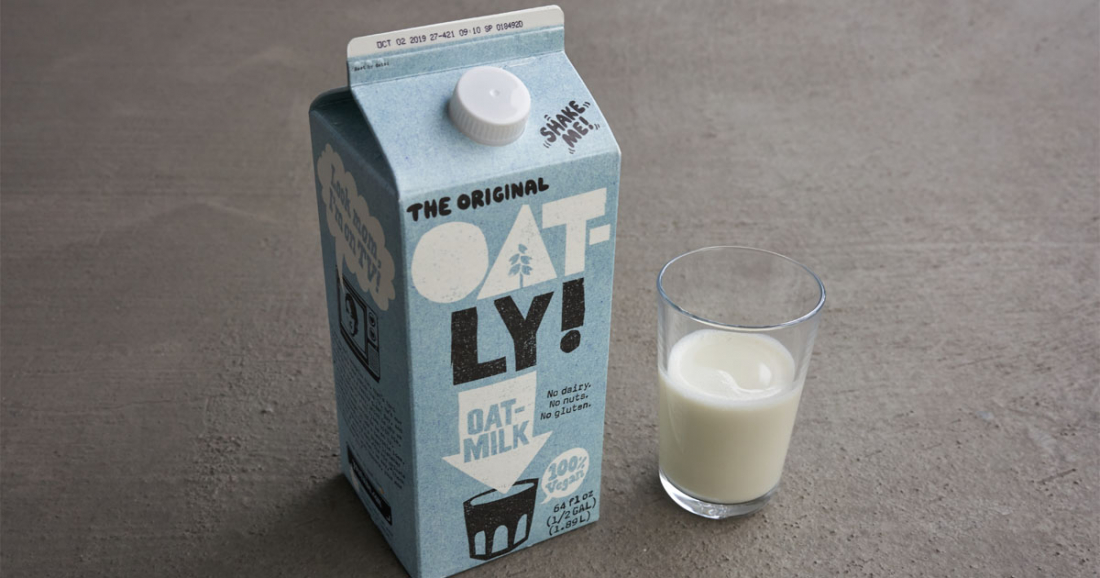
Although plant-based drinks are often fortified with vitamins and minerals, this does not mean that their usefulness is comparable.
There must be something positive about plant-based drinks, right?
Of course there is. The biggest problem with plant milk is its inadequate price. But otherwise, it is a relatively good raw material for vegans, and coconut milk, for example , is really great in the kitchen. We can mention, for example, a great rice with chickpeas, nuts and broccoli, which we cooked as part of our #varimefit series, a delicious shrimp soup and many other recipes.
In general, if you don't mind a certain amount of extra sugars and accept that the vitamin and mineral utilization may not be the most efficient, vegan milks can be considered a very good diversification of your diet. And after all, we must not forget that, unlike cow's milk, they do not contain cholesterol and usually not that much saturated fatty acids. Last but not least, they often taste very good. So if you are comfortable drinking these plant-based drinks or using them in the kitchen, there is certainly no reason to give them up or look for another alternative. Even if you are not a vegan.
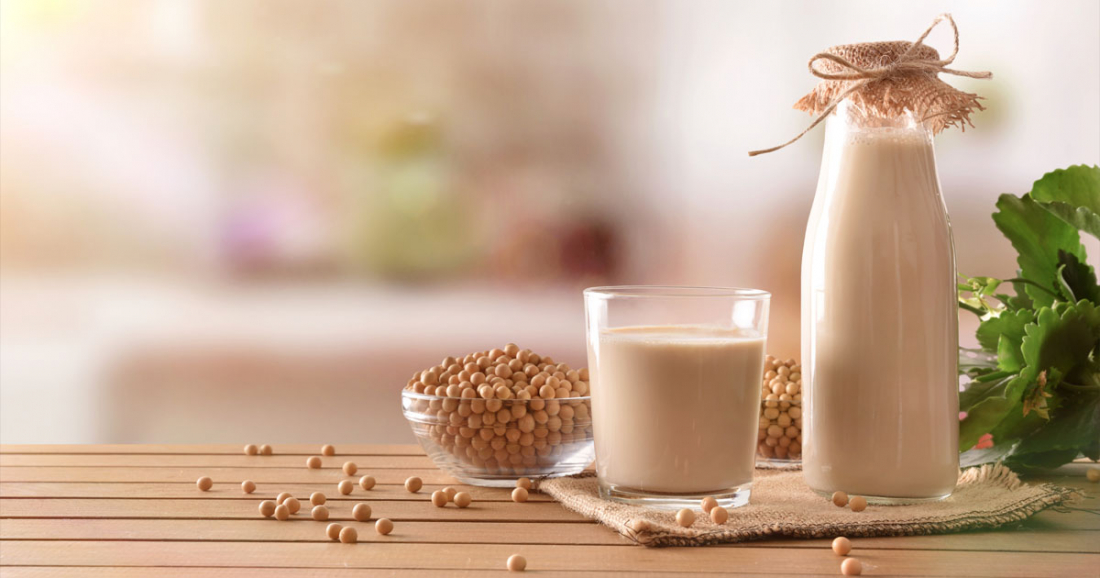
Soy milk contains a good portion of protein and unlike cow's milk, it has no cholesterol. So there's no reason not to indulge in it from time to time.
What to take away from today's article?
The main takeaway from today's article is that plant "milks" are definitely not the miracle food that many promoters make them out to be. In fact, it is basically sweetened water with some content of almonds, oatmeal or other ingredients depending on the type of drink. It is also often enriched with various vitamins and minerals to bring the composition of plant milk closer to that of animal milk.
Unfortunately, the problem is that plant-based diets often contain antinutrients, so the availability of such vitamins and minerals may be somewhat lower. Still, if your finances allow, there is no reason to eliminate plant milk from your diet. You can enjoy it on its own, but also in various recipes - coconut milk, for example, can serve as a very good substitute for conventional milk.
Recommended

Nebbia Muscle fit tričko FLEXIN' 358
Prom-in 100% Magnesium Bisglycinate
Thermogel 80g 5+1

HMS Magnetický veslařský trenažer ZM1801
No posts have been made yet.








