





Taurine - a helper for better regeneration and a healthy heart
 Author:
 Taurine is a very important substance for our body, as it is involved in many functions of the body that are important for overall health. For example, it promotes proper heart and brain function, has the ability to influence athletic performance and has antioxidant properties. Our body produces taurine itself, but of course it can also be found in many foods or supplements. Let's talk a little more about taurine today and find out what this interesting substance can actually do for our body.
Theoretical window - what is taurine?
Taurine, or 2-aminoethanesulfonic acid, is a substance that is naturally found in our bodies. Taurine is a derivative of the amino acid cysteine, which we ingest mainly through foods of animal origin, and is therefore sometimes classified as an amino acid, although it lacks a carboxyl group. Taurine naturally contains sulphur, which makes it indispensable in many physiological functions of our body. It supports the proper function of the brain, cardiovascular system and immune system, influences cell development and protection, can have an antiaging effect and can support performance quite effectively. It has antioxidant properties and is also involved in the formation of bile acids, which are essential for the proper functioning of digestive processes.
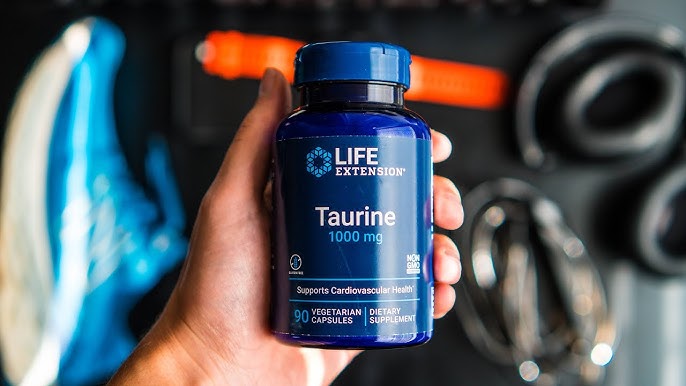
Although amino acids are often referred to as the building blocks of protein, taurine is not used to form protein. Nevertheless, its importance in the body is quite crucial. It makes up more than 50% of the free amines in heart tissue, but is also found in smaller concentrations virtually throughout the body - in the retina, skeletal muscle, brain and immune cells. The word "taurine" comes from the Latin word taurus, which translates to bull or ox, because it was first isolated from ox bile in 1827 by German scientists Friedrich Tiedemann and Leopold Gmelin. L-taurine is very often added to energy drinks because it can effectively boost performance - not as a stimulant, however, but rather because it can improve muscle recovery after exercise and relieve muscle soreness. It is also widely available in supplement form.
The main benefits that taurine provides to our bodies
Okay, we've covered enough theory, so let's get to the most interesting part - what does taurine actually do in our bodies and how can we benefit from sufficient intake?
It can help reduce the risk of developing heart disease and diabetes
Studies show that taurine can help reduce the risk of heart disease due to its ability to regulate blood pressure and inflammation. It appears that higher intake of taurine could help protect against heart disease and prevent the build-up of fatty plaque in the arteries. In addition, taurine has an anti-inflammatory effect in existing cardiovascular diseases, which may support their treatment. A study from Japan concluded that taking 3 grams daily for seven weeks led to a significant reduction in triglyceride levels and weight reduction, both risk factors for developing heart disease, in test subjects. Of course, adherence to other healthy lifestyle principles was also a prerequisite. Supplementation also reduced the atherogenic index, an indicator used to predict the risk of atherosclerosis and heart disease. To make matters worse, it can even improve the health of patients suffering from diabetes.
A potential aid in the treatment of Parkinson's disease
Studies suggest that taurine may help with brain cell regeneration, which could be beneficial in the treatment of neurodegenerative conditions such as Parkinson's disease. Interestingly, research shows that people with Parkinson's disease have lower levels of taurine compared to a control group or healthy individuals. Although more research is needed on the potential benefits of taurine for people with Parkinson's disease, some studies suggest that it could help reduce the severity of symptoms by altering the activity of a specific enzyme involved in mitochondrial function.

It may be a good prevention of the development of metabolic syndrome
Metabolic syndrome is a group of health complications that increase the risk of heart disease, stroke and diabetes. These complications include high blood pressure, excess abdominal fat, elevated cholesterol or triglyceride levels, and high blood sugar. It has been found that taurine can be a very good prevention of the development of metabolic syndrome because it helps regulate triglyceride levels, is a powerful fighter against obesity, lowers cholesterol, harmonizes blood pressure and improves insulin resistance, which is a critical factor in regulating glucose metabolism. Other research also suggests that it could be beneficial in preventing the development of metabolic syndrome - provided, of course, that it is combined with regular physical activity and a healthy, balanced diet.
Can positively affect sports performance
Taurine is a highly valued supplement for supporting athletic performance and is included in most pre-workout supplements, burners and energy drinks. Many athletes use it to improve their physical performance and fitness. Despite belief, it does not work as a stimulant. Because taurine acts as an antioxidant, meaning it can help fight harmful free radicals and oxidative stress in the body, taurine supplementation is associated with improved strength and endurance during workouts because it can increase muscle contraction and delay muscle fatigue. Taurine hydrates muscle cells to increase their volume and helps reduce lactic acid levels after a hard workout. Additionally, other research has concluded that taurine can help prevent muscle injury and increase fat burning during exercise, which can be incredibly beneficial when it comes to boosting athletic performance.
Other potential benefits of taking taurine supplements include:
- Benefits eye health. The antioxidant effects of taurine may help fight oxidative stress associated with retinal degenerative diseases such as age-related macular degeneration.
- It has neuroprotective effects. The anti-inflammatory effects of taurine may reduce inflammation in the brain and combat neurodegenerative conditions such as Alzheimer's disease.
- It can promote liver health. Taurine may have protective effects against chronic and acute liver damage.
Food sources of taurine and supplements
As mentioned earlier, taurine is a natural part of our bodies and we can produce it ourselves in certain amounts. Our body most often makes it from the amino acids cysteine or methionine, which we take in through our diet. The richest food sources of taurine are all types of meat, fish, seafood and dairy products. According to the Food and Drug Administration (FDA), a typical omnivore diet contains around 400 milligrams of taurine per day. The truth is that most vegan diets are completely lacking in this important substance because plant-based foods do not contain taurine. Even so, due to the liver's own ability to produce taurine from other amino acids, deficiency is relatively rare.
Taurine is also found in cow's milk-based infant formulae and can be added as a supplement to non-dairy-based infant formulae, as this substance is really very important for babies. Taurine can of course also be supplemented, both on its own and in various complex products for performance support. Supplements containing taurine are available in capsule or powder form. Taurine dosage can vary depending on a number of different factors, but most supplements contain between 500-1,000 milligrams per serving. However, doses up to 3,000 milligrams have been shown to be safe and associated with minimal risk of side effects. Our legislation allows a maximum of 2 grams to be used as a daily dose.
Recommended
Nutrend Taurine
HiTec Taurin
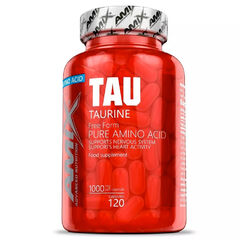
Amix Taurine Neurotransmitter
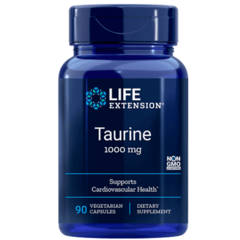
Life Extension Taurine
Dangers and potential side effects
Although taurine supplementation is considered generally safe, it is important, as with all other supplements, to follow the dosage to avoid potential side effects. Potential side effects may include headache, nausea, or indigestion. As already mentioned, our body can produce a certain amount of taurine on its own, and a certain amount is ingested through diet. It is generally stated that the highest daily dose of taurine that can be safely consumed is 3 grams per day. However, the European Food Safety Authority (EFSA) states in its 2012 guidelines that the safe dose of taurine is up to 6 grams per day.
Supplementation is not recommended for those with kidney problems as it could worsen the problems. Women who are pregnant or breastfeeding should also avoid taking it, as no research has yet been conducted to guarantee the safety of its supplementation for this segment of the population. Taurine can also act as a natural diuretic, which means that after its ingestion, there is an increase in water excretion from the body. It may also interfere with certain medications.
The highest risk of developing side effects occurs when consumed in energy drinks. In some countries, the use of taurine in such drinks is even banned. However, the question is whether the side effects are due to the high taurine content or to a generally inappropriate combination of different substances. But definitely, if you decide to increase your taurine intake through pre-workout supplements or energy drinks, you need to consider all the other ingredients in these products that you may be sensitive to or want to limit. For example, these products may be high in caffeine or added sugar.

What to take away from the article?
Taurine is a very important substance for our bodies. Deficiency is generally rare, as taurine is very readily available in foods of animal origin, and in addition, our bodies can make it themselves in the liver from other amino acids in certain amounts. The potential benefits of taurine include improving heart health, reducing the risk of metabolic syndrome and protecting against harmful radicals. Taurine is also a popular ingredient in pre-workout supplements because it can effectively support physical performance, especially due to its positive effect on post-exercise recovery. Moreover, it is considered a safe supplement and its use carries only exceptional risks.
Sources:
Schuller-Levis, G. B., & Park, E. (2003). Taurine: new implications for an old amino acid. FEMS microbiology letters, 226(2), 195-202.Lourenço, R., & Camilo, M. E. (2002). Taurine: a conditionally essential amino acid in humans? An overview in health and disease.Nutricion hospitalaria, 17(6), 262-270.Murakami S. (2014). Taurine and atherosclerosis. amino acids, 46(1), 73-80.Qaradakhi, T., Gadanec, L. K., McSweeney, K. R., Abraham, J. R., Apostolopoulos, V., & Zulli, A. (2020). The Anti-Inflammatory Effect of Taurine on Cardiovascular Disease. Nutrients, 12(9), 2847. Zhang, M., Bi, L. F., Fang, J. H., Su, X. L., Da, G. L., Kuwamori, T., & Kagamimori, S. (2004). Beneficial effects of taurine on serum lipids in overweight or obese non-diabetic subjects. Amino acids, 26(3), 267-271. Zhang, L., Yuan, Y., Tong, Q., Jiang, S., Xu, Q., Ding, J., Zhang, L., Zhang, R., & Zhang, K. (2016). reduced plasma taurine level in Parkinson's disease: association with motor severity and levodopa treatment. the international journal of neuroscience, 126(7), 630-636.Chen, W., Guo, J., Zhang, Y., & Zhang, J. (2016). The beneficial effects of taurine in preventing metabolic syndrome.Food & function, 7(4), 1849-1863. Balshaw, T. G., Bampouras, T. M., Barry, T. J., & Sparks, S. A. (2013). The effect of acute taurine ingestion on 3-km running performance in trained middle-distance runners. Amino acids, 44(2), 555-561. hang, M., Izumi, I., Kagamimori, S., Sokejima, S., Yamagami, T., Liu, Z., & Qi, B. (2004). Role of taurine supplementation to prevent exercise-induced oxidative stress in healthy young men. Amino acids, 26(2), 203-207. Clauson KA, Shields KM, McQueen CE, Persad N. Safety issues associated with commercially available energy drinks. J Am Pharm Assoc (2003). 2008 May-Jun;48(3):e55-63; quiz e64-7. doi: 10.1331/JAPhA.2008.07055. PMID: 18595815.Shao, A., & Hathcock, J. N. (2008). Risk assessment for the amino acids taurine, L-glutamine and L-arginine. Regulatory toxicology and pharmacology : RTP, 50(3), 376-399.Caine, J. J., & Geracioti, T. D. (2016). Taurine, energy drinks, and neuroendocrine effects.Cleveland Clinic journal of medicine, 83(12), 895-904. Kurtz, J. A., VanDusseldorp, T.. A., Doyle, J. A., & Otis, J. S. (2021). Taurine in sports and exercise. Journal of the International Society of Sports Nutrition, 18(1), 39Ahmadian, M., Roshan, V. D., Aslani, E., & Stannard, S. R. (2017). Taurine supplementation has anti-atherogenic and anti-inflammatory effects before and after incremental exercise in heart failure. Therapeutic advances in cardiovascular disease, 11(7), 185-194.
No posts have been made yet.








