





Supplementation around training - what supplements to use before and after training?
 Author:
 Building muscle is not about following a diet perfectly or working out in the gym. In fact, the process of building muscle requires finding a certain symbiosis between the two aforementioned variables, because only when you balance both components will your efforts be maximally effective! However, nowadays there are many helpers who can make the muscle building process much easier for you. We will talk about legal sports nutrition supplements, not steroids. Especially if you are just starting out with exercise, it can be difficult for you to navigate all the supplements. So today we'll look at which supplements are best to take during your workouts.
A little of that theoretical sauce to start with...
As mentioned, building muscle is all about creating a workable combination of training and diet. The first variable in this equation is a well-designed workout. This should be designed in such a way that your muscles are systematically loaded, which allows for some adaptation to the load and thus increases your strength and performance. It is necessary to learn to feel your body and set the right intensity, volume and frequency of training so that you can make the most of the potential for muscle growth. That is, do not train too much or too heavy to allow the body to recover, but at the same time not too little or too low weights, in short, train so that the muscles are under consistent but reasonable pressure.

The second essential variable is nutrition. Surely you know that a properly formulated diet is a must for muscle growth, because in the gym you load the muscles, but you need to provide them with enough nutrients to support their growth and recovery. Nowadays, there are many supplements on the market in addition to your regular diet that you can take advantage of around your workouts and still support your muscle building efforts. Taking the right supplements in the right doses and at the right time around your workout can actually mean an increase in intensity, training volume and easier recovery, leading to high quality muscle gains. So let's take a look at the most used supplements that can be included before and after your workout to make the most of it in terms of muscle building.
What to put in your shaker before a workout?
Approximately 60-30 minutes before your workout should be dedicated to preparing for your workout, and therefore of course pre-workout supplementation. The supplements you use before your workout should energize not only your body, but also your mind so that you are able to give maximum performance. Avoid TOO much stimulants or too high doses of these stimulants before training. The following substances are considered effective and often used in pre-workout supplementation.
COFFEE
Caffeine is a powerful psychoactive nervous system stimulant and is one of the most widely used stimulants in the world. It is rapidly absorbed, with about 99% of the ingested amount being absorbed during digestion within the first 45 minutes after ingestion. Several metabolic pathways through which caffeine acts have been described. However, the two most important are phosphodiesterase inhibition and adenosine receptor antagonism. We will focus first on the latter, i.e. the inhibition of adenosine effects. Once caffeine reaches the brain, it binds to the neurotransmitter adenosine. The effects of adenosine include drowsiness, drowsiness and general fatigue. Caffeine has the ability to block the effects of adenosine and acts in the opposite direction. The brain is suddenly flooded with the hormones adrenaline and noradrenaline, resulting in increased energy, a feeling of alertness, stimulation of concentration and memory, and also a reduction in fatigue.
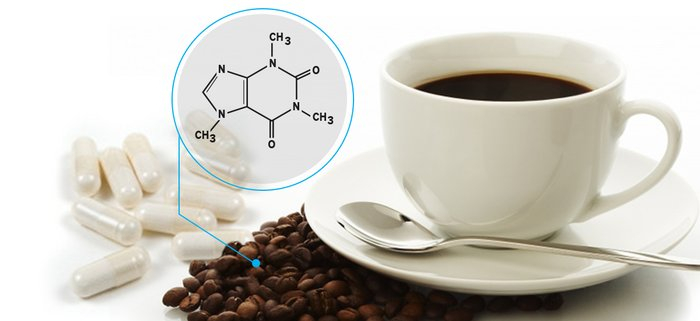
Caffeine also blocks an enzyme called phosphodiesterase (PDE), which breaks down a signaling molecule called cyclic adenosine monophosphate (cAMP). As caffeine blocks PDE, cAMP levels rise simultaneously, prolonging and amplifying the "energizing" effects of the hormones adrenaline and noradrenaline. From these effects, it is evident that the use of caffeine prior to training attenuates feelings of fatigue and the degree of perceived exertion during training. In addition, it appears that caffeine makes us feel less fatigue even after training. Both of these effects lead to an increase in training volume and intensity, which may translate into greater muscle mass gains.
Recommended dose?
For most adults, the optimal dose is around 180-300mg depending on body weight. (The ideal ratio is stated as 1.4mg per kilogram of body weight). However, remember that less is sometimes more. As with most stimulants, the benefits of caffeine diminish if intake is higher than the optimal dose. This is around 2.5 milligrams of caffeine per kilogram of body weight, so caffeine intake before training should definitely not exceed this figure. But we all have an optimum somewhere else.
You can find an overview of products containing caffeine here.
CREATINE HYDROCHLORIDE (HCL)
Creatine is also rapidly absorbed and stored in skeletal muscle, and then provides much needed high energy creatine phosphate there . Up to 95% of all creatine in the body is found in skeletal muscle, with the remaining 5% found in the liver, kidneys and male reproductive organs. Creatine serves to regenerate ATP as the body's cellular energy source, which it uses for muscle contraction. Due to the higher levels of creatine, there is an increase in strength and endurance during training while helping the body recover faster. Athletes of almost any sport and gender can benefit from the effects of creatine.
Research suggests that creatine supplementation over a longer time frame allows you to consistently increase your training load - i.e. perform more reps and lift heavier weights with less fatigue as a result of a workout series. There is a lot of confusion around creatine, whether around its use, appropriate form, side effects, or overall suitability of supplementation. However, few of those claims are actually true. When it comes to timing, virtually any time is fine, but the greatest benefits are provided by creatine supplementation right around training. When it comes to the best form, then creatine HCL is probably the winner, as a highly bioactive form of this substance. This is because other forms can easily degrade due to being in water, and it is assumed that you take creatine along with plenty of water.
What about the dosage?
As far as the period around training is concerned, it is advisable to take a dose of approximately 1.5g of creatine HCL before training and the same dose afterwards.
An overview of products containing creatine HCL can be found here.
L-CITRULIN
Citrulline is another ingredient found in most pre-workout supplements. Citrulline is a non-essential amino acid that helps prevent muscle fatigue and aids in energy production by increasing the rate of phosphocreatine and ATP production. How does citrulline affect fatigue reduction during training? Citrulline is used by the body to remove ammonia, a toxic substance produced during intense training when amino acids are metabolized in the muscles as muscle fibers are partially broken down. Simply put - citrulline accelerates the recycling of ammonia in the urea cycle.
L-citrulline is also converted to arginine in the body , which stimulates the release of nitric oxide (NO). This dilates blood vessels and optimizes blood flow, which means that much more nutrients and oxygen reach the muscles. Research shows that by taking citrulline before training, blood levels of arginine and NO increase more effectively than after taking arginine alone. Recent research then shows that taking citrulline before training has additional benefits. For example, it delays exhaustion and fatigue during training and also appears to significantly reduce muscle soreness during training.
How to dose?
But which form is best? Both L-Citrulline and citrulline malate are quite useful forms. If you opt for L-citrulline, take 2.4-6.0 grams per day for a minimum of seven days. If using citrulline malate, you must increase the dose slightly, due to the fact that it is bound to malate (i.e. malic acid). Therefore, you take up to 50% less citrulline in one dose of this form. The recommended dose for this form is doubtfully between 6.5 - 8 g. Interestingly, citrulline malate can be found, for example, in watermelon.
An overview of products containing L-Citrulline can be found here
BETA ALANIN
Beta-alanine is another non-essential amino acid that definitely deserves attention in strength athletes. It is known for the unpleasant but completely harmless itching sensation that its consumption induces. The main benefit for athletes that beta-alanine offers lies in its ability toincrease the concentration of muscle carnosine. Increased levels of carnosine in muscles increase their energy and endurance by buffering the skeletal muscle acidity that builds up during prolonged, high-intensity exercise. Research results suggest that beta-alanine supplementation makes you last longer when you exercise - i.e. higher loads, for longer = more muscle gain!
How to beta-alanine?
Based on current research, it is recommended to take 4 to 6 grams of beta-alanine per day to improve performance. Because of the aforementioned itchy feeling that occurs after taking beta-alanine, it is better to spread this amount out over several doses throughout the day.
An overview of products containing Beta Alanine can be found here
BETAIN
Betaine is also known as trimethylglycine. One of the main tasks of betaine is the translocation (=methylation) of methyl groups to different molecules in the body. Methylation is important for several biochemical processes, including protein synthesis, which is essential for muscle building. Betaine supplementation has been shown to increase muscle endurance, promote cell hydration and reduce homocysteine levels. High levels of homocysteine can reduce protein synthesis, which can lead to fat gain and, in turn, muscle loss. Betaine is also known for its positive effect on the digestive tract. It normalizes the proper level of stomach acid and also its production. This helps to improve fitness and optimizes the overall condition of the digestive tract.
Betaine dosage?
Betaine is a supplement that you can use both in the period before and after training. Both doses should be approximately the same and are stated to be around 2g.

BCAAS
The amino acids leucine, valine and isoleucine are also stored in skeletal muscle and are used by the body to produce energy during exercise. During strength training, the leucine level decreases by up to 30%, while during aerobic training the decrease in leucine level is between 11-33% depending on the duration of the workout.
If you take a pre-workout BCAA, it gives you an "extra source" of amino acids, so your body first uses the ones you provide just before your workout in supplement form and saves the ones you have stored in your skeletal muscle. Pre-workout supplementation of BCAAs, and thus their increased levels, also helps to suppress fatigue, according to studies, and reduces the degree of perceived exertion, which again allows you to exercise even a little more intensely.
How to supplement?
BCAAs should be taken in at least a 2:1:1 ratio (i.e. leucine:isoleucine:valine) - in short, leucine should be at least 2x more than the other two amino acids. The optimal dose is 5-10 g before training and another 5 g during a really intense workout.
WHAT TO TAKE AFTER TRAINING?
After a workout you feel exhausted and your muscles are literally crying out for nutrition. The post-workout period is one of the most important times to get the right nutrients to increase protein synthesis, and give your muscles maximum room to grow and of course, recover.
An overview of all BCAA amino acids can be found here
PROTEIN
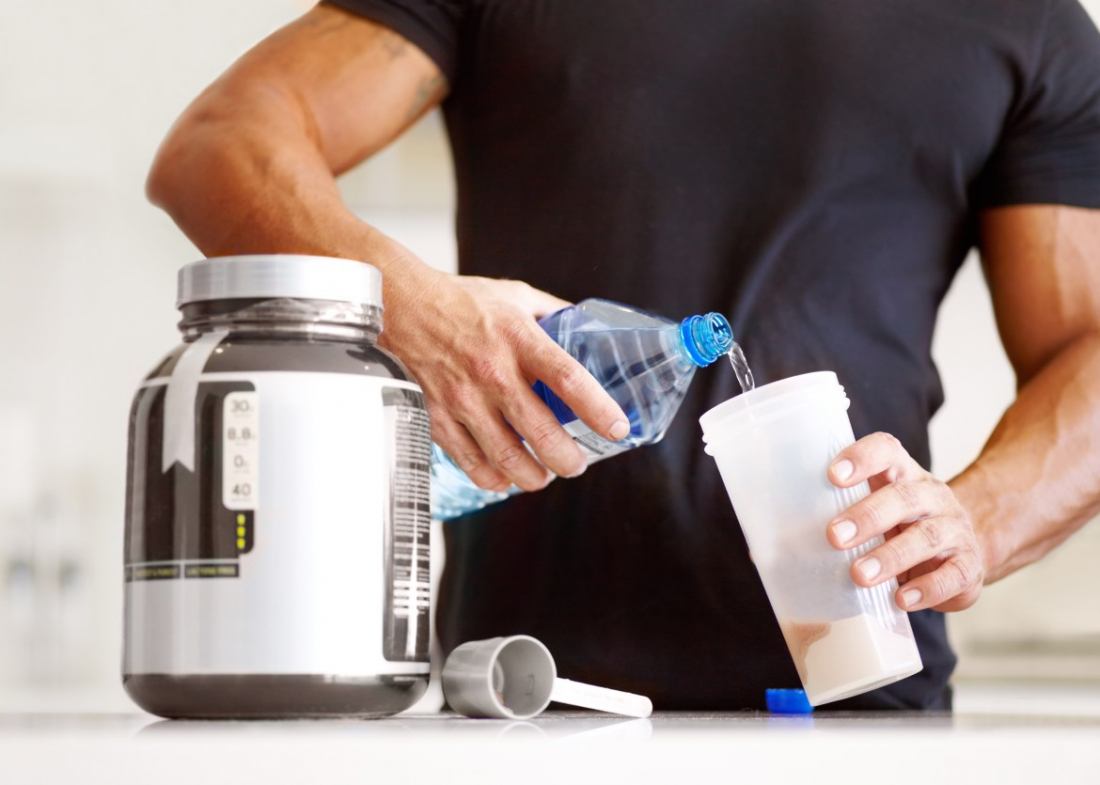
Analyzing which post-workout protein to choose would take an entire article, so let's consider whey isolate. Whey protein isolate is a good source of protein after exercise. It's absorbed at a moderate rate of 8-10 grams per hour, so a post-workout shake of 20-30 grams will raise your amino acid levels and keep them elevated for about 2-3 hours. Whey protein isolate is ideal for jumpstarting recovery processes as it contains high amounts of BCAAs and increases post-workout blood insulin levels. The increase in insulin post-workout will allow for more massive glycogen transport to the stressed muscles, thus promoting faster recovery.
How to use the protein?
The ideal is to take 20-30g of whey protein within 20 minutes of training.
An overview of all types of protein can be found here
CREATINE HCL
The post-workout period is the ideal time to take a second dose of creatine. If you take it together with protein, and especially if the protein contains some probiotic substances, you have createdalmost perfect conditions for fast absorption of creatine. Creatine after training provides support for recovery.
Dosage of creatine after training?
Take 1.5g with protein powder.
CONCLUSION
This article is more of a general explanation of what each supplement is for and when is the appropriate time to dose them, especially for those who are just starting out with exercise and supplement use. Much more could be written about each of the supplements mentioned, but we have tried to select the most important factors affecting training and muscle growth. At the same time, we could mention even more supplements - pre-workout arginine, post-workout glutamine and so on. Supplements suitable for use before training usually do not need to be taken separately, as they are part of pre-workout supplements.
Sources:
https://www.nap.edu/read/10219/chapter/1
https://www.wellesley.edu/404
https://www.ncbi.nlm.nih.gov/pubmed/23834545
https://www.ncbi.nlm.nih.gov/pubmed/24164961
https://onlinelibrary.wiley.com/doi/abs/10.1002/jps.1109
https://www.ncbi.nlm.nih.gov/pubmed/17095924
https://www.physiology.org/doi/abs/10.1152/jappl.1994.76.2.839
https://www.ncbi.nlm.nih.gov/pmc/articles/PMC2651845/
https://link.springer.com/article/10.1007/s00421-010-1509-4
https://www.ncbi.nlm.nih.gov/pubmed/20026378
https://www.ncbi.nlm.nih.gov/pubmed/18708688
No posts have been made yet.








