





Some common advice that is not so good to trust
 Author:
 All of us who are trying to work on our bodies read some new knowledge every day, whether it's about fitness, healthy eating or exercise. We all started out somehow, believed something we didn't have to, listened to advice that wasn't good and made some of those mistakes. In today's article, we'll look at a few of those common pieces of advice that beginners get.
Bad advice number 1 - If you want to lose weight, you have to skip the pastries
 You don't. Do you love baked goods and don't want to give them up in an effort to lose a few pounds? Why would you have to? Choose suitable alternatives, especially from rye or barley flour, which are relatively easy to find nowadays, or feel free to bake your own pastries. How come you don't have to give up baked goods? Well, because pastry alone is not really worth the tyre on your tummy. Fat is stored when we are in a caloric SURPLUS (meaning we consume more calories than we expend) not by simply eating a certain food. So you don't have to skip baked goods, it's just a matter of looking for one that has a quality composition and eating it in reasonable amounts.
Bad advice number 2 - Don't eat carbs for dinner anymore
Why not? Of course, it depends on the type of carbohydrates we consume. But if we take into account complex carbohydrates (rice, buckwheat, etc.), the likelihood of them "turning into fat" is quite small (as long as they are in reasonable amounts, of course). These carbohydrates consumed in the evening may even help to fall asleep more easily, positively affecting the quality of the REM phase of sleep, muscle recovery during sleep, and we could certainly find a bunch of other benefits. The argument that you shouldn't eat carbs at night, as we go to sleep, the metabolic activity "decreases" which is a great opportunity for the consumed carbs to be stored directly as fat, sounds quite convincing.. But that's what these "broscience" claims usually are. There are a number of actually substantiated studies that refute this claim and even lean the other way. As an example, I'll cite one that, after following two groups of people with the same caloric intake and B/S/T ratio for half a year, with only a difference in the daily distribution of carbohydrate intake, concluded that the group consuming more carbohydrates in the evening achieved better results in terms of body fat percentage, enjoyed less hunger, and felt better rested. [1][2] Of course, something fits everyone differently, but the general truth is that WHEN you consume carbs matters more than the TOTAL amount.
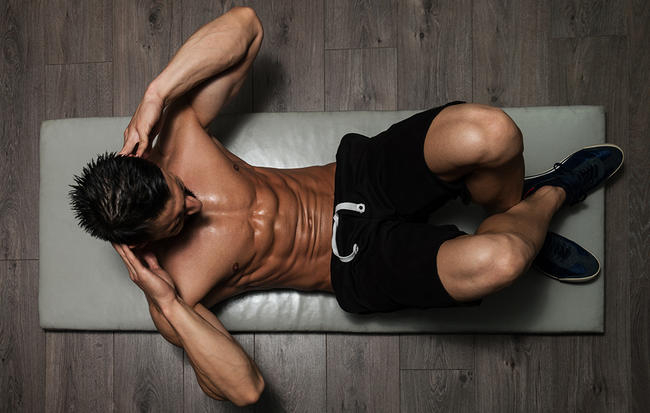
Bad advice number 3 - Do you want a bulging belly? Exercise it every day!
We all have abdominal muscles, they're just usually hidden under a certain layer of fat. The notion that "shredding" your abs daily with hundreds of crunches or other isolated abdominal exercises will help you take off the fat layer.. is unfortunately off too. As I sounded out in the first sentence, the visibility of the abdominal muscles is determined by the amount of fat we have, and therefore the visibility of the muscles are largely influenced by diet. As for strengthening the abdominal muscles themselves, you may be surprised to learn that the most effective exercises are basic compound exercises like the squat and deadlift. Using separate abdominal muscle exercises will only fine-tune their form. Abdominal muscles are muscles like any other, so they need time to recover and it is certainly not advisable to load them daily. You might start to get back pain from doing daily lounge-sit exercises. In addition to a flat stomach, it's also important to strengthen the CORE (translated as core, or centre of the body) and HSSP (deep spinal stabilization system), which form the support of the body and are the foundation for building a nicely shaped body.
Bad advice number 4 - Don't eat more than 1.5g of protein per kilo of weight or you'll destroy your kidneys
There are usually long debates on this topic. There is no evidence that eating even 2-3g of protein has any effect on the state and function of our kidneys. It depends a lot on your overall weight, the percentage of active mass in your body, frequency of training and other things, but it is definitely not necessary to follow the 1.5g number or actually any other specific number. Remember my last article where I mentioned in the conclusion strength endurance professional athletes like hockey players, football players who just come from training, have meat with a side dish and don't think about whether they have exactly the right portion on their plate to accidentally get to 2.12542121g of protein. They just don't do it, and unless you have health complications, you don't have to either. If you consume too much protein, your body will certainly let you know, but you don't have to worry and anxiously cling to any particular number, especially if you're following a drinking plan and moving regularly. Similarly, there' s no telling the exact amount of protein your body is capable of digesting in one go.
Bad advice number 5 - When you're dieting, you need to have a cheat day to kick-start the burn
Nonsense. If you eat healthy, balanced and ENOUGH, you don't need to gorge yourself to bursting on everything possible every Sunday. Can you imagine the havoc it will wreak on you if you're pushing 5 through 9 ALL day? Probably not, and don't even imagine. Learn to eat in such a way that you eat enough calories and variety, in short, so that your body does not starve and you will find that you do not need any all-day "overeating". Do you occasionally crave a vice? Have one! But be sure not to eat it all day long, because this will not support your metabolism, on the contrary, you may cause yourself some health problems. I don't see anything wrong with having a piece of good quality chocolate (75% or more, even a square every day!), going out to dinner with friends now and then, having a pizza, or going to your mom's for a sirloin steak... If your goal is not a pro fitness career, you don't have to completely shun your social life and limit yourself to the maximum. If you're feeling tired, treat yourself to REFEED - which is a kind of energy replenishment by increasing your intake, but not by eating munchies all day, but by increasing portions from your existing, healthy diet.
Bad advice number 6 - I need to take off the fat on my hips, butt and stomach, I need to load this part a lot
Let's get one fundamental thing straight - the body CANNOT lose weight locally only. Just like you can't control where you gain fat, you simply can't decide where the fat is going to disappear from. If you want to reduce fat, you have to reduce it all over your body. Everyone has a problem area where fat just sticks around until the last minute. However, you will not achieve the desired effect by targeting and training only that area very frequently. You have to grit your teeth and persevere with the efforts that have brought you results so far, or adjust your diet and training plan. It will come, just be patient!
Bad advice number 7 - If you want to burn fat, you need to do cardio, lots of cardio
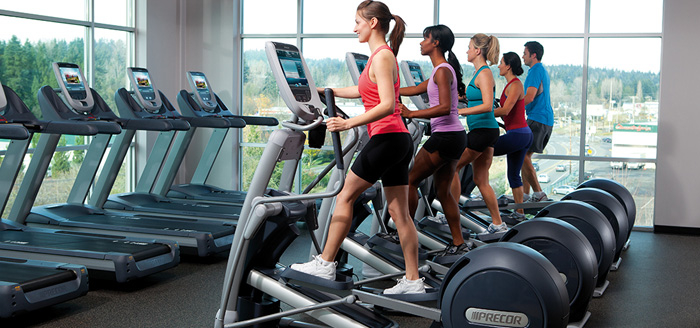 This is also already one of the fitness myths. If you want to lose weight, you definitely don't need to spend hours running on a treadmill at the gym. As we mentioned, fat reduction is a lot about a healthy diet, but you certainly don't need to spend long hours doing often boring cardio workouts. Weight loss starts with creating a caloric deficit (be careful not to be too drastic) and then adding in a suitable workout. Aerobic activities are good, especially if you may be new to exercise and are starting with some higher weight, or simply not used to moving. The big hit for fat burning right now is HIIT (high intensity interval training), as the English translation implies, it is high intensity interval training. It can be done in a variety of ways, from running, to swimming and rowing, to different combinations of exercises, and will take you a maximum of 15 - 20 minutes, which is great! However, the important thing with exercise is that you enjoy it. Find such a "helper" to reduce, so that it is also your hobby, or relaxation for your head and body after coming from work.
I'm sure we would be able to find x-more such recommendations, but we'll look at those next time.
No posts have been made yet.








