





Read labels correctly - we'll help you navigate the tangle of confusing letters!
 Author: Míša Polcarová
 Let's... let's do a little riddle right at the beginning. Do you put groceries in your cart based on taste and what you're used to buying, or do you dig the honest label reading team? Team two wins the golden maze.
Because reading that label many times tells you if the food is really worth spending money on or if it's just throwing peas against the wall.
After all, buying food should be as important to us as what we put in our pet car. Just as we care about what to put in our car to keep it running properly.
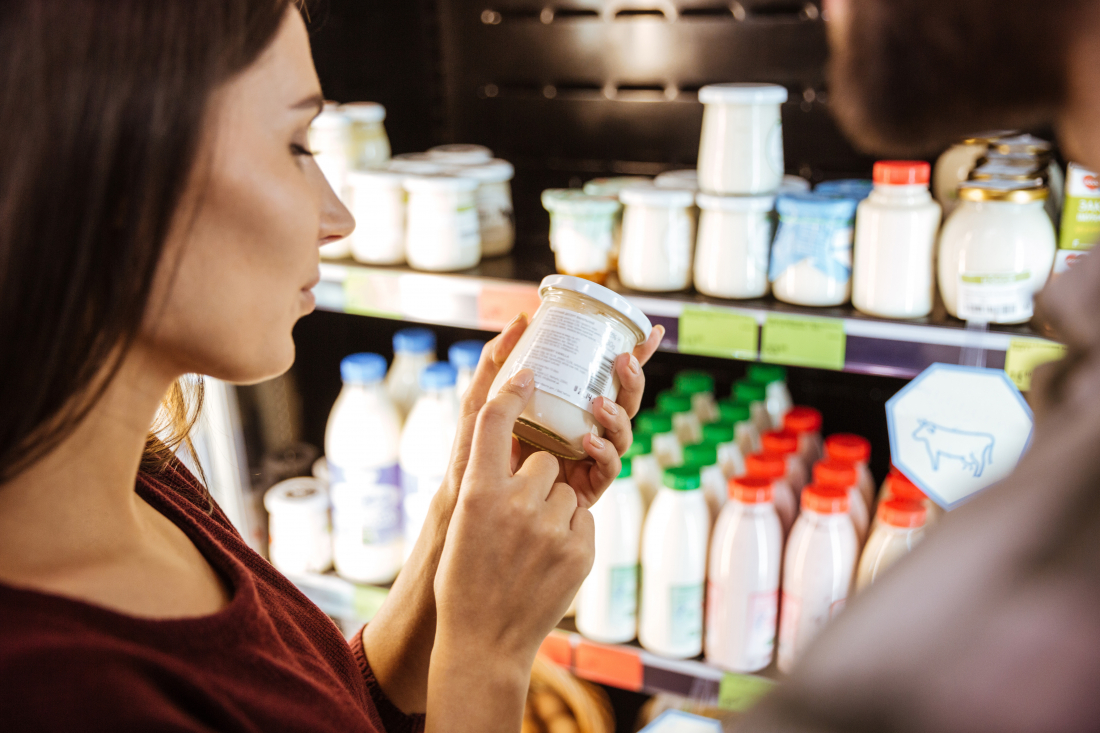
You don't necessarily need to start a reading diary
We only have one health, so we shouldn't care what we feed it.
We should try to watch the quality of our fruits and vegetables, try to limit refined sugar, and pay attention to where our ingredients come from, but... only 18% of the population does. And why is that? Surveys show that the rest can' t read labels.
But grocery shopping doesn't have to turn into a reading club, where you borrow each other's glasses with the biggest diopters to decipher thefleas that appear on the packaging.
The holy foursome
It's important to pay attention to a few basic points, which we'll cover in the following lines, so that we can start to make it easier to read the nutritional values and ingredients that are listed on foods so that you can buy the best quality fuel for your body.
1.Theshorter theingredients,thebetter
It's not for nothing that they say less is sometimes more. The smaller the list of foods a product contains, the better. This means that the product is free of unnecessary added ingredients, so the food is the least industrially processed and thus of higher quality.
For example, if you buy ham - a good quality ham with 96% meat content, it just needs water and some salt added to it. In return, when you reach for that 65%, it's clear that the remaining percentage has to be filled with something - and in the most common case, table salt, drinking water and a whole host of essences and flavourings.
2.Thefirstplaceshould alwaysbe given to the raw material thatismostabundant in theproduct
So if you want to buy a better quality chocolate, sugar really shouldn't come first.
3. If there's somethingin theingredients that you've never heard of or can' t evenpronounce...
"The GDR comrades probably made a mistake somewhere," and you don't even take it off the shelf.
4.It isforbiddenbylawto praise a food for something that iscommonplace
So, for example, if a yogurt manufacturer boasts that it is preservative-free, and puts it prominently on the cup wrapper as something extra and unheard of, it's wrong - quality yogurt must NEVER contain preservatives.
What allmustbe stated on the label?
Manufacturers are willing to put anything on their products just to impress us consumers. But there are some things that the train doesn't run over and that manufacturers must adhere to at all costs.
These include:
- The name of the product
- Substances causing allergy or food intolerance
- The amount of certain substances
- Date of minimum durability
- Best before date
- Name or trade name
- Address of the operator
- Country of origin
- Method of use
- Nutritional values
The marking on the packaging must be clearly legible, visible, indelible and not obscured.
Traditional Czech products can be found under the label Klasa, for example. Czech products must be guaranteed by the Czech Food Chamber.
Although, as we mentioned at the beginning, foods should contain as few added ingredients as possible, some foods simply cannot do without them. These include, in particular, any thickeners,stabilisersandemulsifiers that mix the food.Preservatives that protect the food from spoilage. Furthermore, sweeteners or colouring agents that replace natural colours that may have been destroyed during production. You must also read about allergens, which are required by law to be listed in bold.
What are the most common mistakes?
1. Pastry
There are many types of bakery products on the market today, but it's quite achallenge to choose a really good and honest one.
Classic white bread is made from processed grains. This robs it of its nutritional value and the bread becomes a source ofemptycalories. It has a higher glycaemic index and contains more sugar and salt.

Wholemeal products must contain atleast80%wholemeal flour. In the case of multigrain, 5% of the flour is other than rye or wheat flour. Wholemeal flours are created by grinding the whole grain, including the bran and germ, where the most nutrients are found, so it adds value to the food. It containsmorefibre and vitamins.
Don't look for a miracle under the name 'cereal'. It's just a synonym for "cereal", so it's like a traditional white roll, for example.
The biggest stumbling block is with dark bread, which most lay people buy thinking it is the best we can buy. Wrong! In fact, it's the worst choice because it's a type of pastry that's just colored - and most often with caramel or molasses.
2. Buy "organic"products?
Organic products have really taken off in recent times. But what do we mean by this? These are strictly controlled foods from organic farming.
The food is free of labels, pesticides, GMOs, additives and low in contaminants. As consumers, we are most put off by thehigher price. This is due to the high quality, honest and demanding work of farmers with generally more expensive production where the emphasis is on quality rather than quantity. The products are thus richer in vitamins and minerals.
Where it's worth paying extra for organic quality are, for example, milks that contain a higher proportion of conjugated linoleic acid (up to 200%), which plays an important role in obesity treatment.
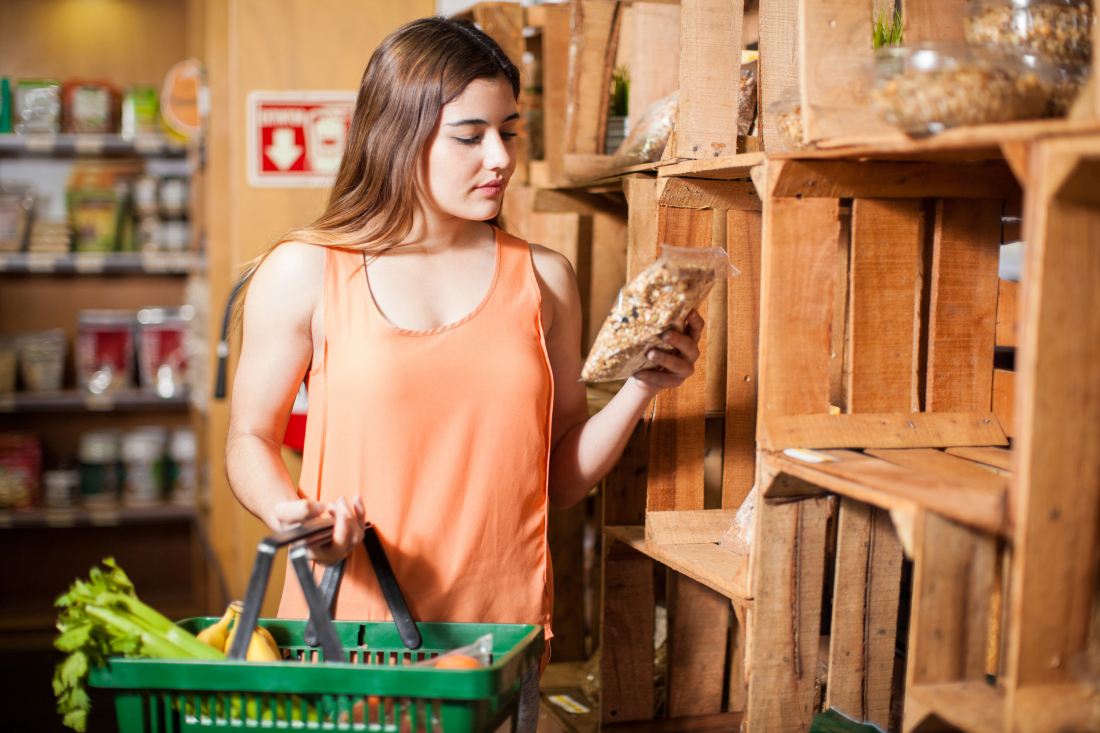
3. Noaddedsugar
A popular marketing lure that all those trying to live a healthier lifestyle try to fall for. While there is no added refined sugar per se in such products, this does not mean that the food is free of the sugar ingredient (for example, in dried fruit or fruit bars).
4. Light,low-fat, fat-free
These products give the impression that they are ideal if your goal is to shed a few extra pounds, for example.
Light products mean that the main nutrient content is reduced by up to 30%. Low-fat foods contain a maximum of 1.5g of fat per 100ml of product or 3g of fat per 100g. For foods labelled 'fat free', fat must not exceed 0.55g per 100g.
Although all of these types appear to be healthier options that certainly won't make us fat and are more beneficial to our bodies than the more traditional fatty options, unfortunately this is not always the case.
In the vast majority of cases they aresupplemented withthickeners, starches orrefinedsugar.
5. Chocolate is not like chocolate
In order to be chocolate, it must contain atleast25%cocoa solids (i.e. cocoa butter and cocoa mass.) According to the legislation, dark chocolate is defined as: "a foodmade fromcocoacomponents,naturalsweeteners,addedsubstances orflavourings".
Thehighertheproportion ofcocoafat and the lower the sugar content,thebetter thequalityofthechocolate. The legislation stipulates that dark chocolate must contain at least 35% cocoa solids.
When buying it, pay attention to the dry matter content. Do not be fooled by the name 'bitter', but check the percentage. Also check the ingredients for added sugar (most of which is found in milk and white varieties), animal fats other than milk starches or vegetable oil.
Dark chocolate has many health benefits, but can it also improve eyesight?
6. Thelabel 'fitness'does not necessarily mean health food
The interest in exercise and healthy eating is growing like a beginner'sbike at the moment. Manufacturers and retailers are taking advantage of this and exploiting consumer ignorance.
They slap a label on a 'fitness bar' or a 'protein pastry' and people latch onto it like wasps onto honey, unfortunately.
Such foods contain the most hidden refined sugar, which is no longer boasted of on the label. They also contain a range of preservatives, ethers, thickeners and sweeteners, the list of which could easily rival any novel.
Such delights are then many times twice as expensive as regular quality ham and that vaunted protein, to search for perhaps with the aid of a magnifying glass.
We hope that today's article has helped you and that you start to read more clearly what you are actually buying and if you are really eating as healthily as you have probably assumed up to this point.
Sources : https://www.zakonyprolidi.cz/cs/2003-76#oddil5
Author: Míša Polcarová No posts have been made yet.








