





Protein intake under scrutiny
 Author:
 Protein. An often talked about topic in sports nutrition - whether in terms of total intake, the single dose the body can absorb, or the risks associated with higher intakes. An article going into the subject of protein in depth would be really extensive and few people would be willing to read it all, so today we will look at the most common "protein question marks" and try to explain them briefly.
A bit of boring theory to start with
Protein is an essential part of the diet. There is no doubt that the body needs them... but there are a million different opinions on how much to actually take in. Most world health organizations recommend very small amounts, usually in the range of 0.8 - 1.2 grams per kilogram of body weight. However, recent studies show that this incredibly small amount is far from sufficient to ensure optimal health and body composition.
Protein is the main building block of the body. They are used to form muscles, tendons, tissues, organs and skin. They are equally important in the formation of enzymes, hormones, neurotransmitters and various small molecules that serve to provide important bodily functions. Proteins are made up of smaller molecules called amino acids that are linked together like beads on a string. The linked amino acids form long protein chains that then fold into complex shapes. Some of these amino acids can be produced by the body, while others must be obtained from the diet. Amino acids are therefore divided into non-essential (those the body makes itself) and essential (those we must get from diet and other sources.
It is not only the quantity of protein we take in that is important, but also its quality. The quality of the protein source depends on the amino acid profile. The best protein sources contain all the essential amino acids in proportions suitable for humans. In this respect, animal proteins are therefore logically better than vegetable proteins. This is due to the fact that animal muscle tissues are very similar to human ones. As far as plant proteins are concerned, there is less potential for utilisation. For vegetarians, it is therefore a more challenging task to meet the protein intake and ensure that the body has sufficient levels of all essential amino acids. However, it is good to combine protein sources appropriately.
The topic of protein intake and its impact on health is literally surrounded by nonsensical myths, which very often do not have a single real proof. So let's break down the main ones.
Protein intake and kidney and liver problems
As important detoxification organs, the kidneys and liver are said to suffer greatly from high protein intake. Higher protein intake may indeed slightly increase kidney function, but compared to the work your kidneys do, this increase is completely negligible. There is no evidence that high protein intake harms kidney function in people who do not have any kidney disease. On the contrary, protein intake has many health benefits. Even research testing a dose of 3.3g of protein per kilogram of body weight has not shown that increased protein intake has any effect on liver and kidney damage. For the average athlete, however, such a high intake is unnecessary.
Protein and osteoporosis
Does excessive protein intake really cause bone decalcification and subsequent osteoporosis? The statement based on the theory that protein intake increases the acidity of the body, which is then forced to take calcium from the bones to balance the PH in the body, is wrong. There are some short-term studies that support this idea, however, in the long run this hypothesis is disproved.
On the contrary, there are plenty of real-world studies that show thathigher protein intake has a positive effect on bones. For example, it can increase bone density and reduce the risk of fractures. It also increases the production of the IGF-1 homrmone and stimulates muscle growth, which is known to be good for bone health. Higher protein intake is beneficial for overall health - especially for building or maintaining muscle mass and reducing fat. Research also shows that a higher protein intake keeps us fuller longer and as a result we are able to consume fewer calories, which is a positive if your goal is fat reduction.
How much protein can I consume in one meal to be absorbed by the body?
30g. That magic number that you very often get to when looking up this information. But in reality, no study has been done that clearly identifies this number as the "golden grail" of protein absorption. The amount that the body can process in one go is very difficult to define precisely. It depends on many aspects - for example, athletes have a higher protein requirement, consumption varies by gender, age, metabolic state. In short, there is no clear number that applies.
Research into the current hit in "diets" called intermittent fasting has supported the theory that the body is capable of processing a much larger dose of protein in one go than most people think. If we dig into the biology and process of digestion, one could say that protein absorption is almost unlimited. When you take in more protein than that "magical" 30 gram limit, the rest doesn't just disappear somewhere, the whole portion goes through the metabolism process and is processed in some way, it just takes the body longer to process a larger single intake and so we feel full for a long time after a protein packed meal.
How much protein do we actually take in?
This is a very difficult question to answer unequivocally. It probably won't surprise you that the amount of protein needed (like the intake of any other macronutrient) is purely an individual matter. Different amounts are recommended for athletes, different amounts for inactive individuals, different amounts for men, different amounts for women, and different amounts for different age groups. Under certain circumstances, such as physical activity or illness, the need for protein may increase or decrease. A sufficiently detailed treatment of the answer would merit its own article - perhaps another installment if you are interested, so we will make some general recommendations and, given the nature of our site, look more specifically at the numbers that apply to athletes.
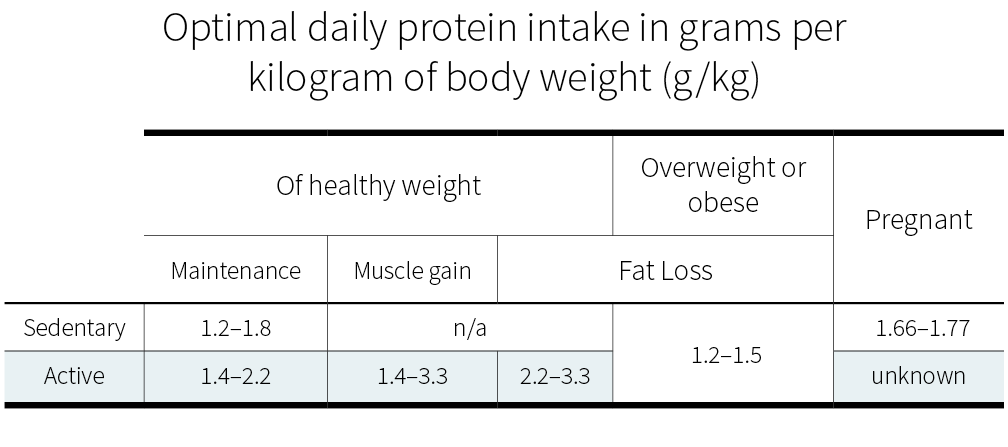
 In general, athletes need more protein than inactive individuals. The need of an inactive individual is set at around 1.2g per kilogram. If you are a recreational athlete, an intake of between 1.6 and 2.2g of protein per kilogram of body weight per day is sufficient. If your goal is muscle gain or reduction, your intake can be increased up to some 3.3g. For the record - top bodybuilders used to have protein intakes of up to 5g, but you know, a little bit of chemistry and everything works differently. For the vast majority of recreational athletes, there is no need to concentrate too much on any particular number. As long as you eat a balanced, wholesome diet and play sports, then you can be completely at ease when it comes to protein intake.
Finally, let's put it in numbers.
The first table shows the approximate optimal protein intake, differentiated according to activity and whether you are overweight or a healthy weight.
*source: examine.com
Here we have the macronutrient breakdown depending on whether you prefer a low-protein, normal (balanced, you could say) or high-protein diet .
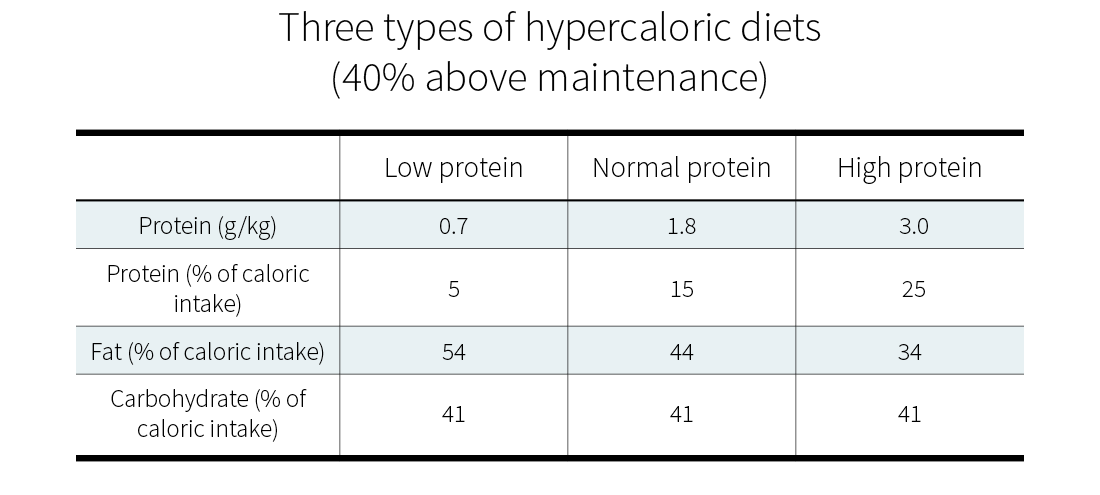
*source: examine.com
The following table shows the optimal intake for athletes and active individuals.
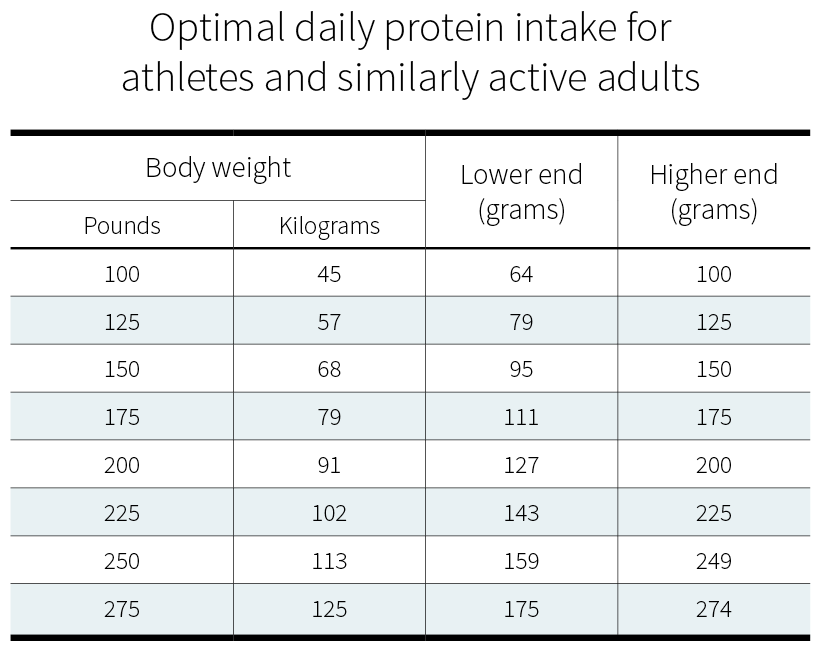
*source: examine. com
A table with the following data is not to be missedfor athletes looking to build more muscle.
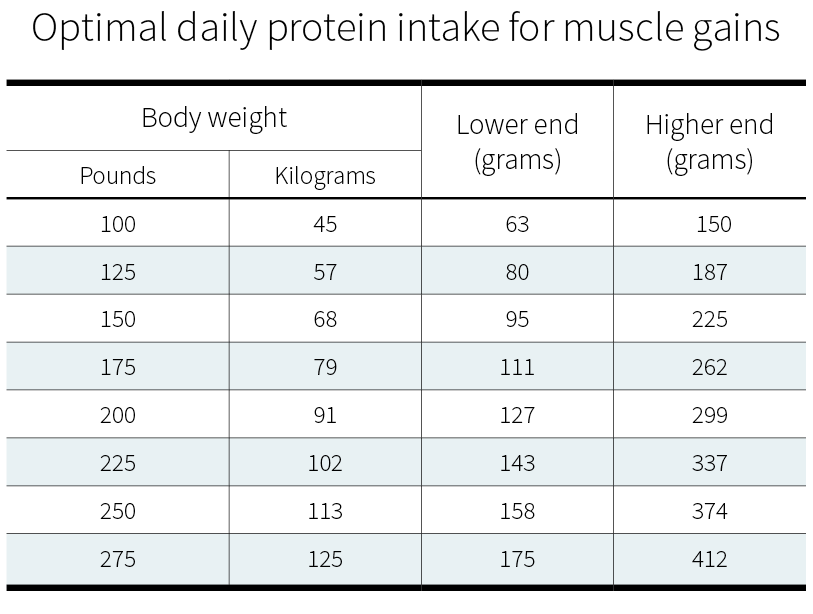 *source: examine.com
And lastly, a table forintake when reducing.
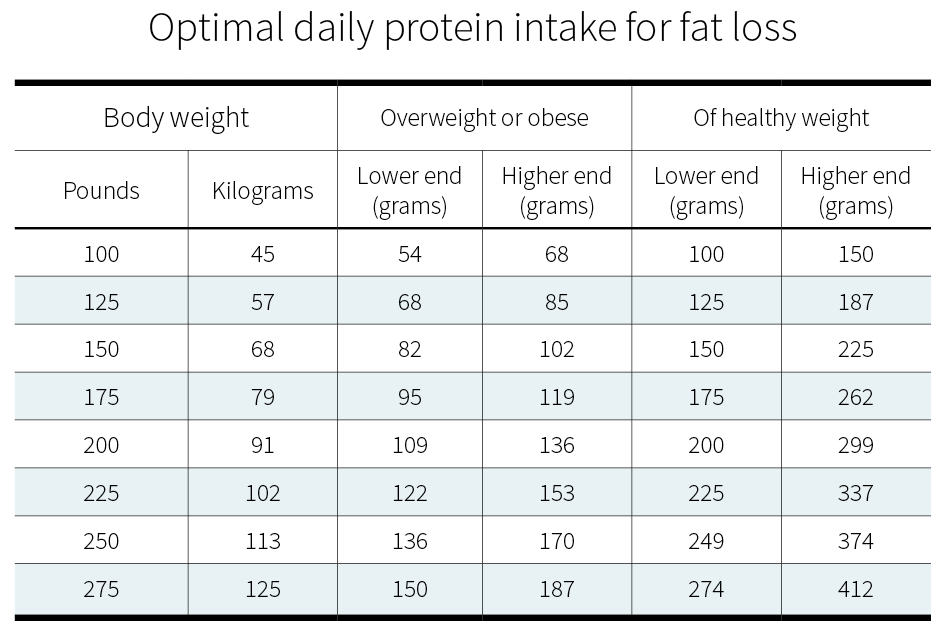
*Source: examine.com
Pubmed, Examine
No posts have been made yet.








