





Protein
 Author:
 For those of you who are really serious about exercise and want to literally shock your body with a new dimension next summer, take a look under the hood of proper nutrition with us. In a new series on our site, we take a look at the athlete's diet in a little more detail than is written in regular articles. In the first series of articles, we will discuss the main components of nutrition, their composition and effect on the body, recommended amounts, digestion, absorption, etc. In short, if you want to give your physique a different dimension, stay tuned and start listening to your body.
Protein
Protein - for many iron game lovers the main indicator of a quality diet. Is it really so? What happens after ingesting protein in our body, what is the optimal dose or what is the opinion of our leading bodybuilders or triathletes about their intake? The following article will help you form a more accurate idea.
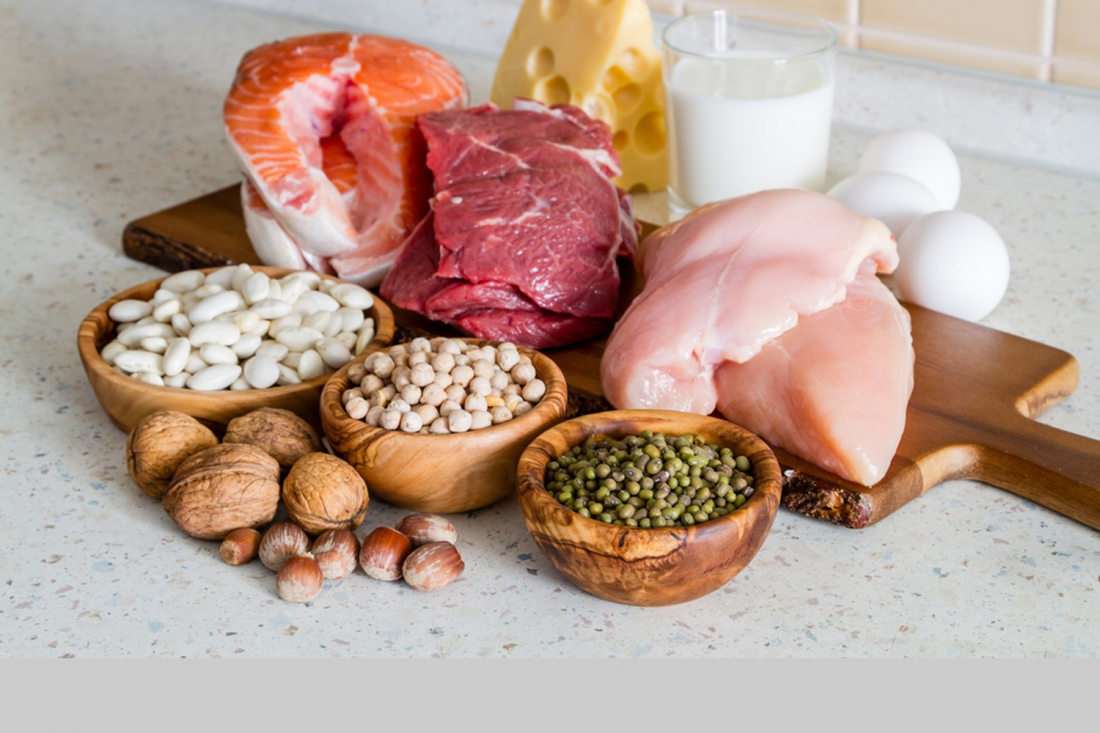
Protein is one of the main macronutrients in our diet, therefore it cannot be replaced. Body proteins are constantly being degraded (broken down) and re-synthesized (created), so their sufficient intake (not only in bodybuilding) is essential. For skeletal muscle, the half-life (both breakdown and rebuilding) is on the order of months, for plasma proteins and intestinal cells on the order of hours to weeks. Adequate intake therefore ensures that these processes are gentle for us (you can read more about adequate intake below, as its determination is a bit more complicated).
However, we are not perfect and infallible, so inadequate protein intake can occur. By this we mean both insufficient and excessive intake. Inadequate intake may result in growth arrest, impaired immunity, slow healing or organ damage. There is a distinction between so-called primary insufficient intake (caused by a lack of protein in the diet) and secondary intake, which is caused by improper liver, kidney or other disease. The opposite of insufficient intake is excess intake (quite common in developed countries). This "over-intake" (forgive the Czechs) is a significant health risk in the long term. There is a risk of increased blood pressure, inadequate load on the liver and kidneys, and associated increased uric acid in the blood (gout).
What are proteins?
Protein proteins are the main building blocks of the body. They are used to form muscles, tendons, tissues, organs and skin. They are equally important in the formation of enzymes, hormones, neurotransmitters and various small molecules that are used to provide important bodily functions. Proteins are made up of smaller molecules called amino acids that are linked together like beads on a string. The linked amino acids form long protein chains that then fold into complex shapes. Some of these amino acids can be produced by the body, while others must be obtained from the diet. Amino acids are therefore divided into non-essential (those the body makes itself) and essential (those we must get from diet and other sources.
It is not only the quantity of protein ingested that is important, but also its quality. The quality of the protein source depends on the amino acid profile. The best protein sources contain all the essential amino acids in proportions suitable for humans. In this respect, animal proteins are therefore logically better than vegetable proteins. This is due to the fact that animal muscle tissues are very similar to human ones. As far as plant proteins are concerned, there is less potential for utilisation. For vegetarians, it is therefore a more challenging task to meet the protein intake and ensure that the body has sufficient levels of all essential amino acids. However, it is good to combine protein sources appropriately.
The main functions of protein
- Structural function - Formation of plasma proteins, which are then used for cell renewal and construction.
- Part of regulatory and metabolic mechanisms - Formation of proteins with specific functions in the body (enzymes, hormones, transport proteins...)
- defensive function - Formation of antibodies.
- Nutritional function - Protein contains 17kJ/g, therefore it is usable by our body as a source of energy. However, this is at a considerable disadvantage due to the high thermic effect of protein metabolism (30% of the energy used for metabolism alone). The oxidation of proteins (decomposition into energy) produces catabolic products that must be eliminated from the body in the form of urea. This leads to an unreasonable load on the body, especially the kidneys.
Protein breakdown
The most commonly used protein division is structural:
- Simple (albumins, globulins, histones, scleroproteins...)
- Complex (Glycoproteins, Lipoproteins, Nucleoproteins...) Another way to divide proteins is by their shape (round to spherical e.g.: albumins, fibrous e.g.: collagen, membrane)
The basic building unit of proteins are the amino acids (AMK), these are connected to each other by a peptide bond. There are 20 basic AMKs in our body. They are the only ones that can be used to synthesize (re-form) proteins and, under a certain energy balance, to form carbohydrates and fats. They also serve as a basis for the formation of a number of important substances, e.g.: adrenaline, serotonin, creatine, carnitine, thyroid hormones... Our body is not able to store AMK, there is only a so-called emergency supply in the tissues.
Amino acids can be divided into three groups according to their need for our body.
- Essential-Our body cannot make them, so we have to supply them with an appropriate diet (valine, lucine, isoleucine, methionine, threonine, phenylalanine, lysine, tryptophan)
- Semi-essential-We can synthesize them, but under certain conditions their synthesis is insufficient (during growth-arginine, histidine, in renal failure-tyrosine).
- Nonessential-A healthy adult is able to synthesize enough of these AMKs (Glycine, alanine, arginine, histidine, aspartic acid, asparagine, glutamic acid, glutamine, cysteine, proline, serine, tyrosine) .
Protein intake
Opinions on protein intake vary widely from bodybuilder to bodybuilder. Some will argue that intake above 1.5 g/kg is a health hazard, while others turn pale with horror (or at least catabolic) at the thought of intake below 3 g/kg. I am presenting here the medical and largely sporting version of intake, which may not at all coincide with your own or adopted practice. Thus, they are merely a sort of tongue in cheek in your decision on how much protein to prepare for your dietary schedule.
Recommended

Nebbia Washed-off bavlněné heavyweight tričko GRIND 370
Nebbia Leginové šortky s vysokým pasem AGILE 475
Nebbia Classic Hero legíny s vysokým pasem 570
Ashwagandha 100cps 1+1
The physiological minimum required to sustain life in humans is 0.5 g/kg (in the long term). However, the optimal amount for an inactive person is 0.8 g/kg, assuming a good quality protein source and a perfectly healthy individual. This amount is (should be) equivalent to 12-15% of energy intake. However, not all of us are inactive yet perfectly healthy, and therefore the need for protein increases (the need increases with any load).
Outside of physical exercise, there are also periods of higher demands for quality protein intake. These conditions are mainly recovery from surgery, illness, pregnancy and lactation (1.5-2g/kg), growth periods (i.e.: childhood and increasing muscle mass) and last but not least during periods of increased physical load. In endurance athletes, these values range from 1.2-1.4g/kg (up to 1.6g/kg/day with high training volume). For strength athletes, this need continues to rise to 1.2-1.7g/kg/day (Personally, I would not go below 1.8g/kg/day in preparation for competition, but this is just my opinion, which you may or may not be inspired by.)
What foods contain the most protein?
Good question to answer. However, beware of plant sources of protein, because as we already know, most plant proteins do not contain the full amino spectrum, so we should definitely combine plant proteins.
- Meat, eggs, dairy products (cheese, cottage cheese, yogurt,...)
- Vegetable sources of protein: legumes, nuts, seeds
Biological value of protein
Another and not insignificant way of looking at proteins is their biological value (BV). This is the determining factor when comparing the quality of proteins. BH tells us how much body (endogenous) protein can be made from 100g of protein ingested from food. It is given in % and generally the BH of animal proteins is higher than the BH of plant proteins. It depends mainly on the amount and ratio of the individual essential AMK and their digestibility.
| Food | BH | Food | BH |
| Eggs (especially egg white - ovalbumin) | 100 | Oatmeal | 60 |
| Whey (lactalbumin, lactoglobulin) | 100 | Wheat | 54 |
| Casein | 80 | Beans | 49 |
| Beef | 80 | Lentils | 45 |
| Pork | 70 | Gelatin | 25 |
Complete proteins contain all the necessary essential AMK, in the right proportions. Animal sources are meat, milk, eggs, fish. From plant sources, the often neglected soybeans. Representatives of non-proteins come mostly from the plant kingdom i.e. nuts, cereals, legumes, seeds. Animal sources are also represented in the form of gelatin (collagen).
How to supplement protein - supplementation
Before we reach for protein supplements, we should know what our daily protein intake should be. As we must remember that for a person who weighs up to 80kg, it should be primary to get protein from a conventional diet rather than from protein supplements. However, if we are unable to supplement our daily protein intake from regular food, we can choose from various protein supplements. There is a plethora of these on the market and so we should be cautious when choosing them.
We have discussed this issue in detail in this article.
Want to get in shape or change your lifestyle? Order a customized diet or workout from Supertrener.cz
Nitrogen balance
As I mentioned above (there's no harm in repeating it in this case), proper protein intake is very important for our health. Adequacy of protein supply can be measured by the so-called nitrogen balance. This is the main indicator of protein metabolism (catabolism/ anabolism). In simple terms, it is the difference between the nitrogen taken in through food (nitrogen is part of protein itself) and the nitrogen excreted from the body. As the name implies, it is important for humans (meaning bodybuilders) to be in a positive nitrogen balance (anabolism occurs = body building. Protein production is greater than breakdown and thus muscle growth can occur).
What is the opinion of our leading bodybuilders on protein intake? Read on.
Marek Vomacka - successful Czech representative in natural bodybuilding (formerly in sports and classical), professional of WNSO federation
"There is no optimal amount. It is very individual. I give from 2.5 to 4 grams per 1kg of body weight depending on the carbohydrate, training and time to the competition or how I feel."
Zdenek Sedmik - one of the most successful Czech power triathletes and strongman
"I weigh 150kg and my protein intake is 2g per kg of weight which is about 300kg per day. The sources for me are meat and mainly nutritional supplements from VITALMAX"
Well, you see, we have finished the first part. I hope it served to deepen your knowledge, and if it led you to think about your protein intake and diet, at least for a while, it served its purpose. In the next installment, we'll take a look at carbs together, but don't worry, there's no end to protein. We'll come back to them as we explore our bodies and, more importantly, the digestion and absorption of our food.
How to supplement protein? In the diet or with protein products?
Tip from the editors of Bodybuilding.com: As mentioned in this article, the primary focus should be on getting protein from your regular diet. Protein supplements will certainly not spoil anything, but we should always keep in mind that it is only a dietary supplement and cannot replace the regular diet. If you are wondering how to build a diet and adjust your caloric intake, we recommend you to either check out this article, which is dedicated to this purpose, or have a customized diet built by our Supertrainer.cz
References:
- Manual of Prevention in Medical Practice II. Nutrition. ND
- TROJAN, S. et al.:Medical physiology. Prague, Grada Publishing, 1996, 2nd ed. 496s.
- ROKYTA, R. et al.: Physiology for undergraduate studies in medicine, natural sciences and physical education. Prague, ISV nakladatelství, 2000, 1st ed. 360s.
- WILHELM, Z. et al. Brno, MU, 2003, 3rd ed. 115s.
- WHITNEY, E.N., ROLFES, S.R.: Understanding nutrition. Wadsworth, 2002, 700+ pp.
- Biochemistry
- PÁNEK, J. et al.: Fundamentals of nutrition. Prague, Svoboda servis, 2002, 1st ed. 205s.
- Blatná, J. et al.:Nutrition at the beginning of the 21st century or about nutrition currently and with a guarantee. Prague, Society for Nutrition - NutriVIT Foundation,2005, 1st ed. 79s.
No posts have been made yet.








