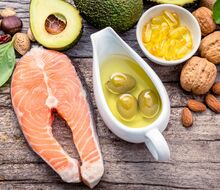
Omega-3 vs. omega 3-6-9 fatty acids
 Author:
 In today's world full of dietary supplements and health advice, it's easy to get lost in the flood of information. One of the most common dilemmas we encounter is the choice between a pure omega-3 supplement and an omega-3-6-9 complex. Both promise health support, but their action and suitability vary depending on your lifestyle, diet and specific goals.
Article Content:
- Basic characteristics of fatty acids
- The Power of Synergy - What does the science say about the Omega-3-6-9 combination?
- When is it better to bet on pure Omega-3s?
Basic characteristics of fatty acids
Before we dive into the comparisons, it's essential to understand what the different omega fatty acids are and what role they play in our bodies. Think of them as different musicians in an orchestra; each has a unique role to play, but it is only their interplay that creates the perfect harmony.
Omega-3: The anti-inflammatory conductor
Omega-3 fatty acids are essential fatty acids, which means that our bodies cannot make them on their own and we must take them from our diet. They are absolutely essential for the proper functioning of the body. Among the most important are:
- Eicosapentaenoic Acid (EPA): key for suppressing inflammatory processes in the body.
- Docosahexaenoic acid (DHA): Essential for brain, nervous system and vision health.
- Alpha-linolenic acid (ALA): A plant source that the body can convert to EPA and DHA to a limited extent.
The main power of Omega-3s lies in their powerful anti-inflammatory properties. Chronic inflammation is now considered a hidden culprit in many diseases of civilization, from cardiovascular disease to neurodegenerative disorders.

Omega-6: An essential but sensitive partner
Like Omega-3s, Omega-6s are essential. Our bodies need them for proper cell membrane function, growth and development. Unlike Omega-3s, however, they can be pro-inflammatory in excess. This is not necessarily a bad thing - acute inflammation is a vital immune response (e.g. in injury). The problem arises in modern diets where Omega-6 intake (from vegetable oils, processed foods) is often up to 20 times higher than Omega-3 intake. This disparity can lead to chronic inflammation. So the goal is not to eliminate Omega-6, but to maintain it in a healthy ratio to Omega-3 (ideally around 4:1).
Omega-9: An independent helper
Omega-9s (especially oleic acid) are not essential because our bodies can make them on their own if they have enough Omega-3 and Omega-6. However, they are very beneficial, known especially from olive oil and the Mediterranean diet. They promote heart and vascular health and have mild anti-inflammatory effects.
The power of synergy - What does the science say about the Omega-3-6-9 combination?
The concept of supplementing all three types of fatty acids at the same time is based on the idea of synergy - that their combined effect is greater than the sum of the parts. Although research in this area is still in its infancy compared to the massive amount of studies on Omega-3s alone, some work suggests fascinating potential.
One recent study, conducted in an animal model, examined the protective effect of a mixture of Omega-3-6-9s against kidney damage induced by the drug cisplatin, which is used in chemotherapy. Results showed that the combination of these three fatty acids exhibited significant anti-inflammatory and protective properties that helped mitigate toxic damage to kidney cells.¹ This research suggests that a balanced complex of all three omega acids can provide robust protection to tissues exposed to severe oxidative stress and inflammation.
Another interesting study focused on the external use of an emulsion rich in Omega-3, -6 and -9 to promote skin wound healing in rats. The researchers found that topical application of this mixture accelerated the healing process, pointing to the key role of these fats in tissue regeneration and repair.² These fatty acids are the building blocks of cell membranes, and an adequate supply is therefore essential for cell renewal and the formation of new, healthy tissue.
These studies, although conducted in animals, support the theory that a comprehensive Omega-3-6-9 supplement can work as a harmonious whole, providing the body with the full spectrum of fats needed to fight inflammation and for effective regeneration.
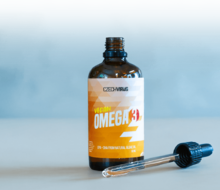
When is it better to bet on pure Omega-3?
The main argument for supplementing with pure Omega-3s is the aforementioned unhealthy ratio of fatty acids in the typical Western diet. Most of us consume an excess of Omega-6 and not enough Omega-9 (if we use olive oil). What we are critically lacking is the anti-inflammatory Omega-3s.
So if you are consuming plenty of nuts, seeds and good quality vegetable oils but not enough fatty marine fish, it is very likely that your problem is not an overall fat deficiency but a specific Omega-3 deficiency. In this case, taking an Omega-3-6-9 complex is counterproductive - you are adding even more Omega-6s that you are trying to balance.
Taking a pure, highly concentrated Omega-3 supplement (ideally high in EPA and DHA) is a targeted intervention. It's like sending an elite anti-inflammatory unit into battle exactly where it's needed. This approach is especially appropriate if your goal is:
- To actively reduce chronic inflammation in the body.
- Targeted support for brain health and cognitive function (DHA).
- To optimize heart and vascular health, for example by lowering triglyceride levels.
- Support mental well-being and mood.

Final summary: So how do you choose?
The choice between Omega-3 and Omega-3-6-9 is not a question of "which is better", but "which is better for me". Here's a simple decision key:
Choose a complex Omega-3-6-9 if:
- Your diet is generally poor in healthy fats and lacks variability.
- You're looking for a basic, all-in-one supplement for overall health and vitality support.
- You're intrigued by the idea of synergistic action and want to support the body's natural regenerative and protective processes, as scientific studies suggest.
- You don't have a specific goal (such as a dramatic reduction in inflammation), but rather seek overall harmony and nutrient replenishment.
Choose pure Omega-3s if:
- Your main goal is to actively fight chronic inflammation and improve your Omega-6:Omega-3 ratio.
- You want to focus on specific brain, heart or vision support.
- Your diet already contains plenty of healthy sources of Omega-6 and -9 (nuts, seeds, avocados, olive oil).
- You consume a diet high in processed foods and vegetable oils and need to "offset" this effect.
Whatever your choice, remember that dietary supplements are only an aid. The basis should always be a varied and balanced diet, rich in natural sources of all beneficial nutrients. Before starting any supplementation, it is always advisable to consult your doctor or a qualified professional about your health.
Recommended

Source:
- ¹ Al-Numair, K. S., et al. (2023). "Evaluating the renoprotective effects of omega-3-6-9 against cisplatin-induced nephrotoxicity in mice." PubMed Central (PMC).
- ² Otranto, M., et al. (2018). "Topical application of omega-3-, omega-6-, and omega-9-rich oil emulsions for cutaneous wound healing in rats." PubMed Central (PMC).
No posts have been made yet.