





Omega-3 deficiency and its symptoms
 Author:
 When we talk about nutrient deficiencies, we often think of visible symptoms: pale skin with iron deficiency or brittle nails with biotin deficiency. But there are deficiencies whose manifestations are far more insidious and take place covertly, deep in our control centre - the brain. Omega-3 fatty acid deficiency is one of them. Although it may be related to the state of our skin or hair, science is revealing that its most serious effects are on our psyche, cognitive function and even the very structure of the brain.
Article content:
- The diet that programs anxiety and depression
- Hidden damage: when the brain lacks the building blocks
- Why should the "Omega-3 Index" be measured?
1. The diet that programs anxiety and depression
Imagine if the composition of your diet could directly influence whether you are more prone to anxiety or depressive states. That's exactly what a study published in the journal Behavioural Brain Research suggests. In it, researchers examined how a lifelong diet low in omega-3s and high in pro-inflammatory omega-6 fatty acids - which is typical of the modern Western diet - affects behavior.
The results were alarming. Animal models fed such a nutritionally unbalanced diet exhibited behaviours that are considered the equivalent of human depression and anxiety. They showed less interest in activities that they naturally enjoy and showed significantly higher levels of anxiety reactions¹ under the test conditions. This research thus provides strong evidence that this is not just a casual correlation. Long-term dietary omega-3 deficiency may actively contribute to the creation of a biological environment in the brain that is a breeding ground for affective disorders.

2. Hidden damage: when the brain lacks the building blocks
But what exactly happens in the brain when it lacks omega-3s? The answer is offered by a review article from Frontiers in Physiology that summarizes the evidence for so-called progressive neuropathology. This term describes the gradual loss and deterioration of brain tissue that is seen in many psychiatric disorders².
Omega-3 fatty acids, especially DHA, are essential for the construction and maintenance of neuronal cell membranes. Think of them as the high-quality, flexible bricks that make up the house of your brain. If these bricks are missing, the body is forced to use substitute, lower quality material - such as other types of fats. The membranes of neurons then become stiffer and less functional. Communication between brain cells becomes more difficult and the brain becomes more vulnerable to inflammation and oxidative stress.
The study shows that this process can lead to structural changes: loss of both grey and white matter in the brain. So it's not just a temporary "bad mood". Chronic omega-3 deficiency can contribute to physical brain damage, which explains why it is associated with long-term deterioration in patients with mental disorders².

3. Why should the "Omega-3 Index" be measured?
Given such strong evidence, the question arises: why are omega-3 levels not routinely measured in mental health care? This is exactly what an article published in Molecular Psychiatry points out. In it, the authors argue that there is a "strong scientific basis" for introducing omega-3 level testing (the so-called Omega-3 Index) into routine psychiatric practice³.
This test measures the percentage of EPA and DHA in red blood cell membranes, a reliable indicator of long-term omega-3 status throughout the body, including the brain. The researchers say identifying patients with deficiencies could be key to personalized and more effective treatment. It could help determine which patients would benefit most from targeted supplementation, potentially improving their prognosis and reducing the risk of their condition worsening³.
.png)
So what are the real signs of deficiency?
As is clear from the scientific studies, the symptoms of omega-3 deficiency are not a simple checklist. They are deep, complex and primarily related to our psyche and mental abilities. We can summarize them as follows:
- Persistent low mood and emotional lability: not just occasional sadness, but rather a long-term tendency towards pessimism and depressive experiences that may be rooted in inappropriate dietary composition¹.
- Increased anxiety: Feelings of inner restlessness, tension and overreactions to stressful situations may also be a signal that the brain is lacking the calming and anti-inflammatory effects of omega-3¹.
- Impaired cognitive function: difficulty concentrating, a feeling of 'brain fog', impaired memory and overall reduced mental acuity. All of this may be related to impaired communication between neurons².
- Low stress resilience: inability to cope effectively with mental stress and slower recovery after challenging events.
.png)
Conclusion.
The link between diet, brain structure and mental health is undeniable. Scientific work clearly shows that a sufficient supply of omega-3 fatty acids is not a luxury, but an absolute necessity for the proper function and long-term protection of our most important organ. Ensuring optimal levels of these essential fats, whether through a diet rich in oily marine fish or quality supplements, is one of the most essential steps we can take for our mental resilience and well-being.
Recommended

Prom-in Native Omega 3

Reflex Omega 3

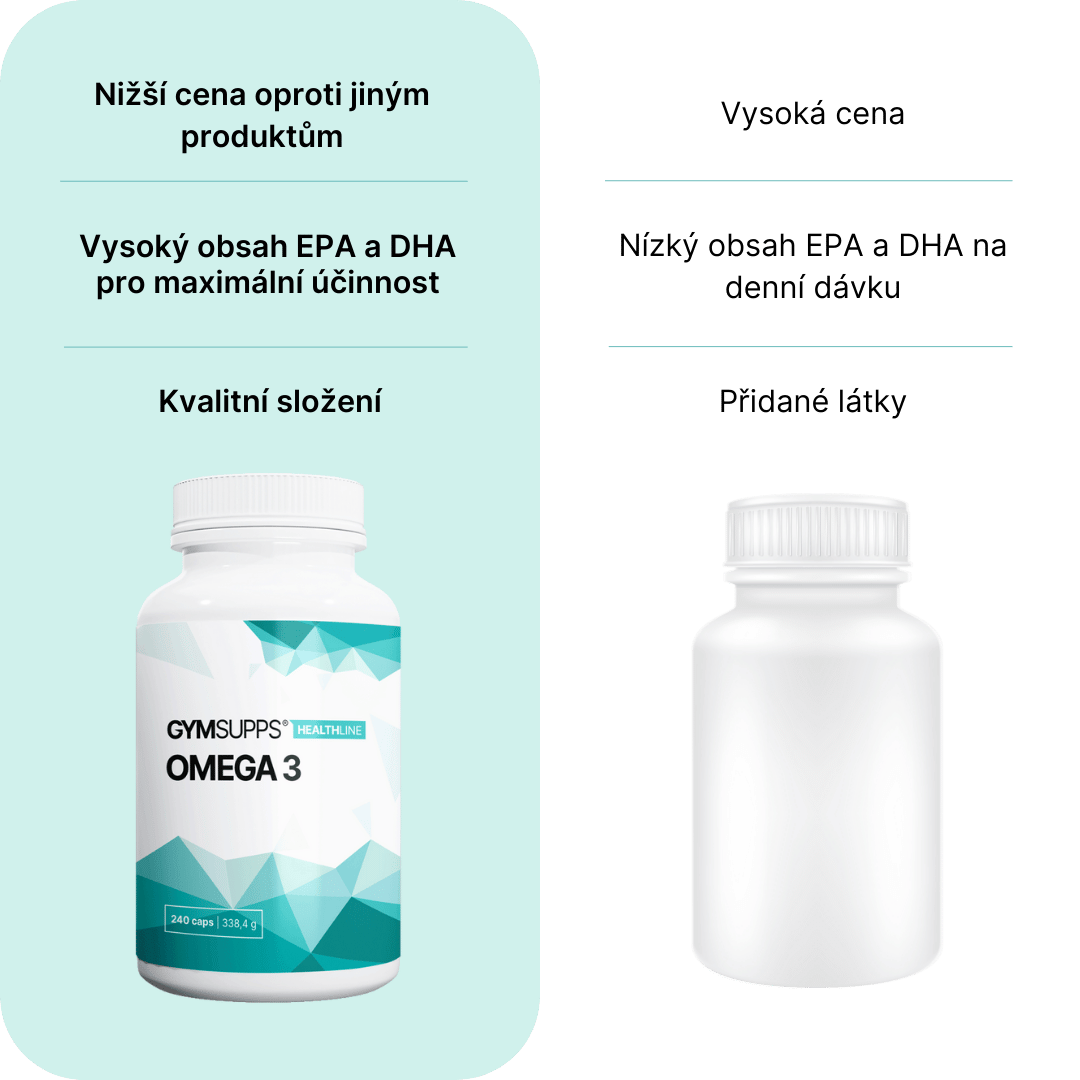
GymSupps Omega 3

Omega 3 240cps 1+1
Sources:
- ¹ Lange, K. W. (2016). Lifelong nutritional omega-3 deficiency evokes a depressive-like state. Behavioural brain research, 306, 147-150.
- ² Larrieu, T., & Layé, S. (2018). omega-3 Polyunsaturated Fatty Acid Deficiency and Progressive Neuropathology in Psychiatric Disorders. Frontiers in physiology, 9, 1941.
- ³ Thesing, C. S., et al. (2016). Detection and treatment of omega-3 fatty acid deficiency in psychiatric practice. Molecular Psychiatry, 21(10), 1337-1341.
No posts have been made yet.








