MCT oil for weight loss: does it really help?
 Author:
 In the world of fitness, new trends are constantly emerging promising guaranteed results. From exotic superfoods to revolutionary exercise plans, the quest to find an effective and sustainable way to lose weight is eternal. One supplement that has gained immense popularity in recent years is MCT oil. It is promoted as a fuel for the brain, a source of quick energy and, above all, a powerful ally in the fight against extra pounds. However, a fundamental question arises: is its reputation backed up by scientific evidence or is it just another marketing myth?
Article content:
- What is MCT Oil and why is it different?
- A look into the scientific studies: what does the data say?
- More than just weight loss: the impact on metabolic health
- How exactly does MCT oil help?
What is MCT Oil and why is it different?
First, it's important to understand how MCT oil differs from conventional fats like olive, sunflower, or animal fat. The vast majority of fats in our diet are made up of long chain triglycerides (LCTs). As the name suggests, their molecules are made up of long chains of carbon atoms (typically 13-21). In order for the body to digest and utilize them, they require bile acids and a complex process of gradual breakdown and transport through the lymphatic system before they ever enter the bloodstream. Some of it is easily stored in fat stores.
In contrast, medium-chain triglycerides (MCTs) have shorter chains (6-12 carbon atoms) in their structure. This seemingly small change has a huge impact on their metabolism. MCTs are absorbed much faster after consumption and travel directly through the portal vein to the liver. Here they are immediately converted into energy or so-called ketones. They virtually bypass the complex digestive process of LCTs and are significantly less likely to be stored in body fat¹. This unique metabolic fate is at the heart of the hypothesis as to why MCTs might aid in weight loss.
A look into the scientific studies: what does the data say?
Individual studies can yield conflicting results. That's why scientists turn to meta-analyses - studies that statistically analyze and summarize results from many high-quality, independent studies. Let's look at the findings of two key meta-analyses that focused specifically on MCTs and body weight.
The first key meta-analysis, published in 2015 in the Journal of the Academy of Nutrition and Dietetics, set out to examine 13 randomized controlled trials. Researchers compared groups of people who consumed MCT oil to groups who consumed regular LCT fats. The results were statistically significant and consistent: substituting LCTs for MCTs led to modest but measurable reductions in body weight (by an average of 0.51 kg), waist circumference (by 1.46 cm) and hip circumference. The study authors concluded that fat replacement may be a useful tool in preventing obesity and promoting weight loss¹.

Although the weight loss of around half a kilogram is modest, it is important to remember that it was achieved only by changing the type of fat, not by drastic diet or lifestyle changes. This suggests that MCTs have a real, albeit modest, metabolic effect.
A more recent and even more detailed meta-analysis from June 2024, published in the prestigious journal Clinical Nutrition, confirmed and further refined these conclusions. This study analyzed data from more than a thousand participants and made a key distinction. It showed that the greatest weight loss benefit was seen with the use of "pure" MCT oil. Diets enriched with pure MCTs resulted in a more significant weight loss compared to diets using mixtures of MCT and LCT oils². This finding is critical for consumers - when choosing a product, it is crucial to look at its purity and composition.

More than just weight loss: the impact on metabolic health
Weight loss is just one piece of the puzzle. Modern science is increasingly focusing on overall metabolic health. Here, MCT oil shows perhaps even more promising potential. The aforementioned 2024 meta-analysis revealed that MCT oil consumption led to a statistically significant reduction in total blood triglyceride levels in addition to weight loss. High triglycerides are a known risk factor for cardiovascular disease, so lowering them is a very positive finding.
In addition, the study also noted an improvement in insulin sensitivity, as measured by the HOMA-IR index. Insulin resistance, a condition in which the body's cells respond poorly to the hormone insulin, is a precursor to type 2 diabetes. A reduction in this index indicates that the body can better manage blood sugar, which is key to preventing metabolic disease in overweight and obese people².
How exactly does MCT oil help?
Researchers have identified several likely mechanisms behind the observed effects:
- Increased thermogenesis: processing MCTs in the body uses more energy than processing LCTs. This process, known as diet-induced thermogenesis, slightly increases the body's overall energy expenditure.
- Increased satiety: Several studies have suggested that consuming MCTs leads to increased production of satiety hormones (such as peptide YY and leptin), which may lead people to spontaneously eat less food throughout the day¹.
- Promoting fat burning: because MCTs are quickly converted to energy in the liver, the body is less likely to store them and may instead prefer to burn existing fat stores.
Conclusion.
So what can we take away from the scientific data? MCT oil may indeed be a helpful supplement when trying to reduce weight and improve metabolic health. Evidence from top-quality studies shows that including it in the diet in place of other fats leads to modest but measurable weight loss, reduced waist circumference, and improved blood fat levels and insulin sensitivity.
However, it is absolutely crucial to maintain realistic expectations. MCT oil is not a miracle weight loss pill. Its effect is mild and will only manifest itself when it is part of an overall balanced diet and healthy lifestyle. Adding MCT oil alone to a diet with excess calories will not yield any results. It works as a metabolism optimizer, not as a metabolism savior. Moreover, it is important for consumers to choose the purest MCT oil possible, as blends with other fats have been shown to be less effective.
In a world full of exaggerated promises, MCT oil represents a supplement whose effects, while modest, stand on solid scientific foundations.
Recommended
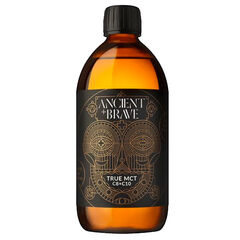
Ancient Brave True MCT
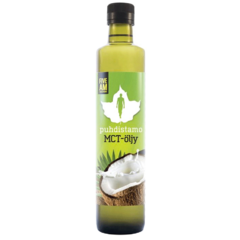
Puhdistamo MCT Oil
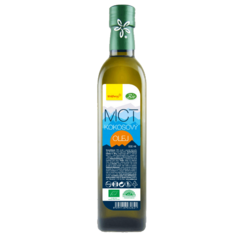
Wolfberry Kokosový olej MCT BIO
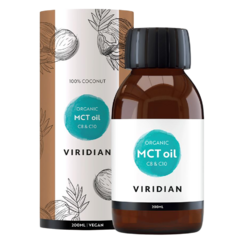
Viridian MCT Oil Organic
Sources:
- ¹ Mumme, K., & Stonehouse, W. (2015). Effects of medium-chain triglycerides on weight loss and body composition: a meta-analysis of randomized controlled trials. Journal of the Academy of Nutrition and Dietetics, 115(2), 249-263.
- ² Wang, Y., et al. (2024). The impact of medium-chain triglycerides on weight loss and metabolic health in individuals with overweight or obesity: A systematic review and meta-analysis. Clinical Nutrition.
No posts have been made yet.