MCT oil: Dosage and proper use
 Author:
 In recent years, MCT oil has gained considerable attention not only in the community of athletes and healthy lifestyle enthusiasts, but also in scientific circles. This unique type of fat, whose name stands for Medium-Chain Triglycerides, is valued for its specific properties that distinguish it from more common long-chain fats. Due to its unique chemical structure, MCT oil is metabolized differently, allowing it to serve as a fast and efficient source of energy. While its popularity is growing, many users are asking crucial questions about its proper dosage, potential benefits, and possible side effects.
Article Content:
What is MCT oil and how does it work?
The fats in our diet consist of molecules called triglycerides, which are made up of a glycerol skeleton and three fatty acids. The chain length of these fatty acids determines how the body processes and uses the fat. Most fats in the typical Western diet, such as those found in meat, fish, avocados, and nuts, are made up of long-chain triglycerides (LCTs), which contain 13 to 21 carbon atoms. In contrast, medium-chain triglycerides (MCTs) have shorter chains, usually with 6 to 12 carbon atoms.
This seemingly small difference in structure has a major impact on their metabolism. While LCTs require a more complex process involving bile acids and pancreatic enzymes for their digestion and absorption and are then transported through the lymphatic system, MCTs are digested much more quickly. Once consumed, they travel directly to the liver, where they are quickly converted into energy or ketones - molecules that can serve as an alternative fuel for the brain and body.¹ This rapid conversion to energy is one of the main reasons MCT oil is so popular among athletes and people looking for an instant source of vitality without burdening the digestive system. MCTs are naturally found in coconut oil, palm kernel oil and milk fats, but MCT oil is a concentrated source of these specific fats.

Potential benefits backed by science
Scientific interest in MCT oil has led to a number of studies investigating its effect on various aspects of human health. Although research is still ongoing, some areas are showing promising results.
Support for weight management
One of the most commonly discussed benefits is the role of MCT oil in weight loss and maintaining a healthy body weight. A 2024 systematic review and meta-analysis concluded that MCT-enriched diets, especially pure MCTs, are more effective in achieving weight loss in overweight and obese individuals compared to LCT-rich diets.² The study authors suggest that MCTs may promote satiety, increase energy expenditure, and positively influence fat metabolism. However, it is important to note that MCT oil is not a miracle weight loss cure, but may be a useful supplement as part of a comprehensive approach involving a balanced diet and regular exercise.
Effect on sports performance
Due to its ability to provide quick energy, MCT oil has become a popular supplement among athletes. It is believed that it could spare muscle glycogen and serve as an alternative fuel source during endurance exercise. However, a systematic review from 2022 showed that most studies failed to demonstrate significant improvements in athletic performance after MCT oil supplementation in healthy subjects.³ Although supplementation led to an increase in ketone levels, the body was unable to use them effectively as a primary energy source during exercise. The authors of the review concluded that MCT oil has little or no ergogenic (performance-enhancing) effect.

Metabolic health and blood lipids
The effect of MCT oil on cholesterol and other blood lipid levels is complex. A 2021 meta-analysis found that MCT oil consumption did not affect total cholesterol, LDL ("bad") cholesterol or HDL ("good") cholesterol. However, it did cause a slight increase in blood triglyceride levels.⁴ Interestingly, the effect on cholesterol varied depending on the type of oil to which the MCT oil was compared. In addition, the aforementioned 2024 meta-analysis showed that MCT-enriched diets were associated with significant reductions in blood triglyceride levels and improvements in insulin resistance in overweight and obese individuals.² These results suggest that MCTs may play a positive role in metabolic health, particularly in specific populations.

Dosage and correct use
Determining a universal optimal dose of MCT oil is difficult because it depends on individual goals, tolerance and overall diet composition. Scientific studies provide some guidelines, but it is crucial to start with a low dose and gradually increase it.
- Start slowly: For beginners, it is recommended to start with one teaspoon (approximately 5 ml) per day and monitor the body's response.
- Gradual increase: If the body tolerates the dose well, it can be gradually increased by one teaspoon every few days until the target dose is reached, which is usually between 1 and 3 tablespoons (15-45 ml) per day, divided into several smaller portions.
- Maximum tolerated dose: A systematic review examining the effect on athletic performance reported that a dose of around 30 grams appears to be a safe maximum dose to minimize adverse gastrointestinal effects during or after exercise.³
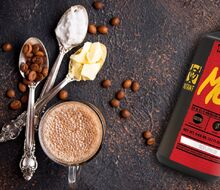
- Dietary inclusion: MCT oil is tasteless and odorless, making it easy to add to a variety of foods and beverages. It is great in coffee (bulletproof coffee), smoothies, protein shakes, salad dressings, sauces or simply poured over ready-to-eat food. However, it is not suitable for high temperature cooking (frying) as it has a low smoke point.
Possible side effects and what to watch out for
The most common side effects associated with the consumption of MCT oil are indigestion. Increasing the dose too quickly or consuming large amounts at once can cause nausea, stomach cramps, bloating and diarrhea.⁵ These symptoms are usually temporary and can be avoided by slowly and gradually incorporating MCT oil into the diet. People with liver disease should consult their doctor about consuming MCT oil, as MCTs are metabolized in the liver.
Conclusion
MCT oil is a fascinating dietary supplement with unique metabolic properties. Scientific evidence suggests that it may be a useful tool for promoting weight management and improving certain markers of metabolic health, especially in overweight or obese individuals. However, its role in enhancing athletic performance is less clear.
An individualized approach is key to successful and safe use. Start with a small dose, monitor your body's response, and gradually increase the dose. Remember that no dietary supplement can replace the basics of a healthy lifestyle, which are a balanced diet, regular physical activity and adequate rest. MCT oil can be a great help on your journey to better fitness and health if used wisely and as part of an overall healthy lifestyle.
Recommended
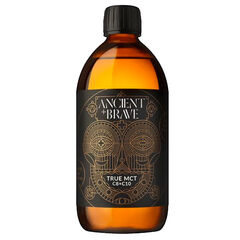
Ancient Brave True MCT
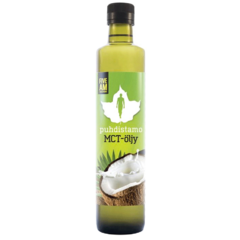
Puhdistamo MCT Oil
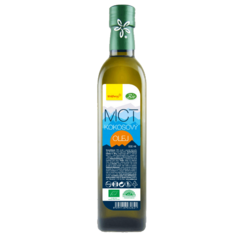
Wolfberry Kokosový olej MCT BIO
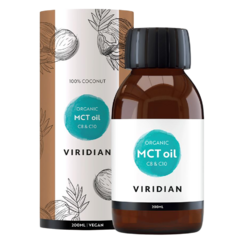
Viridian MCT Oil Organic
Sources:
- ¹ Jadhav HB, Annapure US. Triglycerides of medium-chain fatty acids: a concise review. J Food Sci Technol. 2023 Aug;60(8):2143-2152.
- ² Li Y, et al. The impact of medium-chain triglycerides on weight loss and metabolic health in individuals with overweight or obesity: A systematic review and meta-analysis. Clin Nutr. 2024.
- ³ Png, W. Y., et al. The Effects of Medium-Chain Triglyceride Oil Supplementation on Endurance Performance and Substrate Utilization in Healthy Populations: A Systematic Review. J Obes Metab Syndr. 2022 Sep 30;31(3):217-229.
- ⁴ Geng, Y., et al. Medium-Chain Triglyceride Oil and Blood Lipids: A Systematic Review and Meta-Analysis of Randomized Trials. J Nutr. 2021 Oct 1;151(10):2937-2945.
- ⁵ Wibisono, C., et al. Efficacy of supplemental MCT oil on seizure reduction of adult drug-resistant epilepsy - a single-center open-label pilot study. Epilepsy Behav Rep. 2022 Apr 26;18:100523.
No posts have been made yet.